Tag Archives: suggestion box

How to Capture Employee Ideas: 2026 Innovation Guide

How to Capture Employee Ideas: 2026 Innovation Guide
Coby Skonord|
August 16, 2026

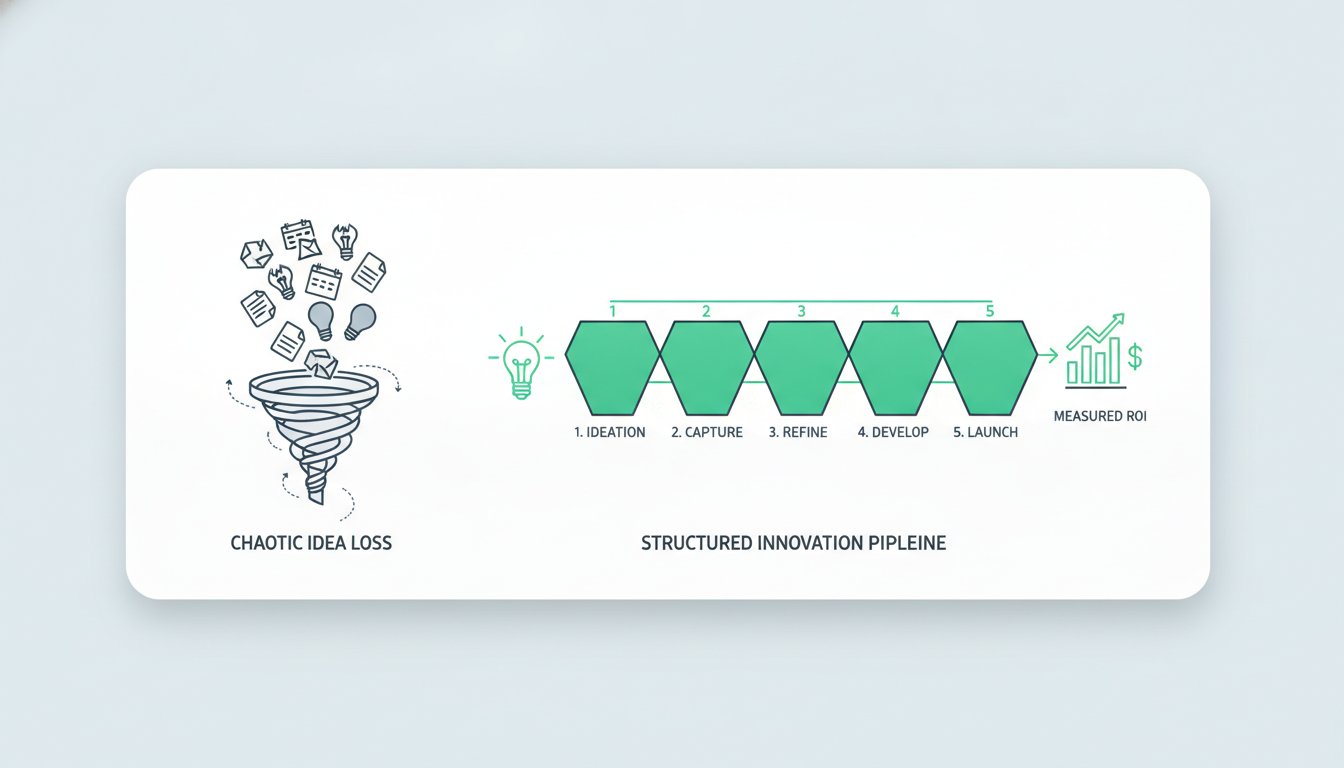
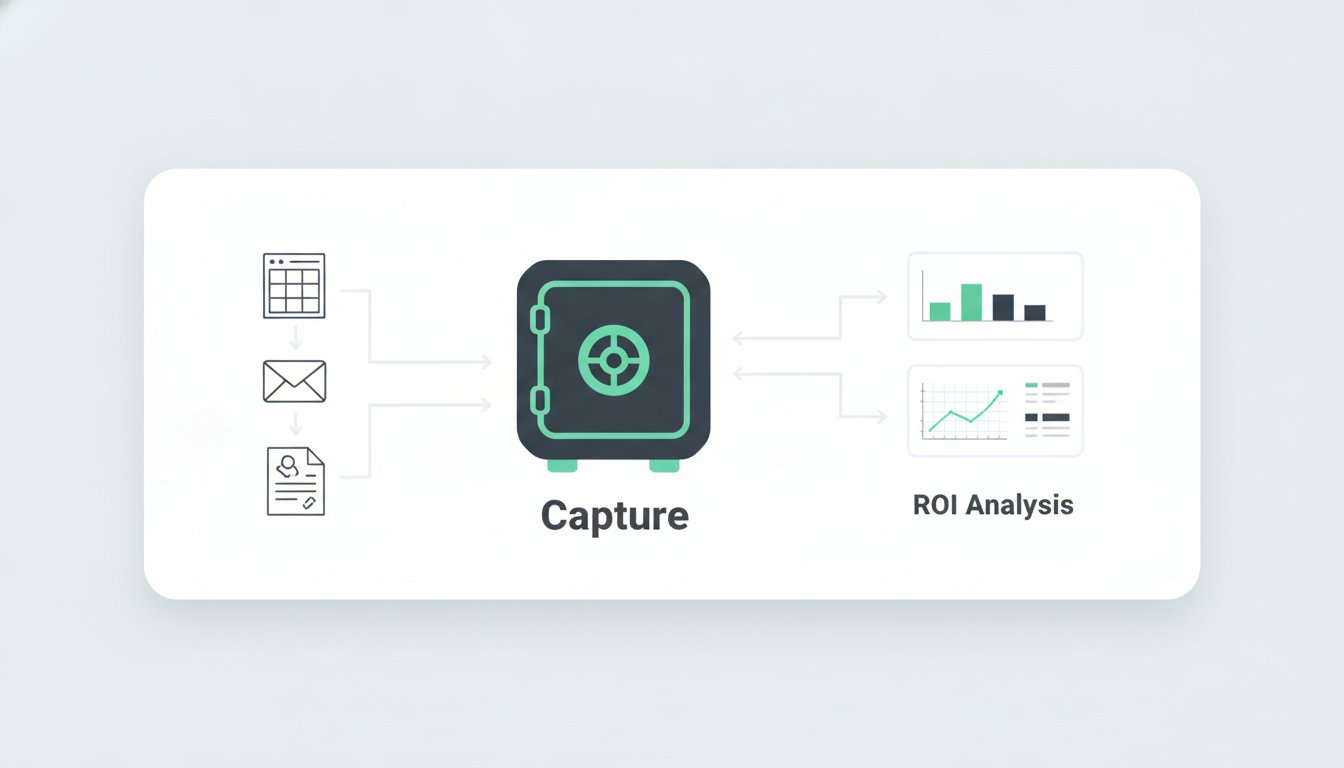
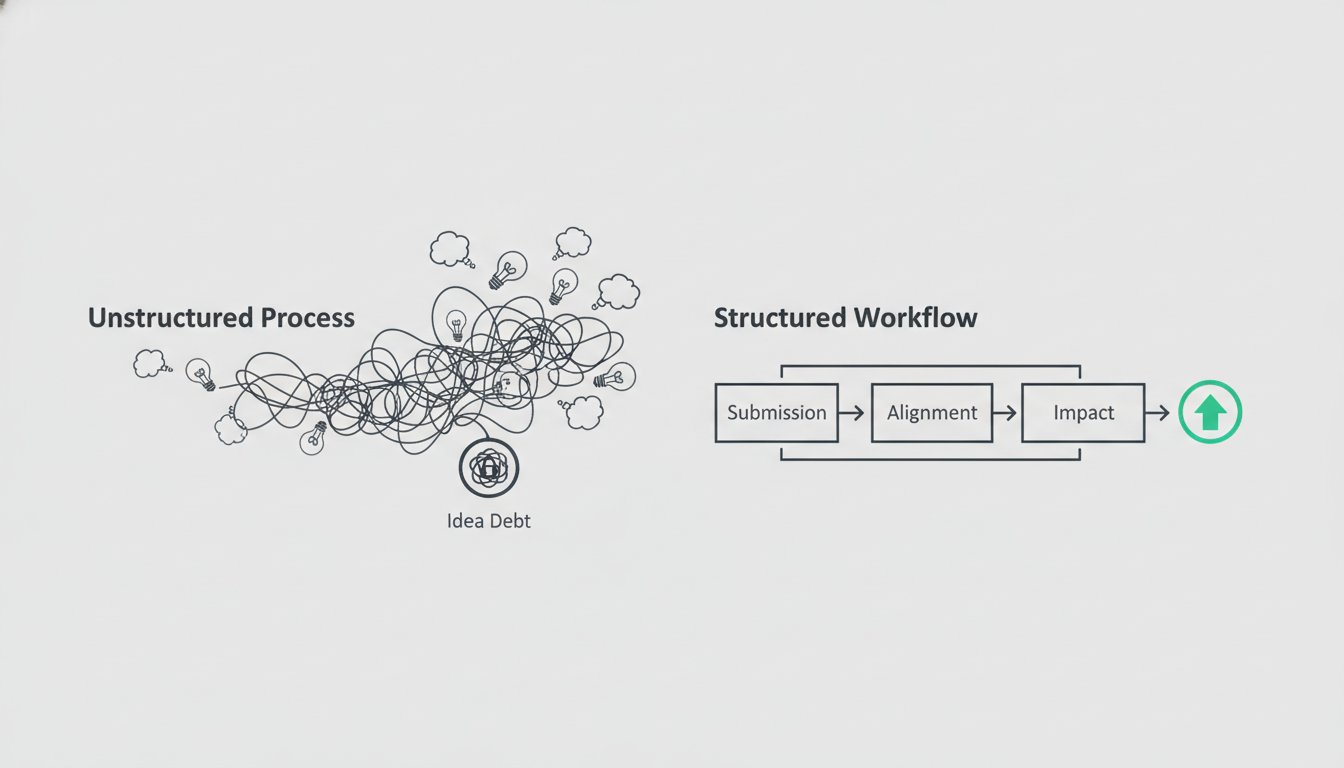
Your frontline is sitting on a goldmine of operational efficiency, but if your current system is just a digital version of a wooden box, you’re throwing money away. Most organizations treat employee insights like junk mail, leaving high-value potential to rot in an unmonitored inbox while managers drown in manual sorting. If you don’t have a structured way to capture employee ideas, you aren’t just missing out on innovation; you’re actively draining your company’s competitive edge and fostering a culture of suggestion fatigue.

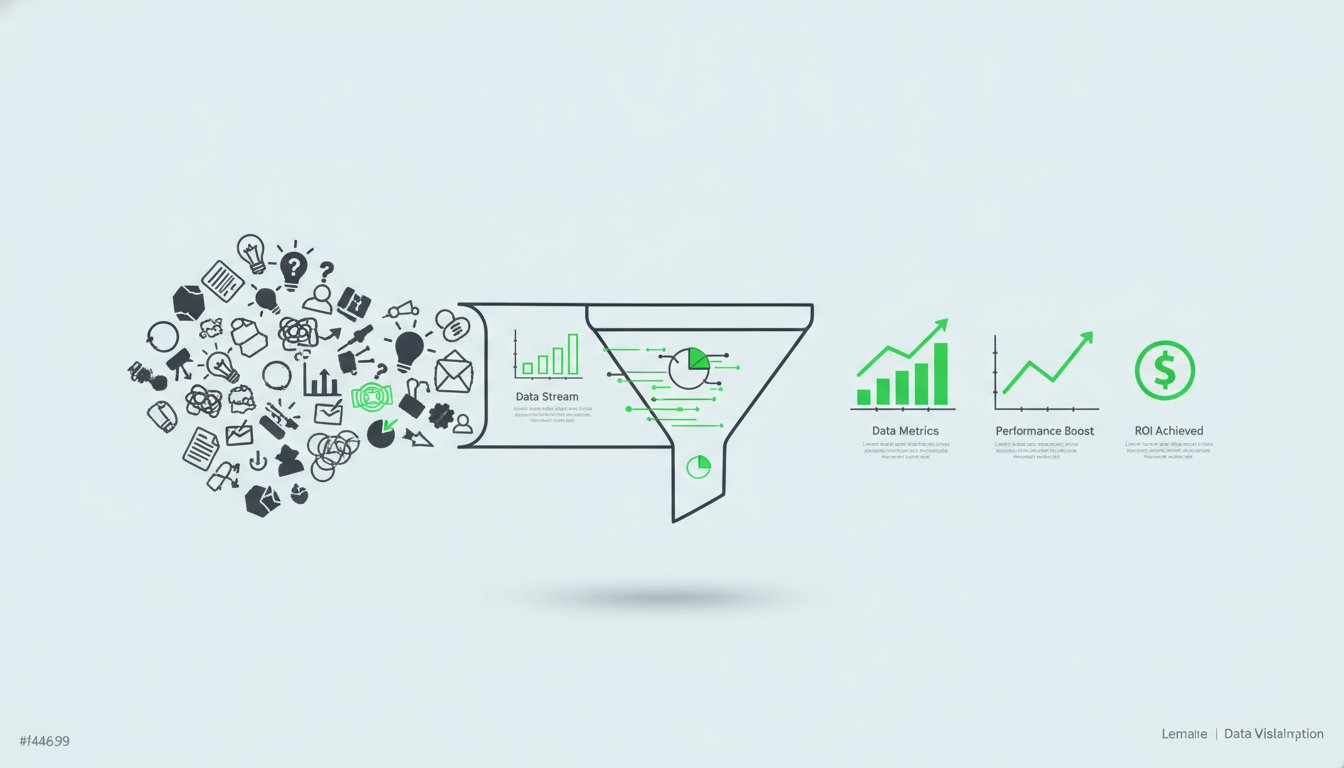
We understand that a suggestion box is a liability when it lacks a clear path to execution. This 2026 guide promises to transform your approach by replacing manual overhead with an automated, AI-driven pipeline that ensures every submission is either actioned or expertly archived. You’ll learn how to implement modern capture frameworks that drive engagement and provide the clear ROI data your leadership demands. We’ll break down the exact steps to move from a graveyard of spreadsheets to a high-performance engine that fuels measurable business value and organizational transformation.

Key Takeaways

  • Transitioning from passive suggestion boxes to a systematic capture framework is critical for preventing the “idea graveyard” and maintaining long-term employee morale.
  • Sustainable innovation requires a culture of psychological safety where every submission receives a transparent, leadership-backed response to combat suggestion fatigue.
  • Leveraging AI allows organizations to capture employee ideas at scale by automating deduplication and solving the “signal-to-noise” problem inherent in high-volume environments.
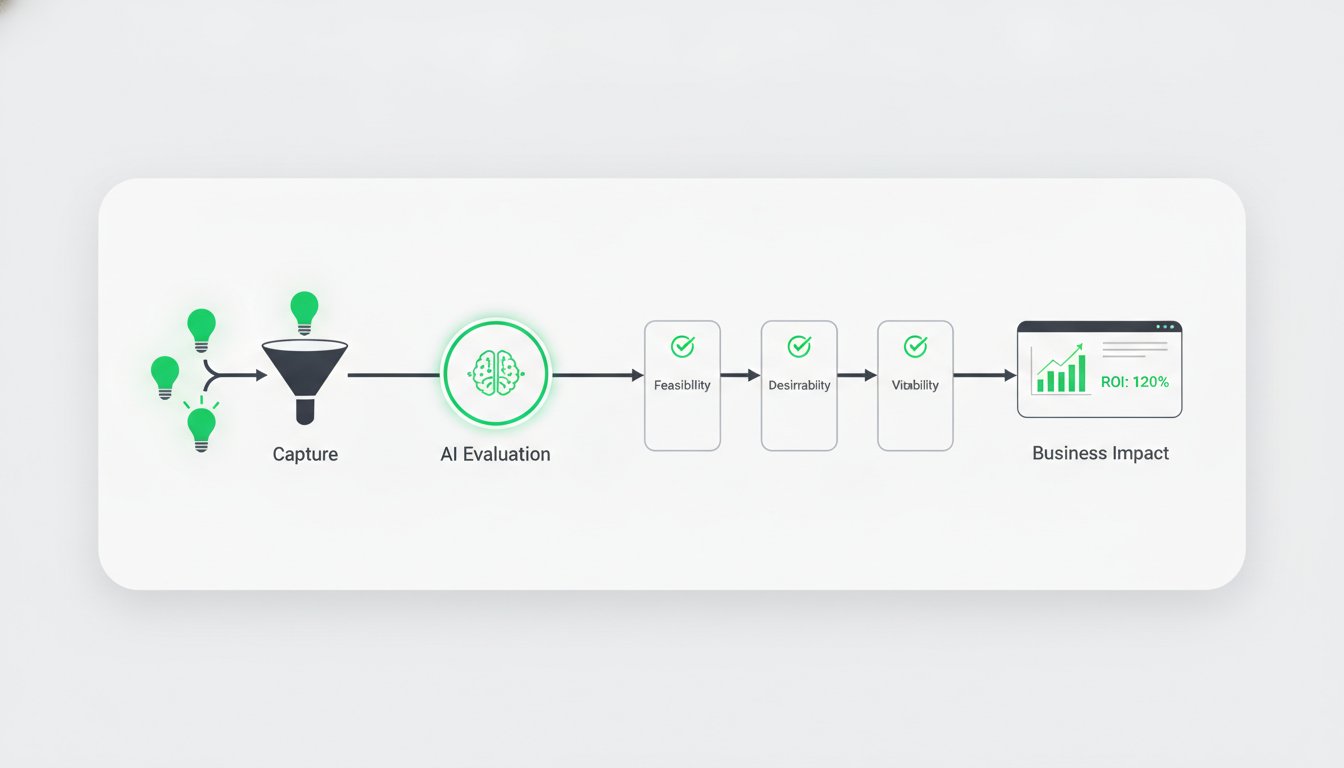
  • High-impact workflows rely on objective evaluation criteria—Feasibility, Desirability, and Viability—to move concepts from raw submission to measurable business value.
  • Modern innovation management platforms significantly reduce administrative overhead while providing the precise ROI data needed to prove the financial impact of your program.

The Strategic Necessity of Capturing Employee Insights in 2026

The systematic effort to capture employee ideas is no longer an optional HR initiative or a “nice-to-have” culture builder. In 2026, it is a core business function. We define this process as a structured, repeatable pipeline for sourcing, evaluating, and implementing operational improvements and new product concepts directly from your workforce. Without a rigorous framework, your company is essentially operating with a blind spot. You’re ignoring the people who see your processes, customers, and product flaws every single day.

Beyond the Digital Suggestion Box

Traditional, unstructured feedback methods fail to scale in enterprise environments because they lack a validation mechanism. Historically, employee suggestion systems were passive tools that often devolved into complaint collections. There is a massive difference between a platform that gathers grievances and one that facilitates strategic ideation. To move the needle, organizations must transition to a structured best idea management software that provides visibility across the entire innovation lifecycle. This shift ensures that ideas are categorized, ranked, and moved toward implementation rather than sitting in a stagnant database.

The Frontline Advantage: Identifying Operational Risks

Employees on the ground often identify efficiency leaks and operational risks months before they appear on a management dashboard. They see the friction in the supply chain and the bugs in the software interface in real-time. Capturing these incremental improvements can drive significant long-term OpEx savings that aggregate into substantial financial gains. The power of the frontline is perhaps best illustrated by the Flamin’ Hot Cheetos case study, where a janitor’s observation led to one of the most successful product lines in snack history. By building a system to capture employee ideas, you empower every member of your team to act as a catalyst for growth, turning localized insights into enterprise-wide advantages.

Creating a Culture of Continuous Idea Generation

Leadership plays a non-negotiable role in this ecosystem. When executives actively participate in the platform, they validate the effort required to innovate. This top-down engagement signals that the organization values intellectual contribution as much as daily output. If you want to see how these cultural shifts look in practice, you can explore a modern innovation framework that automates these feedback loops and reduces administrative friction.

Incentives and Recognition Strategy

While monetary rewards are common, evidence suggests that public recognition and professional growth often provide more sustainable motivation. A well-designed system gives employees public credit for their contributions, potentially linking innovation performance to career advancement opportunities. Gamification elements like leaderboards and peer voting turn the act of sharing ideas into a social, engaging experience. These tools help maintain momentum and prevent the program from feeling like an extra chore for the frontline.

Using structured “Innovation Challenges” is another effective tactic to capture employee ideas with precision. By focusing the collective intelligence of your workforce on a specific problem for a limited time, you create a sense of urgency and purpose. This targeted approach prevents the system from becoming a catch-all for complaints. Instead, it aligns every captured idea with current strategic goals. Recognition in this context isn’t just a pat on the back. It is a verification of an employee’s expertise and their direct impact on the company’s future success.

Leveraging AI to Streamline Idea Collection and Evaluation

AI-Powered Deduplication: Maintaining a High-Signal Pipeline

Manual sorting is the primary reason innovation programs fail to scale. When you use Ideawake AI, the system automatically clusters similar concepts during the submission phase itself. If an employee starts typing an idea that has already been proposed, the platform surfaces the existing entry in real-time. This doesn’t just prevent duplicate work. It encourages contributors to collaborate on existing threads rather than competing for attention. By automating this initial sorting, organizations can reduce administrative time by up to 80%, allowing managers to focus on implementation rather than data entry.

Automated Routing and Expert Evaluation

The true value of an idea is often invisible to generalist managers. It requires the eyes of a subject matter expert. AI streamlines this by matching submissions to specific departmental leads based on historical data and keyword relevance. Instead of an idea sitting in a queue for weeks, it’s instantly routed to the person best equipped to judge its feasibility. By integrating these workflows with enterprise collaboration tools like Microsoft Teams, you ensure that evaluation becomes a natural part of the workday. This automation can shorten the evaluation lifecycle from several weeks to just a few days.

From Capture to Implementation: Building a High-Impact Workflow

Developing Transparent Evaluation Criteria

Objectivity is the enemy of bias. To maintain trust in your program, you must utilize weighted scoring models that rank submissions against three core pillars: Feasibility, Desirability, and Viability. Standardizing the idea evaluation process ensures that every employee feels their contribution was judged fairly. When an idea is rejected, communicating “The Why” is just as important as the rejection itself. This transparency prevents resentment and educates the workforce on what constitutes a high-value concept, effectively training them to submit better insights in the future.

A multi-stage vetting process usually begins with peer-level crowd-voting to gauge desirability. This is followed by a deep-dive expert review where subject matter experts assess technical feasibility and financial viability. This tiered approach prevents your most expensive resources from wasting time on concepts that don’t have internal support. Once an idea clears these hurdles, it must be assigned a clear owner and integrated into a project roadmap with specific milestones and deadlines.

Measuring the ROI of Employee-Led Innovation

To secure long-term executive buy-in, you must translate creative output into financial data. Setting specific KPIs, such as direct cost savings, new revenue streams, or reduced time-to-market, allows you to quantify the impact of your program. Using a specialized ROI calculator helps innovation managers justify program expansion by showing the exact dollar value generated for every hour spent on ideation. For small and medium-sized businesses monitoring these operational improvements and ongoing project budgets, an integrated management system like Flowgres can help track cost efficiencies and sales performance across teams. This data-driven approach moves the conversation from “culture building” to “bottom-line impact.”

Beyond hard financial metrics, it’s vital to document the “soft” benefits of capturing employee ideas. Increased retention rates, higher engagement scores, and a more resilient corporate culture are tangible outcomes of a successful program. When you close the loop by communicating these results back to the original submitter, you reinforce the value of their contribution. This creates a virtuous cycle of participation that sustains the program long after the initial launch excitement has faded.

Ideawake: The Modern Standard for Capturing Employee Ideas

Legacy innovation tools are often where high-value insights go to die. They’re typically clunky, slow, and require excessive administrative maintenance just to keep the lights on. Ideawake represents a fundamental shift in how organizations capture employee ideas, replacing manual complexity with a streamlined, AI-driven architecture. A critical decision for modern leadership is the choice to build vs buy an ideation platform. While internal builds might seem attractive for customization, they frequently collapse under the weight of technical debt and lack the specialized AI capabilities required for deduplication and ROI tracking.

Choosing a purpose-built platform like Ideawake significantly reduces implementation time compared to legacy innovation software. Instead of months of configuration, organizations can launch high-impact challenges in days. This speed allows you to move quickly from identifying a problem to implementing a solution, ensuring that your innovation program delivers immediate, visible results to the executive suite.

Reducing Administrative Overhead with Smart Automation

The primary goal of any innovation manager should be implementing change, not managing paperwork. Ideawake is engineered to automate the “boring” parts of the innovation lifecycle. This level of scalability is vital; whether your team generates 100 ideas or 10,000, the administrative burden remains virtually unchanged thanks to AI-powered sorting and routing. We’ve found that a modern, intuitive UI is the single biggest factor in sustained frontline participation. If the tool feels like a natural part of the workday rather than an extra chore, adoption rates stay high, and your pipeline remains filled with actionable insights without the need for additional headcount.

Winning the Market with Strategic Innovation

Providing end-to-end visibility is what separates high-performance organizations from the rest. Ideawake allows you to track an idea from the first spark of inspiration through to the final ROI report, providing a clear audit trail of value creation. This transparency effectively transforms your entire workforce into a 24/7 R&D department, uncovering efficiency leaks and growth opportunities that traditional top-down management would never see. The long-term impact of employee ideation programs goes beyond simple cost-cutting; it fosters a culture of continuous improvement and radical accountability.

Stop settling for the mediocrity of spreadsheets and unmonitored inboxes. It’s time to leverage a platform that ensures every idea is either actioned or expertly archived while providing the hard data your leadership demands. Transforming your organization’s untapped potential into measurable business value requires the right technology and a results-driven partner. For business owners navigating broader organizational change and strategic execution, working with mentors such as SA Business Coaching can also help align leadership with long-term company goals.

Book a demo to see Ideawake in action

Transform Your Frontline into a Strategic Engine

The days of passive suggestion boxes and stagnant spreadsheets are over. To effectively capture employee ideas in 2026, organizations must deploy automated frameworks that bridge the gap between initial insight and final execution. By leveraging AI-driven deduplication, you can reduce administrative overhead by up to 80% while ensuring that high-signal concepts reach the right experts in days, not months.

This shift to a structured innovation pipeline separates market leaders from those stuck in mediocrity. With end-to-end ROI tracking and a platform trusted by Fortune 500 innovation leaders, you can finally prove the financial impact of your workforce’s creativity. The untapped potential within your frontline is your greatest competitive advantage. It’s time to stop letting it go to waste. Start building a high-impact engine for growth today.

Frequently Asked Questions

How do I encourage employees to share their ideas?

Encouraging participation starts with psychological safety and leadership visibility. You must create a culture where “half-baked” concepts are welcomed and refined through collaboration. Use specific “Innovation Challenges” to give employees a clear problem to solve; this prevents choice paralysis. When leadership actively participates by commenting or voting, it signals that the organization values intellectual contribution. Providing a user-friendly way to capture employee ideas ensures the process feels like a natural workflow.

What is the best way to evaluate a large volume of employee suggestions?

Implement a tiered evaluation framework that starts with peer-level crowd-voting. This identifies “desirability” before expensive subject matter experts are involved. Next, apply a weighted scoring model based on feasibility and viability. Using a digital platform allows you to automate this pipeline, ensuring that only the highest-potential concepts reach the final review stage. This structured approach prevents bottlenecks and ensures that every submission is processed fairly and efficiently without manual sorting.

Can AI really help in capturing and sorting employee ideas?

AI is essential for managing the “signal-to-noise” problem in large organizations. Modern platforms use natural language processing to identify and cluster similar submissions during the entry phase. This prevents redundant work and encourages collaboration on existing threads. Additionally, AI can automatically route ideas to the most relevant departmental experts based on historical data. This automation reduces administrative time by up to 80% and ensures a high-signal pipeline for every decision-maker.

How do I measure the financial impact of an employee idea program?

You must track the hard financial outcomes of every implemented project, such as direct cost savings, new revenue generated, or reduced time-to-market. Use a specialized ROI calculator to quantify these gains against the cost of the program. Beyond hard numbers, monitor “soft” metrics like employee retention and engagement scores. Documenting these results provides the evidence needed to justify program expansion and secure long-term executive buy-in for your innovation initiatives.

What are the common reasons why employee suggestion programs fail?

Most programs fail because they become an “Idea Graveyard” where suggestions go in but never come out. When employees don’t receive timely feedback, they quickly develop suggestion fatigue and stop participating. Other common failures include a lack of clear evaluation criteria and a failure to secure leadership commitment. Without a transparent process and a dedicated implementation roadmap, the program will be seen as a superficial HR initiative rather than a strategic driver.

Should I use a digital platform or a physical suggestion box?

Physical suggestion boxes are obsolete because they lack transparency, scalability, and data tracking. A digital platform provides a centralized hub where employees can collaborate, vote, and see the status of their submissions in real-time. Digital tools also allow for AI-powered sorting and automated feedback loops that are impossible with physical methods. To effectively capture employee ideas across distributed teams, a cloud-based system is required to maintain momentum and ensure end-to-end visibility.

How do I give feedback to employees whose ideas are not implemented?

Always provide clear, constructive reasons why an idea was not moved forward. Use your standardized evaluation criteria, feasibility, desirability, and viability, to explain the decision objectively. This transparency maintains trust and educates the employee on what makes a concept valuable to the organization. Closing the loop ensures that even rejected contributors feel heard, which prevents resentment and encourages them to refine their thinking for future submissions to the program.

What kind of rewards work best for employee innovation?

While monetary incentives are common, public recognition and career advancement opportunities often drive more sustainable engagement. Use leaderboards and peer voting to give contributors public credit for their expertise. Non-monetary rewards, such as presenting an idea to the executive board or receiving dedicated time to work on a pet project, validate the employee’s status as an innovator. A balanced reward strategy aligns individual achievements with the company’s long-term strategic transformation goals.
Article by

Coby Skonord

Coby Skonord is the co-founder and CEO of Ideawake. Since 2013 he has worked with enterprise innovation, continuous improvement, and HR leaders to turn employee ideas into measurable business impact.

The Synergy of Employee Engagement and Innovation: A Strategic Framework for 2026

The Synergy of Employee Engagement and Innovation: A Strategic Framework for 2026
Coby Skonord|
July 9, 2026

Gallup’s 2026 State of the Global Workplace report reveals that global employee engagement has stagnated at a mere 20%, a decline that costs the global economy an estimated $10 trillion in lost productivity. For most organizations, the disconnect between employee engagement and innovation isn’t just a cultural hurdle; it’s a structural failure that leaves high-value ideas trapped in the minds of frontline staff. You’ve likely seen the symptoms: low participation in outdated suggestion programs and an administrative burden that makes managing new ideas feel like a full-time job.

It’s time to stop treating engagement as a soft HR metric and start leveraging it as a high-performance engine for growth. Research shows that motivated employees are 29% more creative, yet traditional tools fail to turn that creativity into bottom-line results. In this article, you’ll discover a strategic framework to build a scalable system for capturing insights while driving higher retention through meaningful contribution. We’ll outline how to bridge the gap between frontline intelligence and executive strategy to ensure your innovation pipeline never runs dry.

Key Takeaways

  • Learn to distinguish between passive job satisfaction and active innovation engagement to build a high-performance feedback loop that drives better decision-making.
  • Master the four stages of engagement-led innovation, starting with using frontline insights to identify real-world friction points and operational waste.
  • Identify the structural failures of traditional suggestion boxes that lead to the “black hole” effect and learn how to replace them with sustainable, enterprise-scale systems.
  • Discover how to leverage AI and gamification to scale employee engagement and innovation while reducing the administrative burden of manual idea management.
  • Streamline your entire innovation lifecycle by adopting modern platforms that track every idea from the initial brainstorming phase to measurable ROI.

Defining the Feedback Loop: Why Engagement and Innovation are Inseparable

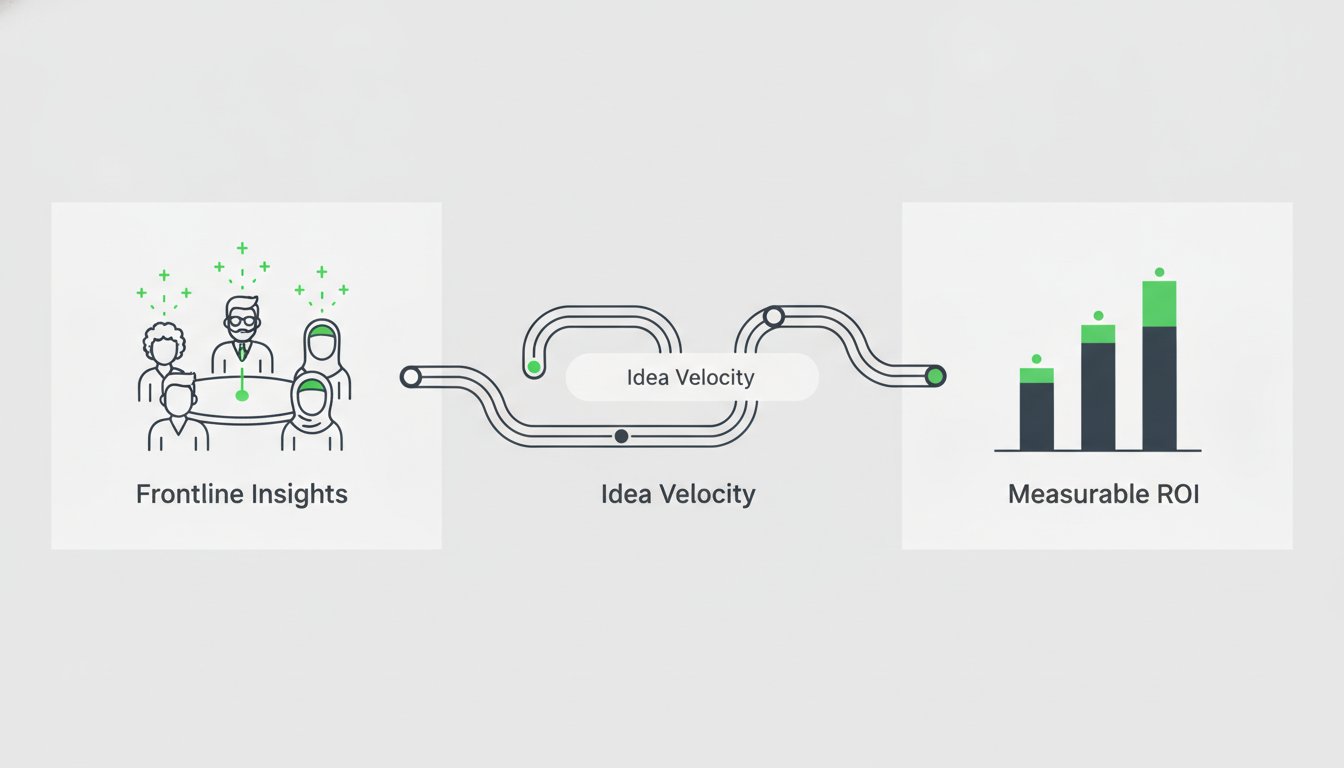
The relationship between employee engagement and innovation is not a linear path; it’s a self-sustaining feedback loop. When employees actively participate in solving organizational challenges, they generate high-quality data that allows leadership to make informed, evidence-based decisions. This cycle creates a culture where contribution is rewarded with visibility, which in turn fuels further participation. Organizations that master this loop don’t just collect ideas; they build a strategic asset that compounds in value over time.

We must distinguish between passive job satisfaction and active innovation engagement. A satisfied employee is content with their current role and environment. In contrast, Employee engagement in an innovation context involves an active commitment to improving the business. According to Gallup’s 2026 data, while global engagement remains low, companies with high-engagement cultures see 20% higher productivity and a significant boost in creative output. Innovation is the highest form of engagement because it satisfies the three core human drivers: autonomy, mastery, and purpose.

The Psychological Safety Requirement

Employees won’t innovate if they don’t feel safe to fail. Psychological safety is the bedrock of any successful framework. You need transparent evaluation processes that show exactly how ideas are vetted to build long-term trust. When the workforce understands that “Micro-Innovation”, small, incremental improvements, is valued just as much as a major product launch, they become more willing to share insights. This builds a culture of continuous improvement where the fear of making a mistake is replaced by the drive to find a better way.

Engagement as a Leading Indicator of Innovation ROI

Tracking participation rates allows you to predict future product breakthroughs before they appear on a balance sheet. High-performing organizations have moved away from soft happiness surveys toward quantitative ideation metrics. By measuring how many employees are actively contributing to challenges, you can see the tangible benefits of employee ideation programs in real-time. This shift ensures that engagement is treated as a critical business metric rather than a secondary HR concern. It’s the difference between guessing at your company’s potential and measuring your engine’s actual horsepower.

The Four Stages of Engagement-Led Innovation

To transform the feedback loop into a repeatable engine, organizations must move beyond random acts of ideation. Research published by the National Institutes of Health highlights a clear link between employee engagement and innovative behavior, suggesting that when staff feel connected to their work, they naturally seek ways to improve it. This framework breaks that natural impulse into four distinct, manageable stages: Discovery, Ideation, Championing, and Implementation.

Discovery: Tapping into Frontline Intelligence

Once a problem is clearly defined, you move to Stage 2: Ideation. This involves crowdsourcing diverse perspectives from across the organization. By inviting different departments to solve a single identified friction point, you prevent siloed thinking and ensure the resulting solutions are robust and multi-dimensional.

Championing: From Suggestion to Ownership

The third stage is Championing, where the “suggester” transitions into an intrapreneur. It’s not enough to just have a good idea; employees need the innovation skills necessary to build a business case and pitch it to stakeholders. Rewarding these “Idea Champions” shouldn’t just be about financial bonuses. Recognition, increased autonomy, and professional development opportunities often carry more weight and sustain long-term commitment without triggering team friction. If you want to see how a structured system can bridge the gap between ideation and execution, you can explore our platform's championing tools.

Finally, Stage 4 is Implementation. This is where you turn validated ideas into operational reality. Many organizations suffer from a “Valley of Death” where ideas are approved but never executed due to lack of ownership or budget. Closing this loop is non-negotiable. If an idea is validated but never implemented, you’re not just losing ROI; you’re actively training your staff to stop participating. Successful implementation proves that employee engagement and innovation are two sides of the same coin, each driving the other toward measurable business outcomes.

Why Traditional Suggestion Boxes Kill Employee Engagement

The traditional suggestion box is a graveyard for great ideas. While it was once a staple of corporate life, it has become a symbol of administrative inefficiency and executive disconnect. In 2026, with a global workforce that is increasingly hybrid or remote, a physical box is practically invisible to over 60% of employees. Relying on these relics doesn’t just result in missed opportunities; it actively damages the relationship between employee engagement and innovation by creating what we call the “Black Hole” effect.

The Black Hole occurs when an employee submits a thoughtful insight and receives no feedback. Silence is a powerful message. It tells the contributor that their perspective is irrelevant to the company’s strategy. This leads to immediate disengagement. Beyond the cultural cost, there’s a heavy administrative tax. Managing ideas through manual email chains or paper forms is unsustainable for any enterprise. It creates a bottleneck where innovation managers spend more time on data entry than on actual strategy, leading to a system that is slow, biased, and prone to gatekeeping.

Traditional hierarchies often stifle the very “radical innovation” companies need to survive. When ideas must pass through multiple layers of middle management before reaching a decision-maker, the most transformative concepts are often diluted or discarded. A modern system bypasses these barriers, ensuring that every voice has a direct path to impact without the friction of legacy gatekeeping.

The Myth of “I Don’t Have Time to Innovate”

The most common objection to new initiatives is a perceived lack of time. Many leaders treat innovation as an “extra” task rather than a core function of the job. This is a fundamental misunderstanding. We must reframe innovation as a primary time-saver. By engaging employees in identifying efficiencies, you aren’t adding to their plate; you’re helping them clear it. While models like Google’s 20% time showed the power of dedicated creative space, they also serve as a warning. Without a structured platform to capture and evaluate that output, “free time” quickly turns into unguided chaos.

Legacy Software vs. Modern Idea Platforms

Strategies to Scale Engagement and Innovation in 2026

Scaling employee engagement and innovation across a global enterprise requires more than just a mandate from leadership. It demands a deliberate architecture that balances human creativity with automated efficiency. To move from a handful of participants to total workforce involvement, organizations must implement structures that reward contribution, provide instant feedback, and maintain absolute transparency throughout the ideation lifecycle. This shift ensures that innovation isn’t just an annual event but a continuous, high-performance habit.

Gamification: The Science of Participation

Beyond gamification, the most effective way to scale is through targeted innovation challenges. Generic “suggestion boxes” fail because they’re too broad. By focusing engagement on specific business problems—such as reducing customer churn or optimizing supply chain logistics—you provide the constraints that actually fuel creativity. This ensures the ideas you receive are relevant, actionable, and directly tied to executive strategy.

AI-Driven Innovation: Scaling the Human Element

AI should act as a co-pilot, not a replacement for human judgment. It excels at the heavy lifting of data organization, freeing up human experts to focus on high-level strategy and implementation. When employees see their ideas moving through a transparent, automated workflow, their trust in the system grows. They can see exactly where their contribution sits in the pipeline, which reinforces the value of their input. If you’re ready to see how these automated workflows can transform your innovation output, you can schedule a demo of our innovation platform today.

The strategies we’ve discussed require a robust, enterprise-grade foundation to succeed. Ideawake provides the specialized infrastructure necessary to turn employee engagement and innovation from abstract concepts into a measurable competitive advantage. While general-purpose tools often fail due to high friction, our platform is built specifically to maximize adoption by reducing the “learning tax” that typically kills new initiatives. If the interface isn’t intuitive, your frontline staff won’t use it, and your innovation pipeline will remain empty.

We manage the entire innovation lifecycle within a single environment. This starts with the very first reverse brainstorming session, where teams identify potential failures before they happen, and continues through to full implementation. By consolidating these stages, you eliminate the data silos that prevent executive leadership from seeing the true value of employee insights. It’s a seamless transition from a raw idea to a tracked, operational reality.

When deciding how to deploy this architecture, many organizations face the build vs buy idea management software dilemma. While building an internal tool might seem cost-effective initially, it rarely matches the security, integrations, and specialized feature sets of a dedicated platform. Ideawake fits into your existing tech stack, ensuring that your data is secure while providing the specific tools innovation managers need to scale.

Measuring What Matters

You can’t manage what you don’t measure. To move beyond qualitative metrics, you must provide hard data on the financial impact of your engagement efforts. Using our idea management ROI calculator, you can quantify the exact value your innovation program generates. Our real-time dashboards provide a transparent view of the health of your innovation culture, showing participation rates and the progress of every validated idea. We also automate the feedback loop by sending “Thank You” and “Next Steps” messages, ensuring contributors never feel like they’re shouting into a void.

Ready to Transform Your Culture?

Engagement is a high-value asset you’ve already paid for through your payroll. It’s time to stop letting that potential go to waste and start unlocking its true value. Organizations that fail to adapt will continue to struggle with disengagement and stagnant growth, while those that embrace a structured framework will dominate their markets. Don’t settle for average results when a superior path is available. We invite you to see the power of our platform firsthand and sign up for a demo of Ideawake to begin your transformation.

Build a Culture That Outperforms the Competition

The gap between a stagnant organization and a market leader often comes down to how effectively they bridge the divide between employee engagement and innovation. We’ve established that traditional suggestion boxes are obsolete and that a structured framework is required to turn frontline insights into operational reality. By moving away from manual tracking and adopting a centralized architecture, you don’t just collect ideas; you empower your workforce to act as a force multiplier for organizational growth.

Ideawake is designed to support this transformation by reducing administrative overhead by up to 80% and managing the full lifecycle from submission to ROI. Our platform uses AI-driven insights to identify high-impact ideas faster, ensuring your team focuses on execution rather than data entry. It’s time to unlock the potential you’ve already paid for and build a system that rewards contribution with tangible impact. Your employees are ready to contribute. Give them the platform they deserve.

Book a Demo to See How Ideawake Drives Engaged Innovation

Frequently Asked Questions

How does employee engagement directly impact innovation ROI?

Employee engagement directly impacts innovation ROI by increasing the volume and quality of actionable insights available to leadership. When employees feel a deep connection to their work, they’re 29% more creative and likely to identify operational efficiencies. This participation creates a larger pool of data, allowing organizations to select high-impact projects with higher success rates. Without this active contribution, innovation becomes a guessing game played only by executive leadership.

Can innovation management software work for small teams?

Innovation management software provides small teams with a centralized architecture that prevents high-value ideas from disappearing into email threads or chat apps. Even for teams of ten, having a single source of truth for continuous improvement ensures that every insight is tracked and evaluated. Establishing these workflows early creates a scalable culture that maintains its innovative edge as the organization grows.

What are the best ways to reward employees for innovative ideas?

The most effective rewards for employee engagement and innovation balance tangible prizes with professional recognition. While financial bonuses are common, providing employees with greater autonomy or the chance to lead their own projects often drives deeper long-term commitment. Public recognition from senior leadership also validates the employee’s contribution, reinforcing their sense of purpose and encouraging a culture of healthy competition across the department.

How do you maintain engagement in a long-term innovation program?

Maintaining engagement requires a consistent commitment to transparent feedback and visible implementation. If employees don’t see their ideas moving through the pipeline, they’ll stop contributing. You must close the loop by showing exactly how previous submissions have improved the business. Regular innovation challenges and gamified leaderboards also help sustain momentum by giving staff new, specific problems to solve throughout the year.

What is the difference between an employee suggestion program and an innovation challenge?

An employee suggestion program is a passive, always-on mechanism, whereas an innovation challenge is a time-bound event focused on a specific business problem. Suggestion boxes often lead to a high volume of low-quality ideas that are difficult to manage. In contrast, challenges provide the constraints necessary to fuel targeted creativity, resulting in higher-quality submissions that align directly with current organizational priorities.

How can AI help scale employee engagement in large organizations?

AI scales engagement by removing the administrative bottleneck that typically delays feedback in large enterprises. Using employee engagement and innovation platforms powered by AI allows for instant clustering of similar ideas and automated duplicate removal. This ensures that even in a workforce of thousands, every contributor receives a response in seconds rather than weeks, effectively eliminating the “Black Hole” effect.

What are the most common failures in employee innovation programs?

The most common failure is the “Black Hole” effect, where ideas are submitted but never acknowledged or acted upon. When employees feel their insights aren’t valued, engagement levels drop immediately. Other failures include a lack of dedicated budget for implementation and complex submission portals that create too much friction. If the process is harder than the problem, your team simply won’t participate.

How do you measure the “health” of an innovation culture?

You measure the health of an innovation culture by tracking quantitative ideation metrics rather than relying on qualitative surveys. Key indicators include your participation rate, idea velocity, and the ratio of submitted ideas to those that reach implementation. A healthy culture shows steady growth in these areas, proving that employees trust the system and see a clear path from their initial insight to measurable ROI.

Article by

Coby Skonord

Coby Skonord is the co-founder and CEO of Ideawake. Since 2013 he has worked with enterprise innovation, continuous improvement, and HR leaders to turn employee ideas into measurable business impact.

Internal Innovation Challenge Platform: The 2026 Enterprise Launch Template

Internal Innovation Challenge Platform: The 2026 Enterprise Launch Template
Coby Skonord|
July 4, 2026

Most enterprise innovation programs fail because they treat creativity as a hobby rather than a measurable business asset. While over 65% of Fortune 500 companies have adopted formal innovation management solutions, many organizations still struggle with passive suggestion boxes that yield little more than administrative burnout. If you’re manually tracking ideas in spreadsheets, you aren’t running a program; you’re managing a bottleneck. Transitioning to a dedicated internal innovation challenge platform is no longer a luxury for the forward-thinking. It’s an operational necessity for any leader tasked with delivering documented financial impact in a market projected to reach over $3 billion by the end of 2026.

You likely recognize that the “post and pray” method of idea collection doesn’t work, yet finding the time to build a repeatable, automated system often feels out of reach. This guide changes that by providing a technical blueprint for launching challenges that scale without increasing your administrative workload. You’ll gain a comprehensive framework for automating evaluation workflows and generating the precise ROI reporting your executive stakeholders demand. We’ll explore how to move past the chaos of manual tracking and toward a system that turns internal insights into implemented, high-value results.

Key Takeaways

  • Learn how to transition from passive suggestion boxes to an active internal innovation challenge platform that focuses on solving specific business bottlenecks.
  • Master a repeatable 5-phase framework designed to move ideas from initial problem definition through to final implementation and ROI reporting.
  • Discover how to leverage AI-driven insights to automate the deduplication and categorization of ideas, eliminating administrative burnout.
  • Identify the critical difference between vanity metrics and impact metrics to provide executive stakeholders with clear evidence of financial gain.
  • Understand the technical requirements for a modern innovation architecture that balances high employee engagement with structured evaluation workflows.

Beyond the Suggestion Box: Why Modern Enterprises Need an Internal Innovation Challenge Platform

The digital suggestion box is where good ideas go to die. For decades, organizations have relied on passive feedback loops that result in cluttered spreadsheets and ignored submissions. An internal innovation challenge platform represents a fundamental shift from this “post and pray” model to a structured engine for problem solving. It isn’t just about collecting ideas; it’s about defining high-value problems and using a modern framework to automate the path to implementation. This approach aligns with the broader principles of open innovation, where internal and external insights are leveraged to drive technological and operational advancement.

Innovation chaos carries a heavy price tag. When ideas are lost in email threads or buried in outdated portals, you don’t just lose potential revenue; you lose employee trust. Disengaged employees stop contributing, and R&D spend is frequently wasted on projects that don’t align with core business goals. As we move through 2026, enterprise leaders are shifting toward outcome-oriented innovation. Over 65% of Fortune 500 companies have already adopted formal innovation management solutions to ensure their crowdsourcing efforts are linked directly to strategic OpEx targets and measurable growth.

The Failure of Legacy Innovation Software

First-generation platforms often failed because they prioritized volume over value. They created massive administrative overhead, requiring dedicated teams just to sort through repetitive or low-quality submissions. This created a “black hole” effect where employees never heard back about their ideas, leading to a rapid drop in participation. Modern architecture has solved this bottleneck. By utilizing intelligent triage and automated workflows, organizations can now reduce implementation time from months to just a few weeks. It’s a move from high-friction maintenance to high-impact execution.

Driving Cultural Transformation Through Structured Events

Active challenges do more than solve technical problems; they break down the departmental silos that stifle enterprise growth. When you launch a targeted event, you invite cross-functional collaboration that rarely happens during daily operations. This visibility allows leadership to validate employee contributions in real time, which is one of the primary benefits of employee ideation programs. By leveraging an internal innovation challenge platform, you transform innovation from a mysterious corporate buzzword into a repeatable, transparent process that rewards performance and drives cultural change across the entire organization.

The 2026 Internal Innovation Challenge Template: A 5-Phase Framework for Success

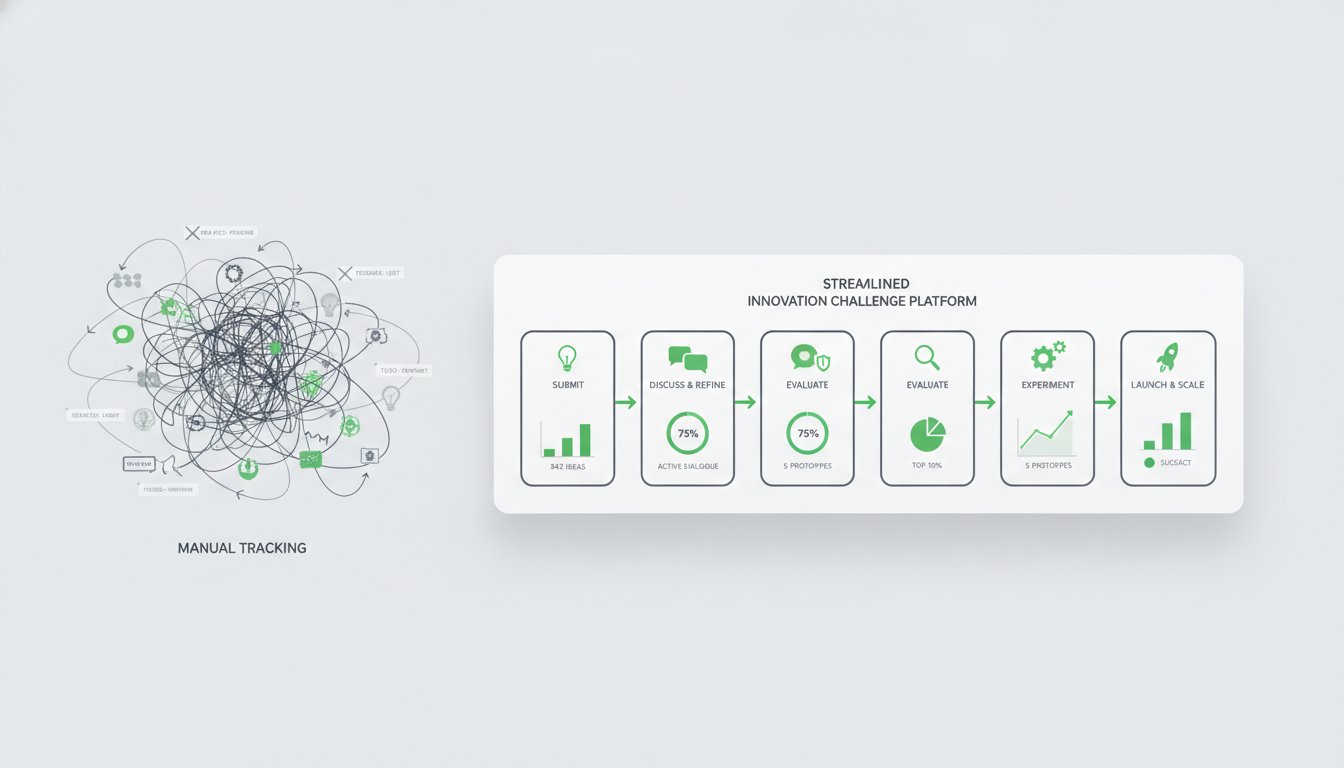
Structure creates the freedom to innovate. Without a repeatable process, even the most advanced internal innovation challenge platform becomes a source of organizational noise. High-performing enterprises don’t just ask for ideas; they deploy a rigorous 5-phase framework to move from initial problem identification to measurable financial gain. This systematic approach ensures that every challenge remains aligned with corporate strategy and delivers a documented return on investment.

  • Phase 1: Problem Definition – Move away from “give us your best ideas” toward “solve this specific operational bottleneck.” Precision is the primary driver of quality.
  • Phase 2: Targeted Crowdsourcing – Use your platform to segment audiences. Engaging the right stakeholders at the right time prevents participant fatigue and increases the relevance of submissions.
  • Phase 3: Collaborative Refinement – Raw concepts rarely survive contact with reality. Social features allow peers to build upon, critique, and strengthen initial ideas before they reach the evaluation stage.
  • Phase 4: Multi-Stage Evaluation – Shift from gut-feel decisions to data-driven scoring. This model is used by organizations like Challenge.gov to ensure transparency and objective solution sourcing in high-stakes environments.
  • Phase 5: Implementation and ROI Tracking – Close the loop. This final step transforms an idea from a digital submission into a verified business outcome.

Crafting the Perfect Challenge Statement

Success starts in the “Goldilocks Zone” of scope. If a challenge statement is too broad, you receive thousands of unactionable ideas. If it’s too narrow, you stifle creativity. Use a results-oriented formula: “How might we [action] for [stakeholder] to achieve [specific metric]?” This ensures every challenge aligns with your phases of continuous improvement, providing a clear path for executive buy-in and resource allocation.

Setting Evaluation Criteria That Predict Success

Transparency builds trust. Evaluate every submission based on three core pillars: feasibility (can we build it?), desirability (do users want it?), and viability (should we do it?). Providing a clear idea evaluation process and criteria prevents the “black hole” effect and keeps employees engaged for future events. If you’re ready to see how these automated evaluation phases look in practice, you can explore our platform's automated workflows to see how we remove the administrative burden from your team.

Essential Platform Features: The Technology Required to Scale Participation Without Chaos

Scaling an innovation program across a global enterprise requires more than just a good process; it requires a robust technical foundation. An internal innovation challenge platform must act as an intelligent filter rather than a simple bucket for raw data. Take NASA’s internal innovation challenge platform, NASA @ WORK, which has successfully sourced critical solutions since 2011. To achieve that level of longevity and impact, your technology must automate the heavy lifting that usually burns out innovation managers. Without the right features, you aren’t managing innovation; you’re just managing noise.

The Role of AI in Modern Innovation Management

Gamification: Why Competition Drives Participation

Engagement isn’t accidental; it’s engineered through social psychology. Gamification and incentives turn a corporate requirement into an engaging social experience. Leaderboards, digital badges, and voting mechanisms tap into the power of social proof. When employees see their peers participating and being recognized, they’re far more likely to contribute their own insights. For a deeper dive into these mechanics, see our guide on gamification for employee engagement to understand how to drive healthy competition. Remember that the most effective incentives often prioritize recognition and professional growth over simple monetary rewards.

Workflows and Security for the Global Enterprise

Flexibility and security are non-negotiable for modern organizations. Your internal innovation challenge platform must support custom stage-gate processes that adapt to the specific needs of different departments. A quick hackathon requires a different workflow than a multi-year R&D project. Finally, protect your internal intellectual property with enterprise-grade security. SOC 2 compliance and robust data protection ensure that your most valuable competitive advantages remain secure while still being accessible to the right internal stakeholders. This balance of transparency and security is what allows innovation to scale without compromising corporate integrity.

Measuring Impact: How to Quantify ROI and Long-Term Value from Internal Challenges

Stop measuring the wrong things. Many organizations fall into the trap of tracking “vanity metrics,” such as the total number of ideas submitted or the percentage of employees who logged in. While these numbers look good in a quarterly report, they don’t represent business value. A high-performance internal innovation challenge platform must prioritize “impact metrics” instead. These include verified cost savings, new revenue streams, and measurable improvements in operational efficiency. If your data doesn’t move the needle on your P&L statement, you aren’t measuring innovation; you’re measuring activity.

To provide a clear picture of success, you need an “Innovation Pipeline” view. This tracks the movement of concepts from the initial crowdsourcing phase through pilot testing and into final implementation. By monitoring this funnel, you can identify where ideas are stalling and address the “cost of inaction.” Calculating what your organization loses by ignoring a specific bottleneck often provides a more compelling case for executive stakeholders than the projected gains alone. Additionally, tracking year-over-year participation growth serves as a critical indicator of your organization’s cultural health and long-term commitment to problem-solving.

The Innovation ROI Calculator

Calculating the financial return of a single implemented idea requires a structured framework. Focus on tangible outcomes, such as the reduction of “Lean Waste” or the automation of manual tasks that previously consumed hundreds of labor hours. When you quantify these shifts, the value of your innovation program becomes undeniable. To simplify this process, you can access our idea management ROI calculator to determine the exact financial impact of your initiatives. Using data-backed calculations ensures your reporting remains authoritative and objective during budget reviews.

Closing the Loop: Feedback as a Retention Tool

Data shows that employees are significantly more engaged when they receive transparent feedback on their contributions. The “Implementation Gap,” which is the space between generating an idea and seeing it in action, is where most programs fail. Bridging this gap requires platform automation that keeps participants informed at every stage of the evaluation process. Failing to close this loop leads to the “black hole” effect mentioned earlier, which is one of the most common innovation failures seen in enterprise environments. When you demonstrate that employee insights lead to real change, you turn your innovation program into a powerful tool for talent retention.

Ready to transform your reporting from surface-level stats to deep financial insights? You can book a free demo today to see our ROI tracking and automated reporting features in action.

Why Ideawake is the Preferred Internal Innovation Challenge Platform for Modern Enterprises

Technology selection is the single most important factor in determining whether your innovation program survives its first year. Many legacy systems are essentially glorified databases that require months of configuration and extensive user training. Ideawake is engineered to eliminate this friction. Our internal innovation challenge platform is built for rapid deployment and high user adoption, ensuring that your team spends time solving problems rather than managing software. We provide a comprehensive, end-to-end solution that handles everything from the initial challenge launch to the final ROI measurement with surgical precision.

Choosing Ideawake means choosing a partnership for success. We recognize that software alone cannot fix a broken culture, which is why we provide the implementation support necessary to ensure your challenges actually deliver results. Our competitive edge is defined by three core outcomes: lower administrative overhead through automation, significantly higher employee participation rates, and a proven ability to document financial impact. We don’t just provide a portal; we provide a high-performance engine for organizational transformation.

Strategic Integration into Your Tech Stack

Innovation should not happen in a vacuum. To drive participation, your platform must fit seamlessly into the tools your employees already use every day. Ideawake facilitates this through a robust library of integrations, allowing ideas to flow between your innovation hub and your existing project management tools. We prioritize ease of access with Single Sign-On (SSO) and a mobile-first design that empowers frontline workers to contribute insights from the factory floor or the field. This commitment to accessibility is a primary reason why we are consistently ranked among the best innovation management software options for modern enterprises.

Taking the Next Step: Build vs. Buy

Many organizations initially attempt to build their own internal tools using generic platforms like SharePoint. This “build it yourself” approach often leads to the administrative chaos we have discussed in previous sections. Generic tools lack the specialized gamification, AI triage, and automated evaluation workflows that drive engagement. Research indicates that specialized platforms outperform generic internal builds by 10x in terms of employee participation and implemented ideas. Before committing internal R&D resources to a custom build, review our comprehensive build vs buy idea management software guide to understand the long-term total cost of ownership and the impact on your innovation ROI.

Transform Your Organization into a Problem-Solving Engine

Innovation is no longer a peripheral corporate activity; it’s a core operational discipline that requires a structured framework to succeed. By moving beyond the passive suggestion box and adopting a rigorous 5-phase template, you transform raw employee insights into implemented solutions that drive measurable growth. Integrating a dedicated internal innovation challenge platform ensures that your program scales without the administrative chaos of manual tracking or redundant submissions. You’ve seen how AI-driven triage and data-driven ROI reporting can bridge the implementation gap, turning potential ideas into verified financial assets.

Ideawake is SOC 2 Type II Certified and has been voted #1 for Ease of Use and Implementation by global enterprises that have used our system to drive millions in documented ROI. We provide the modern architecture and expert partnership necessary to help you outpace the competition and foster a high-performance culture of continuous improvement. Your organization’s next major breakthrough is likely already sitting in the minds of your frontline workers. It’s time to build the automated system that brings those insights to life and delivers the results your stakeholders demand.

Ready to launch your first challenge? Sign up for a demo of Ideawake today.

Frequently Asked Questions

What is an internal innovation challenge platform?

An internal innovation challenge platform is a structured software solution designed to crowdsource solutions to specific business problems from an organization’s own workforce. Unlike a passive suggestion box, it facilitates “active challenges” where leadership defines a clear problem statement and employees collaborate to solve it. It serves as a centralized engine for managing the entire lifecycle of an idea, from initial submission and peer refinement to final implementation and ROI tracking.

How do I choose the best platform for innovation challenges?

Prioritize three core pillars: ease of use, automation capabilities, and reporting depth. You need a solution that offers SOC 2 Type II security and integrates with your existing tech stack via SSO to ensure high adoption rates. A modern internal innovation challenge platform should also include AI-driven triage to handle high submission volumes without increasing your administrative workload. Focus on tools that offer a transparent evaluation process to maintain employee trust.

How long does it take to implement an innovation challenge platform?

Modern cloud-based solutions typically require two to four weeks for full deployment. While legacy enterprise software often demanded months of custom development and extensive training, current architectures allow for rapid onboarding and immediate challenge launching. This speed is critical because it allows organizations to respond to market shifts in real time. Implementation success is usually driven by how quickly you can move from software setup to your first live event.

Can we run a challenge without specialized software?

You can use spreadsheets or generic tools like SharePoint, but these methods often lead to administrative burnout and “innovation chaos.” Manual tracking lacks the automated evaluation workflows and gamification features that drive engagement, which often results in a 10x lower participation rate than specialized tools. Without a dedicated platform, you’ll likely struggle to prove the financial impact of your program to executive stakeholders, making it difficult to sustain long-term funding.

How do we motivate employees to participate in innovation challenges?

Motivation is driven by a combination of social recognition and transparent feedback loops. Use gamification elements like leaderboards and digital badges to tap into social proof and healthy competition. Research shows that employees are most engaged when they see their ideas move through a visible pipeline and receive direct acknowledgement from leadership. It’s about moving away from monetary rewards and toward professional growth and the opportunity to impact the company’s future.

What are the common pitfalls of internal innovation challenges?

The most frequent failure is the “black hole” effect, where employees never hear back about their submissions. This leads to immediate disengagement and a rapid drop in future participation. Other pitfalls include setting challenge statements that are too broad, failing to define evaluation criteria early, or ignoring the “cost of inaction” when reviewing potential solutions. Success requires closing the loop on every idea, whether it moves to implementation or not.

How does AI improve the innovation challenge process?

What is the typical ROI for an internal innovation challenge?

Typical ROI focuses on “impact metrics” such as verified cost savings, new revenue generation, and the reduction of lean waste. Organizations using a dedicated internal innovation challenge platform frequently document millions in returns by identifying operational bottlenecks that were previously invisible to leadership. With cloud-based solutions accounting for nearly 75% of deployments, the ability to track these financial gains in real time has become a standard requirement for any high-performing enterprise program.

Article by

Coby Skonord

Coby Skonord is the co-founder and CEO of Ideawake. Since 2013 he has worked with enterprise innovation, continuous improvement, and HR leaders to turn employee ideas into measurable business impact.

Stop Losing Employee Ideas: A Strategic Guide to Capturing Intellectual Capital

Stop Losing Employee Ideas: A Strategic Guide to Capturing Intellectual Capital
Coby Skonord|
June 27, 2026

Your organization is bleeding capital every time a brilliant insight is shared in a hallway and never documented. This isn’t just a missed opportunity; it’s a systemic failure that directly fuels financial waste and talent turnover. Disengaged employees worldwide account for an estimated $8.8 trillion in lost productivity, according to research from October 2025. To remain competitive, you must stop losing employee ideas to the black hole of manual spreadsheets and outdated suggestion boxes that offer no feedback or visibility.

You already know that your team’s best insights are often lost in the noise of daily operations, leading to an administrative nightmare that kills morale. This guide will show you how to stop the drain of valuable employee insights and transform them into measurable ROI through structured innovation management. We’ll explore how to replace manual tracking with a high-performance framework that captures intellectual capital at scale. By the end of this article, you’ll have a clear roadmap to turn raw suggestions into a high-impact engine for organizational growth and documented performance shifts.

Key Takeaways

  • Quantify the hidden financial and cultural costs of “idea leakage” and how it serves as a leading indicator for employee disengagement.
  • Identify the specific administrative friction points in manual tracking that cause high-value insights to disappear into organizational “black holes.”
  • Implement a strategic 5-step framework to stop losing employee ideas by centralizing intake and establishing transparent, stage-gate evaluation workflows.
  • Compare the scalability limits of spreadsheets against purpose-built innovation management platforms to determine the right fit for your organization.
  • Leverage AI and automation to close the feedback loop, ensuring every contributor receives timely updates without increasing management’s manual workload.

The High Cost of Lost Intellectual Capital

Organizations often suffer from “idea leakage,” a silent drain where frontline insights vanish before they reach decision-makers. This isn’t just a missed suggestion; it’s a failure to document and act on the very intelligence that drives competitive advantage. When you fail to stop losing employee ideas, you aren’t just missing a single spark of creativity. You’re signaling to your workforce that their expertise is optional. This creates a culture of silence that is a leading indicator of systemic disengagement.

The data confirms the financial stakes are high. Research from 2025 by Wellable shows that companies with highly engaged workforces are 23% more profitable. This profitability isn’t a byproduct of luck. It’s the direct result of a workforce that feels empowered to solve problems and optimize processes. Every lost idea is a missed opportunity for operational excellence and a tangible hit to your bottom line.

How Unheard Ideas Drive Talent Turnover

There’s a deep psychological link between having a “voice” and organizational commitment. When employees feel their contributions are ignored, they stop caring. We’ve moved far beyond the antiquated history of suggestion systems where a physical box collected dust in a breakroom. Modern talent expects transparency and a visible feedback loop. Your high-performers are the most likely to leave when their insights are sidelined. They don’t just want a paycheck; they want to see their professional expertise shape the company’s future. If they can’t innovate at your organization, they’ll find a competitor that listens.

The Financial Impact of Innovation Leaks

The cost of lost ideas often shows up as invisible waste in manual processes. Your frontline staff sees the “hidden factory” every day. They know where the redundant checks live and where the bottlenecks stall production. When these insights aren’t captured, you’re effectively subsidizing inefficiency. These leaks often fall into the 8 forms of lean waste, specifically the waste of non-utilized talent. It’s a massive oversight. Structured innovation management changes the math. Instead of viewing employee feedback as a burden, high-performance organizations treat it as a high-yield asset. By creating a system to stop losing employee ideas, you transform raw suggestions into a measurable engine for growth and cost reduction.

Why Organizations Struggle to Capture Employee Innovation

Capturing innovation isn’t a matter of intent; it’s a matter of architecture. Most organizations lose high-value insights because they lack a dedicated infrastructure for intellectual capital. When you rely on fragmented tools, you create an administrative nightmare that eventually kills the desire to contribute. To stop losing employee ideas, you must first identify the technical and psychological barriers that turn brilliant suggestions into forgotten artifacts.

The “Black Hole” effect is the primary reason innovation programs fail. This occurs when an idea is submitted but the contributor receives no status update. Without a visible feedback loop, the psychological contract between the employee and the organization breaks. They assume their input doesn’t matter. Administrative friction compounds this issue. Manual evaluation processes are slow, inconsistent, and prone to human error. If your system requires a manager to manually copy data from an email into a spreadsheet, you’ve already lost.

Informal capture methods like Post-it notes or whiteboard sessions are excellent for brainstorming but fail at scale. They lack the metadata required for strategic decision-making. Without a centralized database, your organization’s intellectual property remains trapped in silos. This fragmentation prevents you from identifying trends, avoiding duplicate efforts, and calculating the true ROI of your innovation efforts. If your current process feels like a manual struggle, you can see how automation streamlines capture.

The Failure of the Digital Suggestion Box

Email aliases and dedicated Slack channels are where great ideas go to die. They lack the transparency required for a high-performance culture. Top-down feedback loops are inherently opaque, leaving employees to wonder if their ideas were even read. Many innovation failures originate here. It’s not that the ideas were bad; it’s that the capture method was too chaotic to allow for proper execution. These digital boxes offer no way to track progress, leading to a complete breakdown in trust.

The Manager Bottleneck

Managers are often the unintended gatekeepers of innovation. Under the weight of initiative fatigue, many see new ideas as additional tasks rather than solutions. If every suggestion requires a manager’s immediate attention, the system will eventually clog. As noted in Inc. Magazine, effective suggestion systems must distribute the evaluation load to remain sustainable. Transitioning to a model that includes peer-to-peer evaluation can bypass this bottleneck entirely, allowing the best ideas to rise to the top without draining management resources.

Comparing Solutions: Manual Tracking vs. Idea Management Software

Many leaders attempt to hack together a solution using Excel or shared documents. It works for five ideas. It fails at fifty. To stop losing employee ideas, you need a system that scales without adding administrative headcount. Spreadsheets are static repositories, not active drivers of innovation. They lack the automation required to move a concept from a raw suggestion to a finished project, often resulting in a graveyard of unimplemented potential.

The choice between building a custom tool and purchasing a dedicated idea management platform is a pivot point for your strategy. Custom software often leads to bloated development timelines and maintenance nightmares that distract your IT team. Specialized platforms offer immediate implementation and a significantly lower Total Cost of Ownership (TCO). These tools are built specifically for the innovation lifecycle, providing mobile accessibility that ensures frontline workers can submit insights the moment they occur, rather than waiting until they reach a desktop.

The Hidden Costs of Ideawake vs. Spreadsheets

Excel is only free if you value your time at zero. Manual data entry and fragmented reporting turn innovation managers into data clerks. Our Ideawake vs. Spreadsheets comparison highlights how manual systems fail to provide real-time ROI tracking. You can’t prove the value of your program to stakeholders if your data is trapped in disconnected tabs. High-performance organizations use automation to eliminate this friction, allowing managers to focus on execution rather than administrative upkeep.

Key Features of a Modern Idea Management Platform

Software doesn’t just store data; it drives behavior. Gamification elements like voting and leaderboards turn participation into a high-energy cultural shift. This social proof is vital for sustained engagement. Crucially, modern tools utilize structured idea evaluation criteria to ensure every submission is judged objectively. This protects institutional knowledge. When a key manager leaves, their evaluation history and the ideas they championed stay in your centralized database. Your intellectual capital remains secure, searchable, and ready for implementation regardless of staff turnover.

A 5-Step Framework to Stop Losing Employee Ideas

Turning intent into action requires a repeatable architecture. To stop losing employee ideas, you must shift from a passive collection mindset to an active management strategy. This framework provides the tactical steps necessary to capture, evaluate, and implement insights while maintaining high levels of engagement across your workforce. It works because it replaces individual effort with systemic reliability.

  • Step 1: Centralize Intake. Eliminate fragmented feedback by creating a single, authoritative source for all submissions. This removes the chaos of disconnected emails and verbal suggestions.
  • Step 2: Implement Stage-Gate Evaluation. Use transparent workflows where ideas move through predefined phases. This ensures consistency and prevents the manager bottleneck from stalling progress.
  • Step 3: Incentivize Participation. Use gamification and public recognition to drive contribution volume. High-performance cultures reward the behavior they want to see repeated.
  • Step 4: Automate Feedback Loops. Ensure every contributor receives a status update regardless of the outcome. Automation is the only way to scale this without increasing administrative overhead.
  • Step 5: Measure and Communicate ROI. Track the financial impact of every implemented idea. Sharing these wins validates the program and secures long-term executive support.

Standardizing the Idea Submission Process

A well-designed submission form is the foundation of quality data. Instead of asking for generic suggestions, design forms that require employees to articulate the specific problem and the potential impact of their solution. This “why-centric” approach filters out noise and highlights high-value opportunities. Leveraging idea crowdsourcing allows you to gather diverse perspectives on these submissions, refining raw concepts into actionable projects. You can also focus creativity by launching specific innovation challenges that target your organization’s most pressing strategic goals.

Building a Culture of Continuous Improvement

Innovation shouldn’t be an annual event. Transitioning to a formal continuous improvement process embeds problem-solving into the daily workflow. Executive sponsorship is the catalyst for this shift. When leaders publicly validate and reward contributions, they signal that innovation is a core competency, not a side project. This validation is critical for retention. High-performers stay when they see their work making a documented difference. If you’re ready to build this framework in your organization, you can book a free demo today to see these steps in action.

Ideawake: Closing the Loop with AI and Automation

Ideawake serves as the modern architecture for enterprise innovation, providing the necessary structure to stop losing employee ideas at every level of the organization. While previous sections detailed the cultural and procedural shifts required, this platform provides the technical backbone to sustain those changes. It integrates directly with existing enterprise workflows, such as Microsoft Teams and Slack, to meet employees where they already work. This removes the friction that often kills participation before it begins.

The platform’s capability to track an idea from the initial submission through to the final ROI ensures that no insight is ever lost in an organizational “black hole.” This visibility is what builds long-term trust and high-performance cultures. By centralizing intellectual capital, leaders can finally move away from the administrative nightmare of manual tracking and focus on high-impact execution.

Leveraging AI for Idea Evaluation

Executing with Confidence

Capture is only half the battle. Execution is where the financial value is realized. A structured implementation process is essential for turning raw concepts into operational reality. Ideawake provides the project management framework to move ideas through the stage-gate evaluation discussed earlier, ensuring accountability at every step. To validate the success of these initiatives, managers can use the ROI calculator to quantify the exact impact on the bottom line. This data-driven approach turns innovation from a subjective exercise into a core business driver. It’s time to replace fragmented tools with a high-performance system designed for scale. You can sign up for a demo today to stop losing employee ideas and start building a measurable engine for growth.

Transforming Intellectual Capital into Measurable Growth

The decision to stop losing employee ideas is a fundamental commitment to organizational high performance. We’ve established that relying on manual spreadsheets creates an administrative burden that kills innovation before it can scale. By implementing a centralized framework, you replace the “black hole” of unheard suggestions with a transparent, automated engine for continuous improvement. This shift doesn’t just protect your institutional knowledge; it turns every frontline insight into a potential driver of operational excellence.

Ideawake provides the modern architecture needed to capture this untapped potential. Trusted by global enterprise leaders, our platform utilizes AI-driven evaluation to reduce administrative time by 80%, allowing your managers to focus on high-impact execution. With end-to-end ROI tracking for every implemented idea, you can finally quantify the financial value of your team’s creativity with absolute certainty.

Don’t let your organization’s next breakthrough vanish into a hallway conversation. Stop losing ideas and start driving ROI with Ideawake—Book your demo today. Your team is ready to contribute. It’s time to give them the platform they deserve.

Frequently Asked Questions

What is the most effective way to capture employee ideas?

Centralized digital platforms are the gold standard for modern organizations. They replace fragmented emails and hallway chats with a structured intake form that captures the specific problem and its potential impact. This architecture allows for real-time tracking and ensures every submission is documented in a searchable database rather than lost in a manager’s inbox.

Why do most employee suggestion programs fail?

Programs fail primarily due to the “black hole” effect, where contributors receive no feedback or status updates. When employees feel their input is ignored, they stop participating entirely. Additionally, manual evaluation processes often create a manager bottleneck that stalls progress and kills the momentum necessary for a high-performance culture.

How do you incentivize employees to share their ideas?

Use a combination of gamification and public recognition to drive engagement. High-performance organizations implement leaderboards, voting systems, and tangible rewards to validate contributions. Demonstrating that an idea was actually implemented and had a measurable impact is often the most powerful incentive for long-term participation.

How much time does it take to manage an idea management platform?

Modern platforms utilize AI to reduce administrative overhead by up to 80%. Automated duplicate detection and trend analysis allow innovation managers to focus on high-level strategy rather than manual data entry. Total management time typically scales down as the system automates feedback loops and evaluation workflows.

Can idea management software integrate with Slack or Microsoft Teams?

Yes, top-tier platforms integrate directly with these enterprise collaboration tools to meet employees where they already work. This integration allows users to submit and vote on ideas without leaving their daily communication channels. It significantly lowers the barrier to entry for frontline workers who don’t spend their day at a desk.

How do you measure the ROI of an employee idea?

ROI is measured by tracking specific outcomes such as cost savings, hours recovered, or new revenue generated from implemented concepts. Using a dedicated ROI calculator allows you to quantify these performance shifts and present clear financial data to stakeholders. This proves the program’s bottom-line impact with absolute certainty.

What is the difference between creativity and innovation in the workplace?

Creativity is the generation of novel concepts, while innovation is the successful implementation of those concepts to create tangible value. You must stop losing employee ideas by moving beyond simple brainstorming and establishing a structured execution pipeline. This transforms creative sparks into documented organizational results and measurable growth.

How do I handle unfeasible employee ideas without discouraging them?

Provide transparent, objective feedback that explains the specific criteria used for the decision. Instead of a flat rejection, frame the response around current strategic goals or resource constraints. This maintains the psychological contract and encourages the contributor to refine their next submission based on the organization’s practical needs.

Article by

Coby Skonord

Coby Skonord is the co-founder and CEO of Ideawake. Since 2013 he has worked with enterprise innovation, continuous improvement, and HR leaders to turn employee ideas into measurable business impact.

Centralized Idea Management Database: The 2026 Guide to Your Innovation Value Vault

Centralized Idea Management Database: The 2026 Guide to Your Innovation Value Vault
Coby Skonord|
June 22, 2026

How much potential capital is sitting idle in your employees’ heads simply because there’s no place to capture it? With the enterprise idea and innovation management market projected to reach $14.94 billion by 2034, the cost of “lost” innovation has never been higher. You’ve likely felt the frustration of discovering two departments spent weeks solving the same problem independently or finding a brilliant suggestion buried in an unread email thread. This fragmentation doesn’t just waste time; it actively drains your organization’s competitive edge.

This guide shows you how to stop the leak by building a centralized idea management database that acts as a high-yield value vault for your company. We’ll explore how to eliminate duplicate efforts, track ROI from submission to implementation, and create a single source of truth that turns scattered thoughts into measurable growth. You’ll learn how to transform your innovation pipeline into a predictable asset that drives cross-departmental collaboration and ensures no high-impact suggestion ever falls through the cracks again.

Key Takeaways

  • Learn why the traditional suggestion box is obsolete and how a centralized idea management database serves as a secure “Value Vault” for your organization’s intellectual capital.
  • Discover the four critical layers of innovation architecture; capture, evaluation, implementation, and ROI tracking are essential for any high-performance system.
  • Understand the “Spreadsheet Trap” and why manual tools like Excel fail to scale, often creating version control nightmares and fragmented data.
  • Master the “Anatomy of an Idea” by identifying the specific metadata and strategic tags required to align every submission with your core business objectives.
  • Explore how to leverage modern platforms to centralize organizational intelligence and track the full lifecycle of an idea from submission to tangible ROI.

Beyond the Suggestion Box: Defining the Centralized Idea Management Database

Traditional suggestion boxes are where good ideas go to die. For the 2026 enterprise, a centralized idea management database functions as the definitive source of truth for all intellectual capital, ensuring that no insight is lost to the void of unread emails or siloed Slack channels. It’s a fundamental shift from storing text to building a high-performance asset. This system transforms unstructured data into structured intelligence, allowing leaders to see the full trajectory of an innovation from its inception to its final impact on the balance sheet.

Centralization is the only way to scale. Without it, you aren’t managing innovation; you’re just managing noise. By consolidating every suggestion into a single searchable repository, you eliminate the risk of duplicate efforts and ensure that every department has visibility into the organization’s collective brainpower. This isn’t just a folder of files. It’s a dynamic “Value Vault” that protects your company’s most valuable resource: its future potential.

The Shift from Passive Collection to Active Management

Passive feedback loops fail because they lack direction. If you simply ask for “ideas,” you’ll likely receive a flood of low-quality, irrelevant noise that creates more work for your managers. High-performance organizations have moved toward a proactive, challenge-based model. This transition is a core component of what is computing innovation, utilizing digital frameworks to solve specific, high-priority business problems. Instead of waiting for inspiration to strike, you direct your team’s creative energy toward the obstacles that are currently hindering growth. This active management approach ensures that every submission has a clear path to implementation and a defined purpose within the broader corporate strategy.

Why Your Organization Needs a “Value Vault” Now

Intellectual waste is the silent killer of enterprise growth. When ideas are ignored or forgotten, the cost isn’t just the lost revenue from that specific improvement; it’s the erosion of employee trust. Research confirms that the benefits of employee ideation programs extend far beyond the ideas themselves. These programs are critical for retention and cultural health, making employees feel like active participants in the company’s success. A centralized idea management database ensures that every contribution is tracked, evaluated, and acknowledged. This transparency breaks down functional silos, allowing a solution developed in logistics to be discovered and adapted by the marketing team. It turns collaboration into a byproduct of your workflow rather than an additional task for your staff to manage.

The Architecture of Innovation: Core Components of a Modern Idea Hub

A high-performance centralized idea management database is not a static repository; it is a dynamic engine designed to move intellectual capital through a rigorous, transparent lifecycle. To function as a true Value Vault, the architecture must support four distinct layers: Capture, Evaluation, Implementation, and ROI Tracking. Without these interconnected stages, ideas remain stagnant. A modern hub uses cloud-based architecture to ensure global accessibility, allowing distributed teams to contribute and collaborate in real time. This accessibility is secured by role-based access control (RBAC), which protects sensitive strategic data while maintaining an open, inclusive environment for general submissions.

For the 2026 enterprise, scalability depends on shifting from manual oversight to automated intelligence. By structuring the database around these core components, leadership gains a birds-eye view of the entire innovation pipeline. You can see exactly where bottlenecks occur, which departments are over-performing, and how much potential value is currently in development. This level of visibility turns innovation from a “black box” into a predictable, manageable business process.

AI-Enhanced Categorization and Deduplication

The biggest threat to a growing database is the “duplicate work” trap. In large organizations, it’s common for two teams to submit nearly identical solutions to the same problem. Utilizing AI tools for innovation managers solves this by using natural language processing (NLP) to cluster related ideas into themes automatically. These tools identify similarities in intent, not just keywords, and can surface “forgotten” ideas from past years that have suddenly become relevant due to new market conditions. This ensures your centralized idea management database remains clean, actionable, and free of redundant clutter.

The Role of Gamification and Engagement Metrics

A database is only as valuable as the data flowing into it. To maintain a high volume of quality submissions, the architecture must incorporate gamification elements like peer voting, leaderboards, and public recognition. These interactive features transform the submission process from a chore into a competitive, rewarding experience. Engagement metrics allow managers to identify “innovation champions” within the frontline staff, while prizes and recognition programs reinforce the idea that the database is a legitimate path for professional impact. If you want to see how these architectural elements work together to drive measurable results, you can schedule a platform walkthrough to see the system in action.

Ad-Hoc Tools vs. Centralized Repositories: Why Spreadsheets Fail at Scale

Relying on “free” tools is one of the most expensive mistakes an innovation leader can make. While Excel or Google Sheets might seem like a low-barrier starting point, they quickly transform into a graveyard for high-potential insights. Once your collection exceeds 50 entries, manual tracking becomes unmanageable. Version control nightmares emerge as different stakeholders save local copies, leading to fragmented data and contradictory status reports. A centralized idea management database eliminates this friction by providing a single, real-time environment where every update is instantly visible to the entire organization.

The Ideawake vs. Spreadsheets Analysis

The difference between manual tracking and purpose-built systems is measurable in hours and dollars. When you compare idea management platforms against spreadsheets, the administrative time-savings are often staggering. Administrators typically reclaim 10 or more hours per week by automating status updates, notifications, and reporting. Manual systems suffer from “data decay” because they aren’t updated in real-time; by the time a manager reviews a spreadsheet, the information is often weeks old. A centralized idea management database ensures that your data remains fresh and actionable, allowing for rapid decision-making that spreadsheets simply can’t support.

The Build vs. Buy Dilemma

It’s tempting for enterprise IT departments to suggest building a custom internal database to “save money.” However, the build vs buy idea management software framework reveals that DIY solutions are frequently more costly in the long run. Internal builds often lack specialized features like native gamification, AI-driven deduplication, and sophisticated ROI tracking. The ongoing maintenance and security patches required for a custom tool drain IT resources that should be focused on your core business. Buying a proven architecture allows you to launch in days rather than months, ensuring you start capturing value immediately instead of waiting for a development cycle to conclude.

Maximizing the “Value Vault”: Best Practices for Database Structure and Metadata

A database without structure is just a digital junkyard. To turn a centralized idea management database into a high-yield asset, you must define the “Anatomy of an Idea” with surgical precision. This means capturing specific data points at the moment of submission that allow for objective comparison later. Strategic alignment is not optional; every idea should be tagged against specific business objectives like operational efficiency, cost reduction, or customer retention. This ensures that your innovation pipeline isn’t just full, but focused on the metrics that drive the C-suite’s agenda.

Tracking the lifecycle of an idea from a rough draft to measured ROI is what separates high-performance organizations from the mediocre. You need a transparent workflow where every stakeholder knows exactly where an idea stands. This is where a rigorous idea selection criteria for innovation and idea evaluation process becomes your most powerful filter. It maintains the quality of your database by ensuring only the most viable, high-impact suggestions consume your implementation resources, preventing the “clutter” that often kills manual systems.

Standardizing the Submission Process

Data integrity begins at the top of the funnel. A structured submission process ensures that you collect enough information to make an informed decision without overwhelming the contributor. Required fields should focus on the specific problem, the proposed solution, and the estimated impact. If you ask for too little, your managers waste hours chasing details; if you ask for too much, your submission rates will plummet. The goal is to capture the essence of the value proposition immediately so it can be categorized and prioritized by the system’s intelligence layers.

Metadata for ROI and Impact Measurement

You cannot manage what you don’t measure. Every entry in your centralized idea management database must eventually be attached to specific KPIs that justify the program’s existence. This includes tracking the actual cost to implement against the expected value over a 12 or 24-month period. Utilizing an idea management ROI calculator allows you to transform abstract suggestions into hard financial data. This evidence-driven approach is the only way to secure long-term buy-in from executive leadership and prove the tangible worth of your innovation efforts.

To see how to structure your own Value Vault for maximum financial impact, book a free platform demo today.

Executing the Vision: How Ideawake Centralizes Organizational Intelligence

Ideawake is engineered to serve as the definitive architecture for the entire innovation lifecycle. By moving beyond the limitations of manual tracking, it provides a purpose-built centralized idea management database that turns raw suggestions into high-yield organizational assets. The platform focuses on eliminating the friction between an idea’s inception and its final implementation. With a focus on speed, the implementation process is designed to integrate into your existing workflows in days, not months. This is a significant departure from the slow deployment cycles typical of legacy enterprise software, which often takes quarters to configure and launch. By choosing a modern SaaS framework, you ensure that your team can begin contributing value almost immediately.

The suite of product features available ensures that every stage of the “Value Vault” is fully automated. From AI-driven deduplication to sophisticated scoring rubrics, the system handles the heavy lifting so your leadership can focus on decision-making. This efficiency is critical in a market for enterprise idea management software that is projected to grow at a CAGR of 16.66% through 2034. It isn’t just about collecting data; it’s about creating a predictable engine for growth that is backed by hard evidence and real-time analytics. Organizations that invest in a collaborative idea management platform are better positioned to harness cross-departmental synergy and convert fragmented feedback into a structured, high-octane innovation engine.

End-to-End Visibility from Submission to ROI

Visibility is the cornerstone of accountability. Ideawake allows you to track the exact financial impact of every implemented suggestion, closing the loop between employee creativity and the balance sheet. The platform’s AI capabilities significantly reduce the administrative burden by automatically categorizing entries and identifying themes across thousands of submissions. This automation ensures your database stays organized without requiring a dedicated full-time manager. To ensure a seamless data flow, the system integrates with your existing tech stack, allowing ideas to move from communication tools like Slack or Microsoft Teams directly into your centralized idea management database without manual intervention. This connectivity prevents the “data silos” that often occur when innovation is treated as a separate, isolated task rather than a core part of the daily workflow.

Your Next Steps: Building the Foundation

The first step toward transformation is acknowledging where your current “idea silos” exist. Scattered emails and forgotten spreadsheets are costing your organization potential revenue every day. We invite you to sign up for a demo to see how a structured database can revolutionize your innovation pipeline. For those looking to deepen their understanding of these frameworks, our library of innovation resources provides the data and best practices needed to lead a successful cultural shift. Stop settling for fragmented feedback and start building your Value Vault today.

Transforming Intellectual Capital into Measurable Growth

The era of the passive suggestion box is over. To compete in the 2026 enterprise landscape, you need more than just good intentions; you need a system that captures, evaluates, and tracks insights with surgical precision. Transitioning to a centralized idea management database isn’t just an IT upgrade. It’s a strategic shift that ensures your organization’s collective intelligence is never wasted. By standardizing your submission process and implementing rigorous idea selection criteria for innovation, you turn a chaotic stream of suggestions into a predictable pipeline of high-yield assets.

Ideawake provides the modern architecture necessary to realize this vision. Our platform reduces administrative overhead by up to 80%, allowing your managers to focus on high-level strategy rather than manual data entry. With AI-driven deduplication and categorization, your database remains clean and actionable, while end-to-end ROI tracking provides the hard evidence needed to justify every implementation. Don’t let your next breakthrough get lost in a spreadsheet or a chat thread. Start building your innovation Value Vault with a free Ideawake demo today. Your team has the answers; it’s time you had the system to listen.

Frequently Asked Questions

What is the difference between an idea management database and a suggestion box?

A suggestion box is a passive repository that lacks transparency and tracking, while an idea management database is an active lifecycle engine. Suggestion boxes often lead to “intellectual waste” because there is no formal process for feedback or implementation. A database provides a structured environment where every submission is categorized, evaluated against KPIs, and tracked from inception to implementation, ensuring that high-value insights are never lost in a void of unread notes.

Can I use existing tools like Microsoft SharePoint or Excel as an idea database?

You can use these tools for small-scale projects, but they quickly become unmanageable once you exceed 50 ideas. Excel lacks real-time collaboration and automated workflows, leading to version control nightmares and fragmented data. A centralized idea management database provides specialized features like native gamification and automated status updates that manual tools cannot replicate. Relying on spreadsheets often costs administrators 10 or more hours per week in manual data cleaning.

How does AI improve the functionality of a centralized idea management database?

Artificial Intelligence eliminates the administrative burden of manual categorization and deduplication. By utilizing natural language processing, the system automatically clusters similar ideas into themes and identifies redundant submissions before they reach the evaluation stage. This ensures that your centralized idea management database remains clean and actionable. AI can also surface historical data from past challenges that may have become relevant due to new market conditions, maximizing the value of your existing intellectual capital.

Who should have access to the centralized idea database within a large enterprise?

Broad participation is critical for a healthy innovation culture, but access must be governed by role-based controls. Frontline employees should have the ability to submit, vote, and comment on ideas to drive engagement. Conversely, sensitive financial data and ROI tracking should be restricted to managers and executive leadership. This balance encourages organization-wide collaboration while protecting strategic information and ensuring that the evaluation process remains objective and secure.

How do you prevent the database from becoming a “black hole” where ideas go to die?

Transparency and automated feedback loops are the best defenses against the “black hole” effect. Every contributor should receive real-time notifications as their idea moves through the evaluation lifecycle. By establishing clear timelines for review and providing constructive feedback for rejected ideas, you maintain trust and momentum. When employees see that their contributions are being actively managed and implemented, they are far more likely to remain engaged in the long term.

What are the most important metrics to track within an innovation database?

You must track both activity and impact metrics to prove the value of your program. While submission counts and participation rates measure cultural health, the most critical data points are the “Implementation Rate” and “Realized ROI.” Tracking the actual cost to implement against the financial gain over 12 to 24 months provides the hard evidence needed to secure executive buy-in. These metrics transform abstract creativity into a tangible business asset that justifies continued investment.

How long does it take to implement a centralized idea management system?

Modern SaaS platforms can be configured and launched in as little as 48 hours, though full enterprise adoption typically spans 30 to 90 days. This timeline includes setting up custom evaluation rubrics, integrating with your existing tech stack, and training internal champions. This speed is a significant advantage over legacy enterprise software, which often requires months of custom development. Rapid deployment allows you to start capturing value and measuring impact almost immediately.

Is it possible to integrate the idea database with our current project management software?

Yes, seamless integration is a core requirement for any high-performance innovation hub. Connecting your database to tools like Jira, Asana, or Microsoft Teams ensures that approved ideas move directly into your development pipeline without manual data entry. This connectivity ensures that innovation is treated as a standard part of the operational workflow rather than an isolated task. It allows for a seamless data flow that keeps all stakeholders aligned on the progress of high-impact projects.

Article by

Coby Skonord

Coby Skonord is the co-founder and CEO of Ideawake. Since 2013 he has worked with enterprise innovation, continuous improvement, and HR leaders to turn employee ideas into measurable business impact.

Structured Idea Submission Process: The 2026 Checklist for Enterprise Innovation

Structured Idea Submission Process: The 2026 Checklist for Enterprise Innovation
Coby Skonord|
June 19, 2026

A 2026 survey of operations leaders found that while 85% believe they’re ahead of their peers in digital transformation, a staggering 89% state their technology investments haven’t actually delivered the promised results. It’s a sobering reality for enterprise leaders who find themselves buried under administrative “idea debt” from hundreds of irrelevant suggestions that lead nowhere. Without a structured idea submission process, your innovation efforts are likely just expensive noise that drains resources without moving the needle on your strategic objectives.

You probably recognize the frustration of watching high-potential employees stop contributing because their feedback feels like it’s entering a black hole. We’re going to help you fix that by mastering the “front door” of innovation with a framework designed for the 2026 landscape. You’ll learn how to build a submission workflow that filters out distractions, ensures every concept maps to a business need, and provides the clear data you need for ROI reporting. We’ll explore how to bridge the execution gap using the latest ISO 56001 standards to turn your innovation program into a disciplined, high-performance portfolio.

Key Takeaways

  • Replace passive suggestion boxes with active workflows to eliminate the “idea debt” that stalls organizational momentum.
  • Build a submission form that requires clear problem statements and early impact quantification to filter out irrelevant noise.
  • Master a structured idea submission process by launching targeted innovation challenges that align employee creativity with strategic goals.
  • Sustain participation by closing the feedback loop through automated updates, ensuring contributors never feel their ideas hit a “black hole.”
  • Transition from spreadsheets to automated platforms like Ideawake AI to deduplicate entries and scale your innovation portfolio effectively.

Beyond the Suggestion Box: Why Your Submission Process Needs Structure

Enterprise innovation often stalls not because of a lack of creativity, but because of an inability to filter the intake. Traditional suggestion boxes act as an innovation graveyard where raw concepts are left to decay without review. This leads to “idea debt,” a state where a massive backlog of unreviewed submissions creates an administrative bottleneck that kills organizational momentum. Managing this requires a shift from a quantity-first to a quality-first mindset, ensuring that innovation management focuses on strategic value rather than just raw volume.

The psychological impact on your workforce is significant. When employees contribute and hear nothing back, they experience the “black hole” effect, which is the primary reason engagement levels drop after the initial launch of a program. This silence is rarely intentional; it’s usually caused by poor data quality in the intake phase that makes evaluation impossible. By establishing a structured idea submission process, you provide the data needed for quick, decisive feedback. This transparency is essential to realizing the long-term benefits of employee ideation programs and sustaining a culture of contribution.

The High Cost of Unstructured Data

Innovation committees often spend excessive hours reviewing vague or incomplete requests. Industry observations suggest that reviewing a single unstructured idea can cost 15 to 30 minutes of leadership time just to understand the basic intent. In a large enterprise, this administrative noise hides high-potential “black swan” ideas that could redefine your market position. Manual data entry and constant follow-ups for missing information are the enemies of growth. When your innovation managers act as data clerks, they aren’t driving the transformative shifts your organization needs to stay competitive.

Defining the “Structured” Advantage

Standardization acts as a catalyst for objective decision-making and faster implementation cycles. A structured idea submission process ensures every idea arrives with the specific context needed for a fast “yes” or “no” from stakeholders. This isn’t about adding unnecessary bureaucracy. It’s about building a high-performance culture that empowers staff to refine their concepts before they hit the submit button. When the criteria for success are visible at the point of entry, you naturally filter out distractions and focus your resources on the projects that deliver the highest ROI.

The Essential Checklist for a Structured Idea Submission Form

Your submission form is the filter that determines the purity of your innovation pipeline. To move beyond the administrative bottlenecks discussed earlier, you must design an intake process that forces contributors to think like business owners. This isn’t about creating barriers; it’s about following best practices for an employee suggestion program to ensure every entry is actionable. When the form is designed correctly, it serves as a self-selection tool that naturally discourages noise while elevating high-potential concepts.

A high-performance submission checklist must include these five pillars:

  • The Problem Statement: Require submitters to articulate the specific pain point they’re addressing. If they can’t define the “why,” the “what” is irrelevant.
  • Impact Quantification: Ask for estimated time savings, revenue growth, or cost reduction. This shifts the conversation from “this sounds interesting” to “this creates value.”
  • Resource Requirements: Force a high-level look at what it takes to execute. Does it require a new software license or a shift in team priorities?
  • Strategic Alignment Check: Use a simple dropdown to link the idea to a current corporate objective, such as “Sustainability” or “Operational Excellence.”
  • Supporting Evidence: Allow for attachments or internal references to validate the claim. Data-backed ideas should always move to the front of the line.

If you’re ready to see how these forms look in practice, you can see a live example of a structured workflow that handles these requirements automatically.

Step 1: The Problem-Solution Fit

Innovation fails when we fall in love with solutions instead of problems. Every submission must address a specific “job to be done.” If a submitter can’t articulate the pain point, the idea isn’t ready for committee review. Use branching logic in your digital forms to guide the user. If they select “Operational Efficiency,” the form should automatically ask for estimated time savings. This keeps the experience focused and prevents “form fatigue” while gathering the deep data your leadership team needs to make informed decisions.

Step 2: Preliminary Impact Assessment

Don’t wait for the evaluation phase to score an idea. Force the submitter to perform a self-assessment during the intake. By standardizing the value fields, you can perform apples-to-apples comparisons across different departments. Integrating specific idea selection criteria for innovation directly into the intake form allows for pre-scoring. This empowers innovation managers to prioritize a structured idea submission process based on potential ROI rather than the seniority of the person who submitted it.

Strategic Alignment: Ensuring Submissions Move the Needle

Strategic alignment is the bridge between raw employee creativity and tangible corporate results. It’s the process of ensuring every submission, regardless of its origin, directly supports your organization’s “North Star” objectives. Without this connection, even a structured idea submission process risks becoming a playground for pet projects that don’t contribute to the bottom line. You must move beyond passive collection and start steering the creative energy of your workforce toward the high-stakes problems that leadership is actually trying to solve.

The most effective way to achieve this is through the implementation of Innovation Challenges. These are time-bound, goal-oriented sprints that focus on a specific business need, such as reducing customer churn or improving supply chain resilience. By narrowing the scope, you provide the constraints that foster more relevant creativity. This is where the Chief Innovation Officer plays a vital role. They are responsible for setting the parameters of these challenges, ensuring they reflect the current strategic roadmap and have the necessary executive sponsorship to succeed.

To handle the volume of ideas that these targeted challenges generate, automated tagging and categorization are essential. Your submission workflow should automatically route ideas to the relevant department based on the tags or categories selected during the intake. This prevents the administrative bottlenecks that kill momentum and ensures that subject matter experts are the ones reviewing the concepts. It transforms the “front door” of innovation into a high-performance sorting machine that prioritizes impact over volume.

Targeted Ideation vs. Open-Ended Collection

While an “Always On” portal is useful for capturing spontaneous improvements, it often results in lower-quality submissions compared to targeted challenges. When employees are given specific prompts rather than a general invitation to innovate, the relevance and implementation potential of those ideas increase significantly. A well-designed system will assign a “Strategic Fit” score to each submission. This allows you to automatically prioritize ideas that align with your quarterly OKRs, ensuring that your resources are always focused on the projects with the highest potential for strategic ROI.

Filtering for Incremental vs. Radical Innovation

Your submission process must be flexible enough to handle different risk profiles. A form designed for a “quick win” improvement shouldn’t be identical to one meant for a long-term moonshot. By distinguishing between incremental vs. radical innovation at the point of entry, you can adjust the evaluation criteria and resource requirements accordingly. This ensures the “Front Door” doesn’t accidentally slam shut on high-risk, high-reward concepts just because they don’t meet the immediate ROI requirements of a standard project.

Building a Feedback Loop to Sustain Long-Term Participation

The “black hole” effect is the primary reason enterprise innovation programs fail. When an employee spends time articulating a solution only to receive zero feedback, they don’t just feel ignored; they feel undervalued. This silence kills engagement faster than a lack of budget ever could. To maintain momentum, your structured idea submission process must include an automated feedback loop. By leveraging a structured workflow, you can trigger status updates at every stage of the evaluation funnel. This ensures that the submitter is never left wondering if their contribution was even opened.

Closing the loop is particularly critical when the answer is “No.” Communicating a rejection with clear, data-backed reasoning actually encourages future participation. It shows the employee that their idea was evaluated seriously against the defined criteria we established in the previous sections. This level of professional respect is what keeps the best talent engaged in the process. If you’re struggling to manage these communications manually, you can book a free demo of our automated workflow tools to see how to close the loop at scale without increasing your administrative burden.

Transparency as a Performance Driver

A public “Idea Board” transforms innovation from a private suggestion into a collective effort. When status changes are visible to the entire organization, it drives accountability for reviewers and confidence for submitters. This visibility also serves a practical purpose: it drastically reduces duplicate submissions. If a staff member sees a similar concept already in the pipeline, they can choose to collaborate rather than compete. Encouraging peers to comment and strengthen ideas before they reach the committee level creates a culture of collaborative refinement. This higher-quality data makes the eventual decision-making process significantly more efficient.

Incentives and Recognition Beyond the Prize

Scaling Success: Transitioning from Manual Processes to Automated Platforms

Manual systems like spreadsheets and email are the primary causes of administrative rot once an organization crosses the 50-employee threshold. At this scale, the sheer volume of data makes it impossible to maintain a structured idea submission process without dedicated tooling. You aren’t just managing suggestions; you’re managing a complex database that requires constant maintenance and oversight. Relying on legacy tools often leads to lost data, missed opportunities, and a complete lack of visibility for stakeholders. It’s a recipe for mediocrity that high-performance organizations can’t afford. Building a centralized idea management database is the foundational step that transforms this fragmented landscape into a single source of truth for your entire innovation portfolio.

This is where Ideawake AI becomes a strategic asset. Instead of innovation managers manually sifting through hundreds of entries to find duplicates, AI automatically clusters similar concepts and refines raw input into actionable business cases. To ensure maximum participation, your platform must live where your employees already work. Through integrations with Slack, Microsoft Teams, and Jira, you can capture insights the moment they occur. This reduces the friction at the “front door” and ensures your innovation pipeline is always full of high-potential concepts.

The Build vs. Buy Dilemma

Scaling success requires moving from qualitative “good ideas” to quantitative ROI. You need to set specific KPIs for the submission phase, including participation rates, idea quality scores, and the “time-to-first-review.” Using an ROI calculator is the most effective way to prove the financial value of your innovation program to the C-suite. By analyzing submission data, you can continuously refine your prompts and challenges for the next cycle. This data-driven approach ensures your innovation engine remains a high-performance vehicle for organizational growth.

Mastering the Front Door of Enterprise Growth

Transitioning from a passive suggestion box to a high-performance structured idea submission process is the difference between organizational stagnation and market leadership. By prioritizing quality-first intake forms and enforcing strategic alignment, you eliminate the administrative rot that stalls execution. We’ve seen that transparency and automated feedback loops are the only way to sustain employee engagement and prevent the feedback black hole that kills participation.

As you scale, manual spreadsheets simply won’t suffice. You need a modern architecture designed for 2026 performance standards. Trusted by global enterprises to scale innovation, Ideawake provides AI-driven deduplication and scoring to ensure your team focuses only on high-impact opportunities. Stop letting high-potential ideas die in unstructured inboxes. It’s time to build a disciplined portfolio that delivers measurable growth.

Ready to turn raw ideas into pure ROI? Discover the Ideawake platform today.

Frequently Asked Questions

What is a structured idea submission process?

A structured idea submission process is a standardized framework for capturing, evaluating, and routing employee suggestions. Unlike an open suggestion box, it requires specific data points like problem statements, impact metrics, and strategic tags at the point of entry. This structure ensures that every entry is actionable and aligned with corporate strategy from the moment of intake, preventing the administrative rot associated with unstructured data.

How do I encourage employees to follow a structured submission process?

Lead with transparency and demonstrate that structured ideas receive faster, more professional reviews. When staff see that following the framework leads to actual implementation and executive recognition, adoption rates increase naturally. You should also integrate the process into existing tools like Slack or Teams. This reduces friction and makes high-quality contribution a seamless part of the workday rather than an additional chore.

Will a structured process reduce the number of ideas we receive?

Yes, it typically reduces the volume of low-quality noise while increasing the caliber of actionable submissions. This is a positive outcome for enterprise innovation. By requiring more effort upfront, you ensure only serious, well-thought-out concepts reach your committee. This prevents the administrative bottlenecks and idea debt mentioned earlier, allowing your team to focus on projects that actually move the needle for the business.

What are the most important fields to include in an idea submission form?

You must include a clear problem statement, an estimated impact field, and a strategic alignment tag. These fields force the submitter to think about the “why” and the potential ROI before they hit submit. Adding a resource requirement section also helps evaluators understand the feasibility of the project. This data allows for an apples-to-apples comparison across different departments, making your evaluation phase significantly more objective.

How do I handle duplicate idea submissions in a structured system?

Use automated platforms that flag similar keywords or concepts during the intake phase. When a user starts typing their suggestion, the system should surface existing ideas to encourage collaboration instead of duplication. This keeps your pipeline clean and ensures that your innovation team isn’t wasting time reviewing the same concept multiple times. It also helps employees find peers who share their vision for specific improvements.

Should I use a different submission process for different types of innovation?

Absolutely, because a minor efficiency fix shouldn’t require the same business case as a radical new product line. You can use branching logic in your digital forms to adjust requirements based on the innovation category. This ensures that “quick wins” move fast while “moonshots” gather the deep data necessary for long-term strategic planning. It prevents your process from becoming a “one-size-fits-all” bottleneck that kills radical creativity.

How often should we update our idea submission criteria?

Review your criteria at least once a quarter to ensure alignment with your current OKRs. Strategic priorities shift quickly in the enterprise landscape, and your submission process needs to reflect those changes. If your organization is pivoting toward sustainability or AI integration, your intake forms must be updated to prioritize those specific themes. This ensures your innovation engine always points toward your current “North Star.”

How can AI improve the structured idea submission process?

AI automates the heavy lifting of deduplication, categorization, and initial scoring of submissions. It can refine raw employee input into professional business cases and identify patterns across different business units that humans might miss. This technology transforms the structured idea submission process from a manual administrative task into a high-performance engine for organizational growth. It allows innovation managers to spend more time on execution and less on data entry.

Article by

Coby Skonord

Coby Skonord is the co-founder and CEO of Ideawake. Since 2013 he has worked with enterprise innovation, continuous improvement, and HR leaders to turn employee ideas into measurable business impact.

The Modern Platform for Continuous Improvement Ideas: From Suggestions to ROI

The Modern Platform for Continuous Improvement Ideas: From Suggestions to ROI
Coby Skonord|
June 16, 2026

Why do 82% of employees cite learning and growth as their primary engagement driver while most organizations still treat their best ideas like junk mail in a digital suggestion box? Global engagement levels have stalled at a mere 23% as of 2025, yet the market for continuous improvement tools is surging toward a $38.15 billion valuation. The disconnect isn’t a lack of brilliance from your staff. It’s the administrative burden of managing those insights. If you’re tired of chasing spreadsheets and losing track of high-value feedback, you need a dedicated platform for continuous improvement ideas that treats every submission as a strategic asset.

You already know that your frontline teams are your greatest untapped resource for efficiency. We’ll show you how to transform those scattered suggestions into a centralized “value vault” that drives measurable financial impact, with some users generating an average of $6,000 in annual impact per person according to industry benchmarks. This article previews the automated workflows that move ideas to implementation and the dashboards that finally quantify the ROI of every improvement. It’s time to move past the passive suggestion box and start scaling excellence with data-driven precision.

Key Takeaways

  • Replace the “black hole” effect of traditional suggestion boxes with a transparent digital ecosystem that captures and acknowledges every employee contribution.
  • Leverage a platform for continuous improvement ideas to cut administrative friction using AI-powered clustering and automated workflows.
  • Apply structured evaluation frameworks to distinguish between incremental gains and radical shifts, ensuring your innovation pipeline remains both balanced and result-driven.
  • Drive cultural transformation by launching targeted Innovation Challenges that align your workforce’s collective intelligence with your most critical financial goals.
  • Stop guessing. Use real-time dashboards to translate raw suggestions into tangible cost savings and documented efficiency gains.

Beyond the Suggestion Box: Why Your Organization Needs a Dedicated Platform

The traditional suggestion box is a graveyard for potential. In most organizations, employee insights vanish into a “black hole” of physical bins or unmonitored email aliases, leaving contributors disengaged and leadership blind to frontline realities. A modern platform for continuous improvement ideas replaces this stagnation with a centralized, transparent hub designed to crowdsource, evaluate, and track every operational change in real time. By 2026, a single source of truth for operational excellence (OpEx) is no longer a luxury; it’s a requirement for organizations aiming to stay competitive in a market projected to reach $38.15 billion. Manual tracking in fragmented spreadsheets inevitably leads to “idea leakage,” where high-value insights are buried under administrative burnout and version control errors.

The Inefficiency of Legacy Systems

Generic project management tools are where great ideas go to die. They lack the structured submission workflows necessary to engage a busy frontline, leading to the high failure rates seen in unstructured innovation programs. This functional gap is at the heart of the Ideawake vs. spreadsheets debate. While some organizations attempt to build custom internal tools, they often find themselves trapped in technical debt and low adoption cycles. Choosing to buy a specialized platform provides the AI-driven deduplication and gamification features that home-grown systems simply cannot match. It ensures the continuous improvement process becomes a core competency rather than an administrative nightmare.

Connecting Frontline Insights to Executive Strategy

The structural gap between the shop floor and the C-suite is a primary cause of operational friction. A dedicated platform for continuous improvement ideas bridges this divide, turning frontline observations into executive-level strategy. This alignment is a powerful catalyst for growth. The benefits of employee ideation programs extend far beyond the balance sheet, fostering a culture of ownership that directly combats the global 23% engagement crisis. When employees see their ideas implemented, retention improves and productivity climbs. Industry data confirms that one in four improvements results in significant time savings, averaging nearly one hour saved per day per improvement. To understand the full scope of how to drive organizational growth through ideas using a repeatable, evidence-based framework, explore our 2026 guide. It’s time to stop guessing and start executing with precision.

The Architecture of a High-Impact Continuous Improvement Platform

Building a high-impact infrastructure for innovation requires more than a digital repository. It demands an active engine designed to eliminate administrative friction while supporting the full lifecycle of an idea. A modern platform for continuous improvement ideas must function as a high-performance filter that prioritizes value over volume. Without this architecture, organizations quickly become overwhelmed by the “noise” of low-quality submissions, leading to the administrative burnout mentioned previously. By 2025, it’s projected that 40% of employee engagement software will incorporate AI to solve this exact problem, moving beyond simple storage to intelligent processing.

Leveraging AI for Idea Evaluation

Gamification and the Psychology of Participation

Software alone doesn’t create a culture of continuous improvement; people do. Sustained participation relies on the psychology of recognition rather than just monetary incentives. High-impact platforms utilize gamification features like transparent voting, leaderboards, and peer recognition to create a “democracy of ideas.” These elements foster a sense of ownership, making employees feel like active stakeholders in the company’s success. Structured Innovation Challenges further focus this energy by directing the workforce toward solving specific business bottlenecks rather than submitting random thoughts. This targeted approach ensures that the collective intelligence of your team is always aligned with high-priority executive goals. To see how these features work in a live environment, you can schedule a brief walkthrough of the platform.

3 Examples of Continuous Improvement Ideas in Action

To understand the power of a platform for continuous improvement ideas, you must look beyond abstract methodologies and examine the tangible results of frontline insights. High-performing organizations don’t just wait for lightning to strike; they build an infrastructure that captures every spark. Every suggestion should ideally aim to eliminate one of the 8 forms of Lean waste, such as overproduction, waiting times, or defective processing. By categorizing these insights, leaders can maintain a healthy balance between incremental vs. radical innovation, ensuring the business evolves at every level simultaneously.

Example 1: The Incremental Efficiency Tweak

In a complex logistics environment, a frontline operator identified a redundant data entry step that added zero value to the end customer. By submitting this observation through a dedicated platform, they triggered a workflow that eliminated a specific instance of overproduction waste. The result was a 15% reduction in processing time for that specific product line. This wasn’t just a “suggestion”; the platform tracked the implementation from the warehouse floor directly to the executive dashboard. It provided leadership with immediate visibility into the cumulative cost savings that would have otherwise been lost to administrative friction.

Example 2: The “Mistake” That Became a Product

Not every breakthrough begins as a deliberate project. The history of Post-it notes is a classic example of an employee idea that was originally a mistake. Dr. Spencer Silver created an adhesive that didn’t stick strongly enough for its intended use, yet he recognized its potential for something else. In a modern setting, a centralized database prevents these moments of unintended brilliance from being lost in private email threads. It allows other departments to view, vote on, and iterate on “failed” experiments, turning internal accidents into global market leaders.

Example 3: The Radical Cultural Shift

Radical shifts often emerge from the most unexpected corners of the workforce. The Flamin Hot Cheetos story remains the ultimate testament to frontline empowerment, where a janitor’s insight revolutionized an entire product category. Today’s enterprises replicate this success by using their platform to host virtual hackathons designed to tackle deep technical debt or cultural bottlenecks. These initiatives empower employees to move beyond small tweaks and propose fundamental changes to the business model, creating a high-performance culture where every voice has the potential to drive organizational growth through ideas and deliver massive financial impact.

Evaluating and Prioritizing Ideas for Maximum ROI

Collecting thousands of suggestions is the easy part. The real challenge lies in distinguishing high-value insights from the inevitable “noise” that high-volume crowdsourcing produces. Without a structured idea evaluation process, organizations fall into the trap of “innovation theater.” This is a state where teams are busy with activity but fail to move the needle on key performance indicators. A modern platform for continuous improvement ideas eliminates this ambiguity by providing a systematic scoring framework. By involving cross-functional experts during the evaluation phase, you ensure that ideas are viewed through multiple lenses, from technical feasibility to market demand.

The core of this prioritization is the Impact vs. Effort matrix. This tool allows managers to quickly identify “Quick Wins,” which are improvements that require minimal resources but deliver immediate gains. Strategic projects, while requiring more significant investment, are also clearly defined and tracked. Automated workflows then take the highest-scoring ideas and move them directly into a project initiation phase, ensuring momentum isn’t lost to administrative delays. It’s about building a pipeline that prioritizes results over mere participation.

Data-Driven Decision Making

When you’re presenting a new initiative to the C-suite, anecdotes aren’t enough. Numbers are the only language that matters for budget approval. Using an idea management ROI calculator allows you to predict potential financial outcomes before you commit a single dollar to implementation. This predictive capability is enhanced by Stage-Gate workflows, which require ideas to meet specific criteria before advancing to the next level of investment. This disciplined approach protects your resources and ensures that your innovation program is viewed as a profit center rather than a cost center. For a comprehensive look at the frameworks and metrics required to quantify these results, explore our guide on how to measure continuous improvement across your enterprise. If you’re ready to see how a data-driven approach can transform your operations, you can book a demo to see these evaluation tools in action.

Avoiding Common Evaluation Pitfalls

One of the most persistent threats to a successful continuous improvement program is the “HiPPO” effect, or the Highest Paid Person’s Opinion. When the most senior person in the room dictates which ideas move forward, it kills employee engagement and often leads to suboptimal choices. To counter this, many high-performing teams use reverse brainstorming to stress-test ideas. Instead of asking why an idea will work, you ask why it might fail. This identifies hidden risks early in the lifecycle. Standardizing what you look for is also vital. Following a specific checklist for what makes an idea great ensures that every suggestion is evaluated on its own merit, regardless of who submitted it. This objectivity is what separates world-class innovation programs from those that eventually fizzle out.

Implementation: Turning Your Platform into a Competitive Advantage

Implementation is often mistaken for a mere technical task. In reality, it’s a cultural shift that requires deep executive buy-in to succeed. A successful implementation signals to the entire organization that innovation isn’t a one-time event but a permanent strategic priority. To build momentum without overwhelming your teams, start with a focused pilot program or a targeted Innovation Challenge. This approach allows you to prove the value proposition in a controlled environment before scaling. By 2026, the organizations that lead their industries will be those that have successfully moved past the “suggestion box” mentality and toward a disciplined execution model.

The Build vs. Buy Dilemma

Many enterprises consider developing an internal tool to manage suggestions, but the hidden costs of maintenance and technical debt are often prohibitive. When you compare building vs. buying idea management software, the advantage of a purpose-built system is clear. Specialized platforms offer modern architecture and no-code configurability that allow you to scale across thousands of users without constant IT intervention. A purpose-built platform provides immediate access to advanced features like AI-driven evaluation and automated ROI tracking that would take years to develop in-house. Choosing a dedicated solution ensures your long-term cost savings are maximized through immediate operational gains and zero maintenance overhead.

Your 90-Day Roadmap to Operational Excellence

Moving from a static environment to a high-output innovation engine requires a methodical plan. The phases of continuous improvement begin with technical configuration and move quickly into active crowdsourcing and evaluation. A critical, yet often overlooked, step is “closing the loop” with your employees. Publicly celebrating successful implementations and acknowledging contributors ensures the pipeline remains full of high-quality insights. This transparency turns a software rollout into a sustainable competitive advantage that competitors simply can’t replicate. It’s time to stop settling for average results and start building a culture of excellence. Schedule a demo today to see how Ideawake can transform your operational efficiency.

Scaling Operational Excellence with Data-Driven Precision

The transition from a passive suggestion box to a strategic platform for continuous improvement ideas is the difference between operational stagnation and market leadership. By centralizing crowdsourced insights and applying AI-driven evaluation, organizations can reduce administrative overhead by up to 80% while ensuring no high-value concept is lost. You’ve seen how structured workflows and transparent ROI tracking turn frontline observations into documented financial gains. It’s time to stop letting potential vanish into fragmented spreadsheets and start building a permanent competitive moat.

Ideawake provides the end-to-end innovation lifecycle management you need to move from initial submission to final impact measurement. With a proven track record of enterprise-scale implementations globally, we help you bridge the gap between employee brilliance and executive strategy. Don’t let your organization settle for average engagement when you can unlock a high-performance culture of excellence. Transform your frontline ideas into measurable ROI; sign up for an Ideawake demo today.

Your team already has the answers to your most pressing efficiency challenges. Give them the tools to make those answers heard and watch your organization thrive.

Frequently Asked Questions

What is a platform for continuous improvement ideas?

A platform for continuous improvement ideas is a centralized digital ecosystem that allows organizations to crowdsource, evaluate, and implement employee-led changes. Unlike static tools, it provides a structured workflow to move from raw insight to measurable financial impact. It functions as a strategic engine for operational excellence; it ensures that frontline intelligence is captured and aligned with executive goals rather than being lost in fragmented communication channels.

How does continuous improvement software differ from a suggestion box?

Continuous improvement software provides transparency and accountability that physical or digital suggestion boxes lack. While suggestion boxes often become “black holes” where ideas disappear, modern platforms offer real-time tracking and automated feedback loops. This ensures every contributor knows exactly where their idea stands in the evaluation pipeline. It transforms passive submission into an active, collaborative project management cycle that prioritizes results over mere activity.

Can this platform integrate with our existing tools like Microsoft Teams or Jira?

Modern platforms are designed to live where your employees already work by integrating with tools like Microsoft Teams, Slack, and Jira. These integrations reduce the friction of switching between applications, which is vital for maintaining high participation rates across a diverse workforce. By embedding the submission process into daily communication channels, you ensure that capturing a breakthrough idea is as simple as sending a chat message.

How do we measure the ROI of a continuous improvement program?

ROI is measured by tracking the tangible cost savings, efficiency gains, and time reclaimed through implemented ideas. High-impact platforms include built-in dashboards that quantify these metrics against the initial investment in real time. Beyond direct financial impact, you should also monitor qualitative gains like increased employee retention and safety improvements. Data-driven reporting ensures your innovation program remains a visible profit center that justifies its own budget. To go deeper on the specific frameworks and KPIs used by data-driven enterprises, see our detailed breakdown of how to measure continuous improvement for 2026.

What are some examples of successful continuous improvement ideas?

Successful ideas range from incremental process tweaks to radical shifts in business models. Common examples include identifying redundant steps in a production line to reduce waste or implementing new safety protocols that lower insurance premiums. Other wins might involve optimizing energy consumption in facilities or digitizing manual paperwork to save hundreds of administrative hours. The key is that every idea addresses a specific operational bottleneck with a clear path to implementation.

How do we encourage employees to submit their ideas regularly?

Sustained engagement is driven by recognition and the visible implementation of ideas rather than monetary rewards alone. Use gamification features like leaderboards and peer voting to foster a healthy “democracy of ideas” within the office. Launching targeted Innovation Challenges also focuses employee energy on solving specific, high-priority business problems. When staff see their contributions actually changing the workplace, participation naturally becomes a core part of the organizational culture.

Is AI used in evaluating the ideas submitted to the platform?

AI is a mandatory component for modern platforms to manage high submission volumes without increasing administrative burden. It automates the first pass of screening by identifying duplicate ideas and clustering similar themes into actionable groups. This allows innovation managers to focus their time on high-potential concepts rather than manual data entry. By 2025, it’s projected that 40% of employee engagement software will incorporate AI to solve these exact evaluative bottlenecks.

How long does it take to implement a continuous improvement platform?

Full implementation of a platform for continuous improvement ideas typically takes between two to six weeks. This timeline depends on the scale of your organization and the complexity of required software integrations. A phased approach starting with a pilot program allows you to demonstrate quick wins and refine your strategy before a full-scale rollout. Expert partners accelerate this process by handling technical setup and cultural training concurrently to ensure immediate adoption.

Article by

Coby Skonord

Coby Skonord is the co-founder and CEO of Ideawake. Since 2013 he has worked with enterprise innovation, continuous improvement, and HR leaders to turn employee ideas into measurable business impact.

Stop Wasting Potential: Mastering the Modern Idea Management System in 2026

Stop Wasting Potential: Mastering the Modern Idea Management System in 2026
Coby Skonord|
June 8, 2026

Your current suggestion box isn’t an innovation strategy; it’s a digital graveyard for your organization’s untapped potential. While 70% of enterprises now claim that building a culture of innovation is a top priority, most are still suffocating under the administrative burnout of manual tracking and embarrassing engagement levels. It’s time to stop settling for average. A modern idea management system shouldn’t just collect feedback. It must function as a high-velocity engine that automates the journey from a raw concept to a massive, measurable ROI.

You’ve probably felt the frustration of being unable to prove the financial value of your program to skeptical leadership. We understand the pressure to deliver tangible results. This article reveals how to replace stagnant processes with a streamlined, AI-driven pipeline that uses gamification to spark high participation. You’ll discover the exact data points needed to link employee creativity to your bottom line, transforming your innovation efforts from a vague aspiration into a documented powerhouse of organizational growth.

Key Takeaways

  • Learn how to replace passive suggestion boxes with an end-to-end idea management system that prioritizes high-velocity execution over simple feedback.
  • Discover the architectural shift from static lists to configurable workflows designed to accelerate evaluation and eliminate organizational bottlenecks.
  • Bridge the engagement gap by utilizing gamification strategies that transform employee participation from a chore into a high-impact contribution.
  • Implement a battle-tested 5-step framework to bridge the gap between raw insights and measurable financial ROI.
  • See how modern automation can slash your administrative overhead by 80%, allowing you to focus on scaling results rather than manual data entry.

The Suggestion Box is Dead: Defining the Modern Idea Management System

The physical suggestion box is a dusty relic of the past. Even its digital descendants often fail because they remain fundamentally passive. A true idea management system is not a simple database; it is a structured, end-to-end innovation management process. It sits at the heart of modern Innovation management, acting as the high-velocity engine that drives organizational evolution. If your current tool just collects digital “suggestions” without a clear, automated path to execution, you aren’t innovating. You are performing innovation theatre. This performance might look good on a quarterly report, but it does nothing for your competitive advantage.

Legacy tools are built on a “hope and wait” model. That model is dead. The 2026 standard demands an aggressive, ROI-focused approach where every submission is treated as a potential asset. We are moving toward platforms that are AI-driven and deeply gamified. These systems ensure that the creative spark at the front end of innovation connects directly to a measurable impact on the back end. Anything less is a waste of your team’s time and your company’s resources. You need a system that forces action rather than one that merely invites it.

Passive vs. Active Ideation: Why the Difference Matters

Passive systems wait for lightning to strike. They act as black holes where employee ideas go to die, which quickly leads to a toxic cycle of cynicism and disengagement. When workers see their contributions vanish into an administrative void, they stop contributing. Active systems, by contrast, hunt for specific solutions. By launching targeted Innovation Challenges, leaders can focus the collective intelligence of their workforce on high-priority bottlenecks. This targeted approach shifts the culture from “we have an idea” to “we have a solved problem.” It turns innovation from a random event into a repeatable, scalable business process that delivers predictable results.

The Core Components of a 2026 System

A high-performance idea management system in 2026 must integrate four critical phases to ensure nothing slips through the cracks:

  • Submission: This must be mobile-first. Your frontline workers are often your best source of truth, and they don’t sit behind desks. They need to be able to capture insights the moment they happen.
  • Evaluation: You need configurable workflows that prevent administrative bottlenecks. AI now handles the heavy lifting of duplicate detection and trend summarization before a human ever needs to look at the data.
  • Implementation: Ideas are useless without an execution plan. The system must track accountability and project milestones in real-time to move from concept to reality.
  • ROI Tracking: This is the ultimate goal. You need clear data that connects every implemented idea to documented cost savings or revenue growth.

Automation is the critical bridge here. By using AI for administrative tasks, you can reduce the burden on managers while ensuring that no high-potential concept is ever lost in the shuffle. It’s about maximizing impact while minimizing the friction that usually kills great ideas.

The Anatomy of a High-Performance Innovation Platform

Architecture isn’t just about code; it’s about movement. A high-performance idea management system must be built for adoption, not just storage. If your platform feels like a chore to navigate, your employees will treat it like one. We are seeing a massive shift toward cloud-based solutions, which now account for 68% of total deployments as of 2026, ensuring that every team member can contribute regardless of location or device. This isn’t just about accessibility. It’s about creating a collaborative ecosystem where ideas aren’t static entries but evolving assets that teams can refine, debate, and improve in real-time. Collaborative ideation allows diverse perspectives to collide, turning a single spark into a robust, battle-tested solution.

Transparency is the non-negotiable bedrock of this architecture. When a submitter drops an idea into the system, they deserve to see its progress through every gate of the innovation lifecycle. Silence is the ultimate killer of momentum. A modern platform provides automated status updates, ensuring that every contributor knows exactly where their proposal stands. This visibility builds trust and reinforces the idea that the organization actually values the creative output of its people. It eliminates the “black hole” effect that has plagued corporate suggestion boxes for decades.

AI-Driven Insights and Admin Reduction

The administrative burden of innovation used to be the primary reason programs failed. Today, 55% of leading platforms have integrated AI to handle the grunt work that used to stall progress. AI instantly categorizes and deduplicates submissions, ensuring that your managers aren’t wasting hours sorting through repetitive noise. These tools also assist in evaluation by highlighting high-potential wins based on historical data and strategic alignment. By automating these low-value tasks, modern software can reduce innovation administrative overhead by up to 80%.

Configurable Workflows for Diverse Business Needs

Rigid, one-size-fits-all workflows are where niche innovations go to die. Your product development team requires a different set of evaluation criteria than your operations team focused on continuous improvement. A high-performance platform allows you to build complex, configurable workflows that mirror your specific business logic. This flexibility ensures that every department can innovate at its own pace without being forced into a generic mold that doesn’t fit their reality. When you leverage a flexible idea management system, you empower every corner of the organization to solve problems on their own terms. This customization is what separates a world-class innovation program from a mediocre one that only checks boxes.

“Our employees just won’t use another software tool.” This is the standard excuse for leaders who have already accepted defeat. The reality is that people don’t hate software; they hate wasting time on systems that offer zero psychological payoff. If your innovation program feels like an extra chore, you’ve already lost the battle. A modern idea management system solves this by integrating gamification as a core behavioral driver rather than a superficial add-on. If your idea management system doesn’t provide a dopamine hit within the first five minutes of use, it’s destined for the digital scrapheap. It transforms the act of sharing an idea from a lonely administrative task into a visible, high-impact contribution that earns immediate social capital.

This isn’t about playing games. It’s about leveraging the fundamental human desire for status and recognition to drive business results. While monetary rewards have their place, the 2026 standard for engagement relies on a sophisticated mix of public recognition and community validation. When an employee sees their name at the top of a leaderboard, they aren’t just looking at a ranking; they are seeing a public endorsement of their value to the company’s future. This level of transparency creates a healthy, high-performance culture where innovation is expected, not just invited. It forces a massive shift in how teams perceive their own agency within the organization.

The Power of Innovation Leaderboards

Visible rankings are the ultimate catalyst for friendly competition across departments. When you display real-time performance data, you trigger a powerful social proof effect. Laggards who were previously skeptical of the system often jump in once they see their peers gaining visibility and influence through their contributions. These leaderboards do more than just motivate; they act as a diagnostic tool for leadership. They consistently identify the “hidden” innovators in your organization. These are the frontline experts who possess deep operational knowledge but rarely speak up in traditional meetings. By giving these individuals a platform to shine, you diversify your innovation pipeline and break down the silos that usually stifle growth.

Voting, Prizes, and Real-World Incentives

Community voting features allow you to tap into the “wisdom of the crowd” to filter out the noise. When teams can vote on and refine each other’s ideas, the best concepts naturally rise to the surface before they ever reach a manager’s desk. This peer-driven validation is a critical part of the evaluation process. To keep this momentum alive, you must pair participation with real-world incentives that actually matter. Non-monetary prizes, such as a dedicated “innovation day” to work on a pet project or a featured spotlight in the company-wide newsletter, often drive more sustainable engagement than one-off cash bonuses. The most important factor is closing the feedback loop. Every participant must receive a clear, timely response. If you fail to acknowledge the contribution, no amount of gamification will save your engagement levels from a total collapse.

From Insight to ROI: A 5-Step Framework for Implementation

Ideas are cheap; execution is the only currency that matters. If you think a modern idea management system is just about gathering thoughts, you’ve missed the point entirely. The “Front End of Innovation” is a vanity project unless it’s backed by a ruthless, back-end execution plan. You need a disciplined Innovation Pipeline that manages risk and allocates resources to the ideas with the highest potential for impact. This is how you separate the winners from the hobbyists who are merely performing innovation theatre. Stop collecting suggestions and start building an engine that converts raw concepts into bottom-line results.

The 5 Steps of High-Velocity Innovation

  1. Targeted Challenges: Stop waiting for random sparks to fly. Launch specific prompts that force your team to solve actual, documented business bottlenecks. This hunt-first mentality ensures you’re only working on what matters.
  2. Collaborative Crowdsourcing: Use peer feedback to refine raw concepts. This stage isn’t just about voting; it’s about building. When teams collaborate early, they identify flaws and strengthen the value proposition before a manager ever sees it.
  3. Expert Evaluation: Stop guessing which ideas will work. Use data-driven scoring and configurable workflows to prioritize bets based on feasibility, cost, and potential impact.
  4. Prototyping & Execution: Move from digital concept to real-world trial. This is the filter that kills bad ideas early. Run small, controlled trials to validate assumptions before you commit to a full-scale rollout.
  5. ROI Measurement: Track the final outcome against the initial investment. If you can’t prove the financial gain or the time saved, the project wasn’t a success. This data creates the feedback loop that informs your next set of challenges.

Measuring What Matters: The ROI of Ideation

Quantifying success requires looking at both “soft” and “hard” wins. Soft wins, like a measurable shift in innovation culture or employee sentiment, are the leading indicators of long-term organizational health. Hard wins, such as documented revenue growth or operational savings, are the lagging indicators that keep your program funded and your leadership happy. You must track your participation rate, implementation rate, and net financial impact to prove your idea management system is actually working. Tracking ROI justifies the software cost in the first year. For a deeper dive into the numbers, read How to Measure ROI from Employee-Generated Ideas. If you’re tired of mediocre results and ready to scale your impact, book a demo of our platform now.

Ideawake: The Disruptive Alternative to Legacy Innovation Software

Don’t settle for enterprise software that feels like a tax on your productivity. Most legacy tools are built for compliance and storage, acting as little more than digital filing cabinets for forgotten thoughts. Ideawake is different. We have built a high-energy idea management system designed specifically for results-obsessed leaders who refuse to accept mediocrity. We don’t just provide a platform; we provide a high-velocity engine that supports your entire innovation lifecycle. From high-stakes Hackathons to year-round Continuous Improvement programs, Ideawake ensures every concept has a direct, automated path to documented ROI. By slashing administrative overhead by 80% compared to legacy competitors, we empower you to focus on scaling impact rather than managing spreadsheets.

The “ghost town” effect is the silent killer of most innovation programs. If your platform doesn’t spark immediate engagement, it’s a wasted investment. Our “built for engagement” philosophy directly addresses the psychological barriers that cause participation to crater after the first two weeks. We transform the act of innovation from a lonely administrative task into a visible, rewarding experience that employees actually want to join. It is time to stop treating innovation like a side project and start treating it like the core business driver it is.

Why Modern Architecture Wins Every Time

Clunky, bureaucratic interfaces are the graveyard of good intentions. If your employees need a manual to share a breakthrough, they simply won’t do it. Ideawake’s intuitive UI mirrors the modern applications your team already uses, which is why we successfully crush the engagement drop-off seen in standard tools. Speed is our primary competitive advantage. While legacy vendors require months of “consulting” and setup, you can get your first Innovation Challenge live on our platform in days. This cloud-based flexibility ensures that our idea management system scales seamlessly with your organization, providing a high-performance experience whether you are supporting 50 users or 50,000.

Your Partner in Transformation

We aren’t just another software vendor; we are a catalyst for cultural change. Ideawake exists because we are tired of seeing organizations settle for average results while their best ideas stay trapped in the heads of their frontline workers. We provide the structure, the automation, and the Ideawake AI tools necessary to turn your workforce into a high-output engine of growth. Stop wasting your organization’s potential on outdated methods that don’t deliver. It is time to demand more from your innovation efforts and start driving the massive shifts in performance your company deserves. Book a demo to see how Ideawake automates your innovation pipeline and finally connect your team’s creativity to your bottom line.

Ignite Your High-Velocity Innovation Engine Today

The days of passive suggestion boxes are over. You now have the blueprint to replace administrative burnout with a structured, high-velocity idea management system that prioritizes execution over noise. By moving toward a model that combines AI-driven automation with deep gamification, you eliminate the engagement crisis and finally connect employee creativity to measurable financial results. It’s time to stop performing innovation theatre and start building a repeatable pipeline that delivers a documented ROI. You have the tools to shift from a culture of “hope” to a culture of “impact.”

Don’t let your organization’s best ideas die in a digital graveyard. You can reduce your innovation administrative overhead by up to 80% while maximizing long-term participation through our proven engagement features. Our modern, AI-driven architecture is built for rapid implementation, so you can stop waiting and start winning immediately. Book your personalized demo of Ideawake and start capturing ROI today. Your team’s untapped potential is waiting for a leader bold enough to give it a platform. Let’s build something transformative together.

Frequently Asked Questions

What is an idea management system?

An idea management system is a structured platform designed to manage the entire innovation lifecycle from the initial spark of a concept to its final implementation and financial measurement. Unlike static tools, it provides a centralized hub where organizations can launch targeted challenges, crowdsource solutions from employees, and track the progress of every submission. It acts as a high-velocity engine that ensures no high-potential concept is lost in administrative silos.

How does an idea management system differ from a digital suggestion box?

Digital suggestion boxes are passive collection points where ideas often go to die without feedback or action. In contrast, a modern idea management system is a proactive execution engine that forces transparency and accountability. It utilizes automated workflows to move concepts through evaluation gates and provides real-time status updates to submitters. This shift from passive gathering to active management is what transforms a simple list into a documented driver of organizational growth.

Can idea management software really improve employee engagement?

It absolutely can if the software leverages gamification and public recognition to drive participation. When employees see their contributions validated through peer voting and visible leaderboards, they feel a sense of agency that traditional systems lack. This social proof creates a healthy, competitive culture where innovation is recognized as a core value. By closing the feedback loop and ensuring every contributor is heard, you eliminate the cynicism that usually kills engagement in legacy programs.

How do you measure the ROI of an idea management system?

ROI is measured by tracking the net financial impact of implemented ideas against the initial software and resource investment. You must analyze hard metrics like cost savings and revenue growth alongside leading indicators such as participation rates and implementation velocity. A high-performance platform provides real-time dashboards that visualize these data points, making it easy to prove the program’s value to leadership. This data-driven approach justifies the cost and ensures the program remains a strategic priority.

Is an idea management system difficult to implement in a large enterprise?

Implementation is surprisingly fast when you choose a modern, cloud-based platform designed for rapid deployment. While legacy enterprise software might take months to configure, disruptive tools allow you to launch your first targeted challenge in just a few days. These systems are built to scale seamlessly from 50 to 50,000 users, ensuring that geographic dispersion doesn’t hinder collaboration. The key is choosing a partner that prioritizes intuitive UI and administrative automation to minimize friction.

What role does AI play in modern idea management software?

How do you encourage employees to submit high-quality ideas?

High-quality submissions are the result of targeted challenges rather than open-ended requests for suggestions. When you provide specific business problems to solve and clear evaluation criteria, you guide your workforce toward more impactful thinking. This approach eliminates the noise of irrelevant feedback and focuses your collective intelligence on high-priority bottlenecks. Pairing these challenges with non-monetary rewards and public recognition ensures that your best innovators remain motivated to contribute their top-tier insights.

What is the best way to evaluate ideas submitted through the platform?

The most effective evaluation method uses configurable workflows that mirror your organization’s specific business logic. You should implement data-driven scoring systems that assess ideas based on feasibility, cost, and potential impact. By involving subject matter experts at specific gates and using peer voting as an initial filter, you ensure that only the most robust concepts move toward prototyping. This structured approach prevents administrative bottlenecks and ensures that every decision is backed by transparent, objective data.

Article by

Coby Skonord

Coby Skonord is the co-founder and CEO of Ideawake. Since 2013 he has worked with enterprise innovation, continuous improvement, and HR leaders to turn employee ideas into measurable business impact.