
Tag Archives: Psychological Safety

How to Encourage Employees to Share Ideas: A Data-Driven Guide to High-Participation Cultures

How to Encourage Employees to Share Ideas: A Data-Driven Guide to High-Participation Cultures
Coby Skonord|
July 13, 2026

If only 21% of your workforce is engaged at work, you aren’t just losing morale; you’re losing the competitive edge hidden within your own ranks. Data from 2026 indicates that employees who are encouraged to innovate are three times more engaged, yet most organizations still rely on “suggestion boxes” that yield nothing but silence. You likely recognize that your frontline staff holds the answers to your most persistent bottlenecks, but without the right systems, those insights remain trapped in silos. This guide details how to encourage employees to share ideas by treating silence as a design flaw in your systems rather than a lack of initiative from your people.

Key Takeaways

  • Identify why the “Futility Factor” is the primary driver of employee silence and how psychological safety acts as a foundation for organizational performance.
  • Discover how to encourage employees to share ideas by launching time-bound Innovation Challenges that focus team energy on specific business problems.
  • Apply the IDEA framework and transparent idea evaluation criteria to ensure high-impact suggestions are prioritized and implemented.
  • Move beyond the “black hole” of physical suggestion boxes by centralizing your innovation pipeline within a digital employee suggestion platform.
  • Build a sustainable culture of participation by closing the feedback loop and measuring the tangible ROI of implemented improvements.

Understanding the Barrier: Why Employees Stop Sharing Ideas

Most managers assume employees stay quiet because they’re afraid of being wrong or facing criticism. The data suggests a more frustrating reality. The “Futility Factor” is often the real killer of innovation. If a team member believes their suggestion will disappear into a void, they simply stop contributing. This isn’t just a loss of morale; it’s a structural failure that creates a “silence climate.” Understanding the root of this behavior is the first step in learning how to encourage employees to share ideas effectively.

The Psychology of the Silent Employee

The Cost of Lost Insights

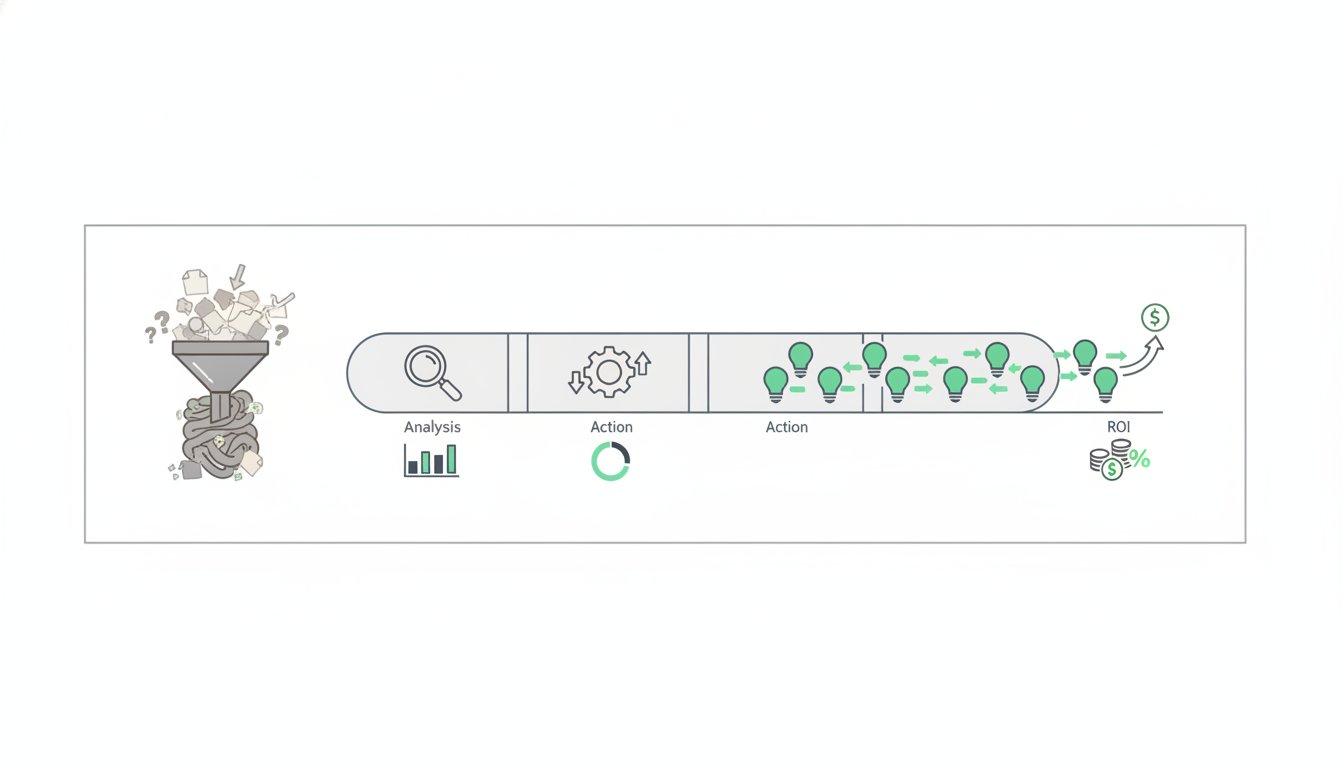
The traditional suggestion box is a relic of an era that didn’t value transparency. In most offices, it’s a physical or digital graveyard. This lack of a visible feedback loop reinforces the Futility Factor. The financial impact is real. Every unshared idea represents a missed opportunity to eliminate one of the 8 forms of waste, such as waiting times or non-utilized talent.

Designing the Invitation: How to Ask for Ideas Effectively

The Art of the Strategic Question

Open-ended questions outperform yes/no queries because they demand analysis rather than simple compliance. Use these five courageous questions to prompt deep thinking during your next team meeting:

  • If you had to cut our turnaround time by 50% without losing quality, where would you start?
  • What is the most redundant task you perform weekly that adds zero value to the end user?
  • Where are we most vulnerable to a competitor’s strategy right now?
  • What process do we use that feels like a relic of a decade ago?
  • If you were in charge of this department with a blank check, what’s the first thing you’d change?

Active listening must follow these questions. If you ask but don’t document the response, you’re merely performing engagement rather than facilitating it. Employees need to see that their input is recorded and considered in real-time to overcome the “Futility Factor” discussed in the previous section.

Time-Bound Innovation Challenges

Structure matters. A 30-day innovation challenge focused on a single bottleneck provides the necessary constraints to spark creative solutions. Research suggests that limited time and resources often force teams to move past obvious answers toward more radical improvements. For high-energy bursts of participation, many organizations now use hackathons to prototype solutions in real-time. These events transform abstract concepts into tangible results in a matter of hours.

You can inspire your team by highlighting successful innovation examples that started as simple responses to specific challenges. If you find your team is stuck, try reverse brainstorming. Instead of asking how to improve a system, ask how to make it fail. This often reveals hidden roadblocks that standard brainstorming misses. To see how these frameworks look in practice, you can book a free demo of a structured innovation system.

The IDEA Framework and Structured Evaluation

Generating a high volume of suggestions is only half the battle. If your team feels their input is judged arbitrarily, they’ll quickly revert to silence. High-participation cultures are built on the back of transparent, objective systems. To master how to encourage employees to share ideas, you must provide a clear roadmap for what happens after the “submit” button is clicked. The IDEA framework serves as this roadmap, transforming vague suggestions into actionable business cases while protecting managers from the “idea overload” that often leads to administrative paralysis.

The IDEA framework consists of four critical pillars:

  • Interesting: Does the idea solve a documented pain point or align with current strategic goals?
  • Doable: Is the solution technically feasible within our current resource constraints?
  • Engaging: Will the implementation improve the experience for employees or customers?
  • Actions: Are there clear, immediate steps we can take to test or prototype the concept?

Moving beyond simple acronyms requires establishing firm idea evaluation criteria. When these metrics are public, you eliminate the perception of favoritism. Use an “Impact vs. Effort” matrix to visualize these criteria. This helps the organization prioritize “quick wins” that build momentum while identifying the high-resource “moonshots” that require deeper vetting.

Teaching Employees to Self-Vet

Quality improves when employees act as the first line of evaluation. Provide a simple rubric that encourages staff to move from sharing an “opinion” to building a “business case.” A well-structured submission should include the specific problem, the proposed solution, and the anticipated outcome. This shift in mindset encourages incremental vs. radical innovation, showing employees that small, daily improvements are just as valuable as disruptive breakthroughs. When staff understand the “why” behind evaluation, they’re more likely to contribute high-quality data rather than raw complaints.

The Manager’s Role in Evaluation

Building the Infrastructure: Moving Beyond the Suggestion Box

The Digital Advantage

Gamification and Engagement

Healthy competition can be a powerful driver of participation. Using leaderboards and points creates a sense of progress that keeps employees coming back to the platform. While cash rewards can provide a temporary boost, research suggests that social recognition and digital “badges” often lead to higher long-term engagement. A user-friendly interface is non-negotiable. If the system is difficult to navigate, adoption will stall regardless of the incentives offered. To see how a structured system can transform your culture, book a free demo to explore the features that drive high-participation innovation.

Closing the Loop: Recognition, Implementation, and ROI

Effective Feedback Mechanisms

Tracking the Numbers

Transforming Your Workforce into a Scalable Innovation Engine

Dismantling the “Futility Factor” requires more than an open-door policy; it demands a structured approach that combines psychological safety with high-performance digital tools. By replacing stagnant suggestion boxes with a transparent evaluation framework, you transform raw feedback into a measurable corporate asset. This guide has detailed how to encourage employees to share ideas by focusing on strategic questioning, the IDEA framework, and rigorous ROI tracking. It’s about shifting your culture from passive observation to active, high-impact participation.

The path to a high-participation culture is paved with accountability. When managers provide consistent feedback and leadership prioritizes implemented improvements, innovation becomes a sustainable habit rather than a one-time event. Ready to turn your employees into an innovation engine? Ideawake is trusted by organizations to manage thousands of ideas through AI-powered evaluation that saves managers time and built-in ROI tracking that proves your program’s value. See how Ideawake automates the process by booking a free demo.

The potential within your organization is vast. With the right systems in place, you’re ready to unlock it.

Frequently Asked Questions

How do I motivate employees who are afraid to speak up?

You motivate hesitant employees by establishing psychological safety where the risk of sharing is lower than the reward of participation. Silence is rarely a personality trait; it’s a rational response to a “silence climate” where employees feel their input is ignored or punished. Focus on reducing the perceived stakes by asking for small, incremental improvements rather than radical breakthroughs. When staff see that pointing out an inefficiency leads to a better workflow rather than a reprimand, their defensive silence will naturally dissolve.

What is the best way to reward employees for their ideas?

How do I handle “bad” or unfeasible ideas without hurting morale?

Handle unfeasible ideas by providing transparent, data-backed feedback that explains the specific constraints preventing implementation. A “No, because…” response is significantly better than silence because it treats the employee like a professional partner. Use these moments as coaching opportunities to help the staff member refine their next submission. When you explain the “why” behind a rejection, you maintain trust and ensure the employee feels comfortable contributing again in the future.

Should I use a physical suggestion box or digital software?

Digital software is the only scalable choice for modern organizations because it eliminates the administrative “black hole” associated with physical boxes. Physical boxes lack transparency and make it nearly impossible to track ROI or provide timely feedback. A digital platform centralizes all insights into a “Value Vault,” allowing for cross-departmental collaboration and automated sorting. This infrastructure ensures that every idea is documented, evaluated, and archived for future use rather than being lost in a desk drawer.

How often should we run innovation challenges?

Run innovation challenges quarterly or whenever a specific departmental bottleneck requires a fresh perspective. Frequency matters less than the quality of the “ask.” If you run challenges too often without implementing previous winners, you risk “challenge fatigue.” A 30-day window is typically sufficient to generate high-energy participation and rapid prototyping. This time-bound structure creates a sense of urgency that pushes teams to move past obvious solutions toward more impactful improvements.

What role does leadership play in encouraging idea sharing?

How can we ensure that ideas from frontline staff reach upper management?

What are the most common reasons innovation programs fail?

Innovation programs fail primarily due to a lack of feedback and administrative complexity. If employees never hear back about their suggestions, they conclude that their effort is futile and stop participating. Understanding how to encourage employees to share ideas requires a commitment to closing the loop every single time. Additionally, programs often collapse when they rely on manual tracking like spreadsheets, which become unmanageable as the volume of ideas increases. Success demands both a culture of accountability and the right technical infrastructure.
Article by

Coby Skonord

Coby Skonord is the co-founder and CEO of Ideawake. Since 2013 he has worked with enterprise innovation, continuous improvement, and HR leaders to turn employee ideas into measurable business impact.

Improving Corporate Innovation Culture: A Data-Driven Execution Guide

Improving Corporate Innovation Culture: A Data-Driven Execution Guide
Coby Skonord|
July 7, 2026

Only 39% of organizations effectively track the return on investment of their innovation initiatives, according to recent research. This leaves a staggering majority of companies stuck in “innovation theater,” where activity is high but tangible outcomes are non-existent. If you’ve struggled with improving corporate innovation culture, you’ve likely faced the same wall: low participation rates, crushing administrative bottlenecks, and a lack of executive buy-in for anything that doesn’t show immediate profit.

It’s exhausting to manage ideation programs that produce more noise than value. You know that creativity isn’t the problem; it’s the lack of a structured system to capture, triage, and evaluate it. You’ll discover how to operationalize innovation by moving beyond random brainstorming into a world of structured processes and psychological safety. This guide provides a data-driven execution framework that leverages modern AI tools to reduce administrative overhead and ensure every idea is measured against its potential for real-world impact.

Key Takeaways

  • Contrast “Innovation Theater” against a results-driven execution model that treats culture as a systematic framework of habits and tools.
  • Identify the critical link between psychological safety and radical innovation to eliminate leadership behaviors that act as “innovation killers.”
  • Transition to a “Challenge-Led” model for improving corporate innovation culture by aligning employee creativity with specific business needs and North Star metrics.
  • Utilize modern AI tools to automate administrative tasks like sentiment analysis, allowing innovation leads to focus on high-value strategic execution.
  • Implement a dual-metric tracking system that measures both participation inputs and hard output data like Innovation Velocity and ROI.

The Anatomy of a High-Performance Innovation Culture

Innovation culture isn’t a byproduct of casual Fridays or colorful furniture. It’s a repeatable, systematic framework composed of specific habits, digital tools, and leadership behaviors. For leaders focused on improving corporate innovation culture, the first step is distinguishing between “Innovation Theater” and “Innovation Execution.” Theater is purely performative. It involves high-profile hackathons that result in press releases but zero actual product launches. Execution is results-driven, focusing on measurable outcomes that impact the bottom line. McKinsey research indicates that organizational health is the strongest predictor of long-term enterprise survival, yet many firms treat it as a secondary concern. This structural foundation is the Anatomy of a High-Performance Innovation Culture.

The Four Pillars of Cultural Maturity

Why Passive Suggestion Boxes Kill Culture

The traditional “suggestion box” is where good ideas go to die. This “Black Hole” effect occurs when employees submit thoughts but never hear back, leading to immediate disengagement and a decline in future participation. Passive systems also suffer from a lack of strategic alignment. Asking for “any idea” usually produces low-value noise that clogs the evaluation pipeline and frustrates managers. To drive real growth, organizations must move toward a structured idea submission process. This shift moves the company from top-down directives to a bottom-up model where the people closest to the problems are empowered to solve them. By focusing creativity on specific business challenges, you ensure that improving corporate innovation culture leads directly to operational excellence and measurable ROI.

Step 1: Establishing Psychological Safety and Inclusivity

Psychological safety is the bedrock of any high-performance team. Without it, the fear of professional embarrassment kills radical ideas before they ever reach a whiteboard. Data consistently shows that psychological safety directly correlates with the volume of high-impact, non-incremental ideas generated by a workforce. When leaders prioritize Creating a Culture of Innovation, they effectively neutralize “Innovation Killers” like micromanagement and extreme risk-aversion. These behaviors signal to the workforce that only “safe” or “perfect” ideas are welcome, which effectively shuts down the innovation pipeline and keeps the organization stuck in the status quo.

True progress in improving corporate innovation culture happens when you treat every employee as an intrapreneurial stakeholder in company growth. Inclusivity isn’t just a social metric; it’s a strategic necessity that expands the cognitive diversity of your innovation pipeline by bringing in perspectives from different departments, backgrounds, and hierarchies. By empowering everyone to contribute, you move from a “Boss-led” model to an “Employee-led” engine of growth. This shift ensures that the people closest to the problems are the ones tasked with solving them.

Building Trust Through Transparency

Transparency is the ultimate antidote to disengagement. Many organizations fail because they reject ideas without explanation, creating a “black hole” where employee enthusiasm disappears. Using objective scorecards to provide feedback on rejected concepts shows employees that their contributions were taken seriously, even if they aren’t moving to a pilot phase. “Fail-Forward” sessions further de-stigmatize unsuccessful projects by treating them as vital data-gathering exercises rather than personal failures. This level of cultural openness is one of the primary benefits of employee ideation programs, as it builds a resilient environment where experimentation is celebrated rather than feared.

Empowering the Frontline

Frontline employees often identify the most valuable opportunities for incremental innovation and lean waste reduction. They see the daily operational friction that executives often miss. A classic example of this is the Flamin’ Hot Cheetos story, where a janitor’s observation about a product gap transformed an entire food category. Managers should actively solicit ideas during standard workflows rather than waiting for a formal annual meeting. To capture these insights effectively, consider these practical steps:

  • Integrate “innovation minutes” into daily stand-ups or huddles.
  • Provide mobile-friendly submission tools for workers who don’t work at a desk.
  • Publicly recognize small, incremental wins to build momentum for larger cultural shifts.

If you’re ready to see how a structured platform can facilitate this trust and drive participation, you can schedule a personalized demo to explore the impact on your organization’s bottom line.

Step 2: Transitioning to Structured Innovation Challenges

Broad, open-ended suggestion boxes are where momentum dies. To succeed in improving corporate innovation culture, you must shift to a “Challenge-Led” model. This approach focuses employee creativity on specific, high-priority business problems rather than vague requests for “innovation.” By narrowing the scope, you provide the constraints necessary for truly actionable ideas to emerge. Transitioning to this structured model isn’t just a trend; it aligns with the ISO 56001:2024 standard, which provides the first certifiable framework for innovation management systems. It forces the organization to stop guessing and start solving.

Each campaign should have a “North Star” metric. Are you looking for a 10% reduction in churn or a new revenue stream from an adjacent market? Defining these goals upfront is essential for Fostering Successful Innovation that actually moves the needle. Without clear targets, you’re just collecting noise. Urgency is another powerful catalyst. Programs that stay open indefinitely lose steam. Instead, use time-bound events lasting four to six weeks. This creates a focused window for participation and prevents the initiative from fading into the background of daily operations.

Gamification elements like leaderboards and peer voting boost engagement levels significantly. These aren’t just toys; they are social proof mechanisms that encourage employees to contribute and refine each other’s work. When people see their colleagues participating and receiving recognition, they’re more likely to jump in themselves. This creates a self-sustaining cycle of engagement that transforms innovation from a top-down directive into a shared cultural habit.

Designing a High-Impact Challenge

Effective challenges start by distinguishing between “Pain Points” and “Opportunities.” Pain points focus on fixing existing inefficiencies, while opportunities explore untapped market potential. Both are valid, but they require different evaluation criteria. Set these criteria before you launch. When employees know exactly how their ideas will be judged, the quality of submissions increases. Use cross-functional teams to refine raw ideas. This ensures that a great concept from marketing is vetted for technical feasibility by engineering early in the process, reducing the risk of pursuing unworkable projects.

Scaling Participation Without Chaos

High participation is a win, but it can quickly lead to an “Administrative Wall” if not managed correctly. Collaborative filtering allows the community to help triage submissions, highlighting the most promising concepts through peer review and sentiment analysis. This prevents “Idea Fatigue” by ensuring managers only spend time on high-potential leads rather than wading through hundreds of duplicate or low-value entries. To execute this at scale, organizations often look for the best innovation management software to automate the workflow. These tools handle the logistics of improving corporate innovation culture, so you can focus on the strategy of execution across the entire enterprise.

Step 3: Leveraging AI to Remove Administrative Friction

The “Administrative Wall” is the primary reason why even the most enthusiastic managers eventually stop supporting innovation programs. When an ideation campaign is successful, it often generates hundreds of submissions, creating a crushing workload for the people responsible for evaluating them. Without the right technology, improving corporate innovation culture becomes a burden rather than a benefit. AI solves this by automating the most tedious parts of the process, such as idea deduplication and initial sentiment analysis.

Instead of reviewing ten variations of the same suggestion, AI clusters related entries into “Super-Ideas” that carry higher impact and clearer implementation paths. This allows innovation leads to stop acting like data entry clerks and start acting like strategists. AI-driven insights provide a bird’s-eye view of the innovation landscape, highlighting trends and gaps that would be impossible to spot manually. It transforms a chaotic pile of suggestions into a prioritized roadmap for growth.

AI-Enhanced Evaluation

Modern AI tools for innovation managers can now score ideas against specific strategic goals with remarkable accuracy. This objective scoring ensures that the most relevant concepts rise to the top of the pile immediately. AI also automates the feedback loop, ensuring that every employee receives a response without requiring a manual email from a manager. This keeps the “black hole” effect mentioned earlier at bay. Ideawake AI further accelerates the process by identifying potential resource requirements and technical hurdles during the initial submission phase, significantly reducing the time it takes to move from a concept to a pilot.

Reducing the Cost of Innovation

To see how these automated workflows can revolutionize your internal processes, you can book a free demo of the Ideawake platform today.

Step 4: Measuring Cultural Maturity and Innovation ROI

Culture is often dismissed as a “soft” metric, but in high-performance organizations, it’s treated with the same analytical rigor as a quarterly earnings report. When you’re focused on improving corporate innovation culture, you must distinguish between input metrics and output metrics. Input metrics, like the number of ideas submitted or employee participation rates, measure engagement and initial buy-in. Output metrics, however, track the actual financial impact on the organization. It’s the difference between being busy and being profitable. If you aren’t measuring the dollar value of your culture, you aren’t managing it.

One of the most critical KPIs to track is Innovation Velocity. This measures the total time elapsed from the moment an idea is submitted to the launch of a pilot program. Slow velocity indicates bureaucratic friction that kills employee enthusiasm. You should also monitor your Cultural Net Promoter Score (cNPS). This metric asks employees how likely they are to recommend your organization’s innovation process to a peer. High cNPS scores correlate directly with reduced recruitment costs and improved employee retention. People don’t leave companies where they feel empowered to build the future. It transforms a standard job into a mission with visible impact.

Hard Metrics for Executive Buy-In

To secure long-term executive buy-in, you need hard data. You can’t rely on anecdotes about “creativity” or “synergy.” Instead, focus on calculating the ROI of idea management by tracking cost savings from continuous improvement initiatives and revenue generated from new product lines. When you can show that a single internal challenge resulted in $500,000 in operational savings, the conversation shifts from “culture” to “competitive advantage.” These figures provide the accountability that leadership demands, proving that culture is a driver of the bottom line rather than a cost center.

The Innovation Maturity Scale

Organizations typically move through an Innovation Maturity Scale, ranging from Level 1 (Ad-hoc and reactive) to Level 5 (Optimized and embedded). Level 1 organizations only innovate when a crisis hits, while Level 5 firms have innovation in their DNA. To move up this ladder, conduct quarterly “Culture Audits” to identify bottlenecks like slow approval times or lack of manager feedback. As your program scales, your technological needs will evolve. Developing a clear roadmap for how to choose the best innovation management software ensures that your infrastructure can support a Level 5 culture. This isn’t just about improving corporate innovation culture today; it’s about building a permanent, results-driven engine for enterprise growth.

Transforming Your Innovation Strategy Into a Competitive Engine

The transition from performative “innovation theater” to a results-driven culture requires more than just good intentions. It demands a systematic approach that combines psychological safety with structured, time-bound challenges. By focusing employee creativity on specific business problems and providing transparent feedback, you ensure that improving corporate innovation culture becomes a repeatable process rather than a random occurrence. The goal is to move up the maturity scale until innovation is embedded in your organization’s DNA.

Technology is the catalyst that makes this scale possible without drowning your managers in paperwork. Modern tools reduce administrative complexity by up to 80% through automated triage and AI-driven insights. This efficiency allows your team to focus on high-value strategic execution and end-to-end lifecycle management from the first submission to final ROI tracking. If you’re ready to operationalize your creativity and see tangible financial impact, book a free demo of Ideawake's platform today. It’s time to stop guessing and start building the future of your enterprise with data-backed confidence.

Frequently Asked Questions

What is the most effective way to start improving corporate innovation culture?

The most effective starting point is launching a narrow, high-impact pilot challenge rather than attempting a company-wide cultural overhaul. By focusing on a specific business problem that frontline employees can solve within a few weeks, you demonstrate immediate value. This builds the necessary momentum and social proof to justify larger cultural shifts and executive investment in the future.

How do you measure the success of an innovation culture shift?

Success is measured through a combination of Innovation Velocity and the Cultural Net Promoter Score (cNPS). Innovation Velocity tracks the time from idea submission to the launch of a pilot, revealing how much bureaucratic friction exists. A rising cNPS indicates that employees feel more empowered and psychologically safe, which is a leading indicator of long-term participation and radical idea generation.

Why do most corporate innovation programs fail within the first two years?

Most programs collapse because they hit the “Administrative Wall.” When managers are overwhelmed by manual triage and employees don’t see their ideas move toward implementation, engagement disappears. Without a structured system to manage the lifecycle of an idea, the program becomes perceived as “Innovation Theater,” leading executives to withdraw support when they don’t see a clear ROI.

How can AI help in building a more innovative culture?

AI removes the administrative friction that kills momentum by automating deduplication and initial sentiment analysis. It ensures that every employee receives prompt, data-backed feedback on their submissions. This responsiveness is critical for improving corporate innovation culture because it proves to the workforce that their contributions are valued and evaluated against objective strategic goals rather than subjective opinions.

Does a culture of innovation require a large budget?

A robust culture is built on psychological safety and structured processes rather than massive capital expenditure. While investing in an execution platform is necessary for scale, the cost of “Innovation Theater” and lost productivity far exceeds the price of modern tools. Most radical innovations come from better utilizing the existing cognitive diversity of your workforce rather than spending on physical prototyping labs.

How do you encourage employees to participate in ideation without offering cash prizes?

Intrinsic motivators like autonomy, peer recognition, and the opportunity to lead a project are more effective than cash. Gamification elements such as leaderboards and voting systems create a sense of community and social proof. Employees are most motivated when they see their ideas actually implemented, as it gives them a sense of ownership over the company’s future growth.

What role does psychological safety play in corporate innovation?

Psychological safety is the prerequisite for any non-incremental growth. If employees fear professional embarrassment or career repercussions for a failed experiment, they’ll only submit “safe” or obvious ideas. Safety creates an environment where “failing forward” is treated as a data-gathering exercise. This openness is a cornerstone of improving corporate innovation culture and driving radical breakthroughs that challenge the status quo.

How often should a company run innovation challenges to maintain culture?

A quarterly rhythm is ideal for maintaining momentum without causing “Idea Fatigue” among your staff. This schedule provides enough time to evaluate and pilot the winning ideas from the previous cycle while keeping innovation top-of-mind. Regular, time-bound events create a healthy sense of urgency and ensure that the innovation process is viewed as a permanent system rather than a one-off initiative.

Article by

Coby Skonord

Coby Skonord is the co-founder and CEO of Ideawake. Since 2013 he has worked with enterprise innovation, continuous improvement, and HR leaders to turn employee ideas into measurable business impact.