
Tag Archives: ISO 56001

Innovation Program ROI Tracking: The 2026 Enterprise Reference Guide

Innovation Program ROI Tracking: The 2026 Enterprise Reference Guide
Coby Skonord|
July 5, 2026

Why do 56% of CEOs report zero revenue growth or cost savings from their massive AI investments despite global spending projected to hit $2.5 trillion in 2026? This staggering accountability gap, highlighted in a January 2026 PwC survey, proves that throwing capital at “innovation” without a rigorous system for innovation program ROI tracking is a recipe for executive skepticism. You likely agree that relying on vanity metrics like idea volume is no longer enough to justify your budget. It’s frustrating to manage spreadsheet chaos while leadership demands to see exactly how employee suggestions impact the bottom line.

We promise to help you bridge this gap by mastering the tiered data architectures and automated workflows required to transform raw concepts into measurable strategic growth. This reference guide provides a standardized framework for reporting financial returns that aligns with the new ISO 56001:2024 standards. You’ll learn how to replace manual evaluation overhead with high-performance tracking that secures increased investment and turns your innovation hub into a verified profit center. It’s time to stop guessing and start proving your program’s worth with hard data.

Key Takeaways

  • Transition from tracking vanity metrics to a tiered architecture that prioritizes cost savings and revenue growth as the ultimate measures of success.
  • Implement a centralized data infrastructure for innovation program ROI tracking to accurately capture baselines and the financial impact of implemented ideas.
  • Utilize metered funding and portfolio management strategies to balance risk, ensuring that 100% success rates don’t mask a lack of ambitious, high-return initiatives.
  • Automate the innovation lifecycle with AI to reduce administrative evaluation overhead by up to 80%, allowing teams to focus on execution rather than data entry.

Defining Innovation Program ROI Tracking: From Vanity to Value

Innovation program ROI tracking isn’t a simple calculation of dollars in versus dollars out. It’s a comprehensive measurement of the financial, strategic, and cultural returns generated relative to every resource invested in your innovation ecosystem. In 2026, the definition has shifted from vague “creativity” to rigorous accountability. You can’t just claim your program is successful; you have to prove it with hard data that satisfies the scrutiny of a CFO.

Many leaders fall into the “Vanity Metric Trap.” They celebrate 500 ideas submitted or 80% employee participation. These are activity metrics, not impact metrics. While engagement matters, counting ideas without tracking their implementation is a recipe for budget cuts. To combat this, elite organizations use Innovation Accounting to measure progress during the early stages when traditional financial ROI hasn’t materialized yet. This approach bridges the gap between lead indicators, like pipeline health, and lag indicators, such as direct cost savings or top-line revenue growth.

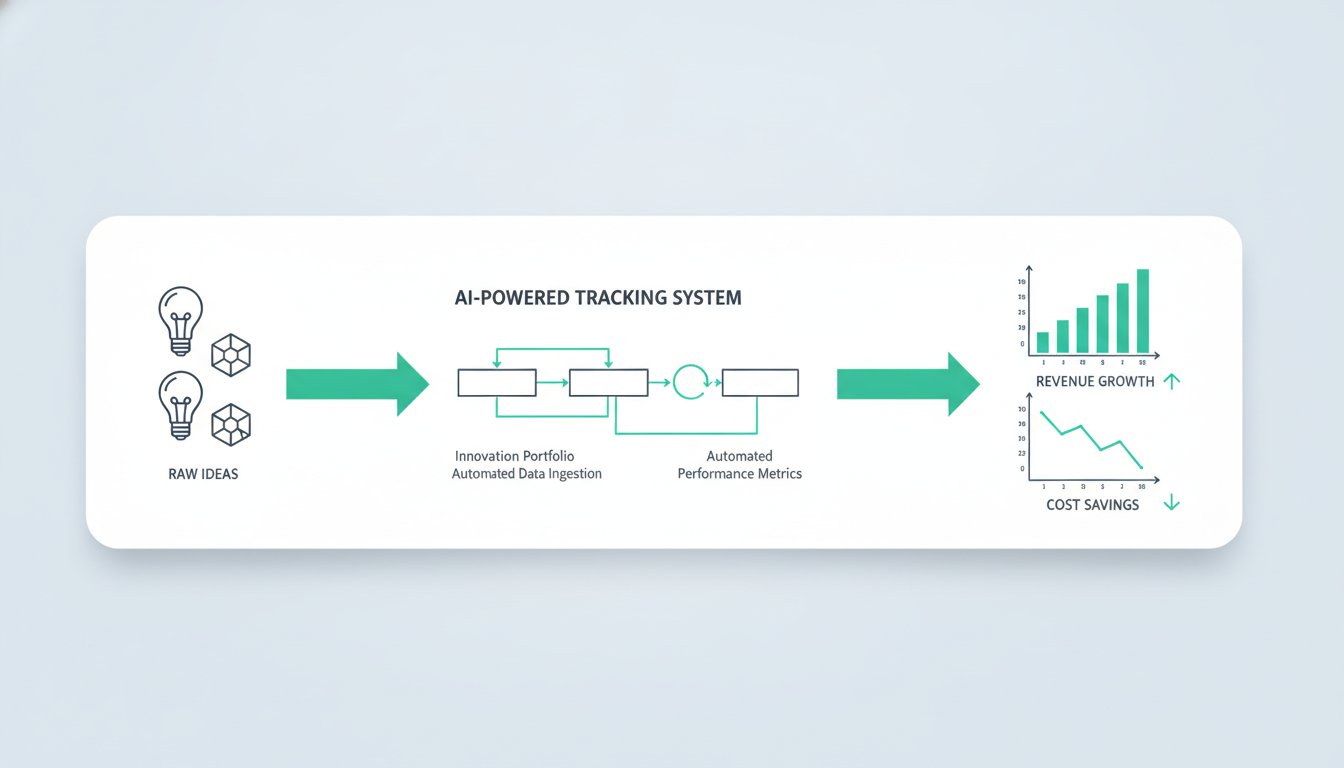
Establishing a clear innovation lifecycle management process is the only way to create a traceable path from a raw concept to a measurable financial outcome. Without this infrastructure, ideas die in the “valley of death” between ideation and implementation. You need a system that captures data at every stage to ensure that innovation program ROI tracking remains accurate and transparent.

The ROI Maturity Model

Your tracking capabilities usually evolve through three distinct stages. Level 1 is activity-based, focusing on participation rates and raw idea counts. Level 2 moves to efficiency, measuring time-to-implementation and the cost-per-validated-idea. The gold standard is Level 3: Impact-based tracking. This level focuses on validated financial returns and direct alignment with corporate strategic goals. Reaching Level 3 requires moving beyond manual data entry and embracing automated tracking workflows.

Why 61% of Organizations Fail to Track ROI

The Three Pillars of Innovation ROI: Financial, Strategic, and Cultural

Constructing a comprehensive innovation program ROI tracking report requires a holistic view that satisfies three distinct internal stakeholders: the CFO, the Chief Strategy Officer, and the Head of HR. If you only present financial gains, you ignore the long-term value of a resilient culture. If you only present engagement scores, you risk losing your budget. You must balance hard financial data with strategic alignment and cultural health to secure lasting executive buy-in.

Hard ROI: Cost Savings and Revenue Generation

Hard ROI represents the tangible, audited financial impact of implemented ideas. To track cost savings effectively, many enterprises utilize the 8 forms of lean waste framework. This allows teams to categorize ideas by their ability to reduce overproduction, waiting times, or defects, translating operational improvements directly into OpEx reductions. For revenue generation, distinguish between incremental improvements to existing service lines and entirely new product revenue. Because innovation projects often span years, calculating the Net Present Value (NPV) is critical for comparing the future value of these initiatives against today’s investment costs. Following a five-step process for measuring innovation ensures that these financial calculations remain consistent and auditable across the entire portfolio.

Strategic and Cultural ROI

Measuring “Strategic Fit” allows you to quantify how effectively your innovation pipeline supports your organization’s annual goals. This is measured by tracking the percentage of implemented ideas that directly contribute to specific corporate objectives. Cultural ROI is the long-term increase in organizational agility and problem-solving capacity. While it feels abstract, it has significant financial implications. High participation in an employee suggestion program correlates strongly with increased empowerment scores and decreased turnover. The benefits of employee ideation programs extend far beyond the ideas themselves; they foster a sense of ownership that improves retention. Reducing turnover by even a few percentage points can save an enterprise millions in recruitment costs annually. To see how these pillars come together in a unified dashboard, you can book a demo with our team to explore automated innovation program ROI tracking workflows.

Building the ROI Tracking Infrastructure: Data, Baselines, and AI

Infrastructure is the silent killer or catalyst of enterprise innovation success. To move beyond the vanity metrics discussed in previous sections, you need a centralized data vault that tracks every idea from the moment of submission through to implementation and final financial audit. This digital paper trail is essential for innovation program ROI tracking because it eliminates the “black hole” where high-potential ideas often disappear. Without a dedicated infrastructure, you’re left guessing which initiatives actually contributed to the bottom line.

The most significant shift in 2026 is the integration of AI driven innovation software as the primary engine for automated reporting. While global AI spending is projected to reach $2.59 trillion this year, many organizations still struggle with an accountability gap. Modern platforms solve this by using machine learning to predict financial impact based on historical performance and real-time market data. This automation reduces the administrative burden of evaluation by up to 80%, allowing your team to focus on execution rather than manual data entry.

Relying on manual tools often leads to “spreadsheet chaos.” When comparing ideawake vs spreadsheets, the primary risk of manual tracking is data fragmentation. Spreadsheets are static and prone to version control errors, making it nearly impossible to maintain a “source of truth” across departments. A dedicated platform provides a dynamic environment where data flows seamlessly from HR and Finance systems to validate every claim of success.

Establishing Reliable Baselines

Accurate measurement is impossible without a clear starting point. Baselining involves capturing current state data before an innovation is implemented to measure the delta in performance. You must collaborate with Finance and HR to access verified “Source of Truth” data, such as current OpEx for a specific process or existing employee retention rates. For process innovations, setting up control groups is a highly effective way to isolate the impact of your initiative. If historical records are missing, use industry benchmarks or a “burn-in” period of data collection to establish a credible foundation.

The Build vs. Buy Dilemma for ROI Tracking

Many enterprises consider developing a custom internal tool to track their innovation pipeline. However, the hidden costs of maintenance, security updates, and integration often outweigh the initial perceived savings. Our build vs buy idea management software guide highlights that modern platforms offer a significantly lower Total Cost of Ownership (TCO). These solutions provide out-of-the-box integrations with your existing tech stack, ensuring that your innovation program ROI tracking is both scalable and secure from day one.

Managing the Innovation Portfolio: Balancing Risk and Return

A 100% success rate is a red flag. If every project in your pipeline hits its target, your program is failing to take the risks necessary for breakthrough growth. High-performance innovation program ROI tracking requires you to view your pipeline as a portfolio, not a list of guaranteed wins. You must balance the “Exploit” side, which involves optimizing your core business, with the “Explore” side, where disruptive, high-potential ideas live. Settling for safe, incremental gains alone ensures long-term stagnation while your competitors chase transformative shifts.

To manage this balance, you need enterprise innovation tools that provide a visual map of your risk distribution. This visibility allows you to stop guessing about pipeline health and start making data-driven decisions that align with your risk appetite. Moving beyond a “suggestion box” mentality requires a rigorous approach to how capital is deployed and reclaimed based on performance.

Metered Funding and Evidence-Based Decisions

Traditional annual budgeting is the enemy of agility. Instead of releasing a full budget upfront, elite organizations use metered funding to maintain accountability. Metered funding is an incremental investment strategy that reduces financial risk by requiring evidence of value at each stage. This approach allows you to set “Kill Gates,” which are predefined milestones where a project must prove its viability or face termination. By failing fast, you significantly reduce “Innovation Waste” and can reallocate those resources to projects showing real traction. This ensures that your innovation program ROI tracking reflects actual progress rather than just sunk costs.

Incremental vs. Radical Innovation ROI

Not all returns follow the same timeline. Incremental vs radical innovation requires different measurement horizons and expectations. Incremental improvements offer faster, more predictable ROI, often focusing on immediate cost savings or service line enhancements. These are your program’s “bread and butter.” Conversely, “Moonshot” projects may have a 5-10 year horizon. These radical initiatives require a balanced scorecard that weights potential market dominance against current implementation costs. While 83% of companies rank innovation as a top priority, only 3% feel prepared to execute. Closing this gap requires a reporting framework that respects these different lifecycles without sacrificing financial rigor.

Ready to transform your portfolio’s financial reporting from a guessing game into a verified profit center? Book a free demo to see how we automate risk and return tracking for global enterprises.

Automating the ROI Lifecycle with Modern Innovation Platforms

Manual evaluation is the bottleneck of enterprise growth. When teams rely on human review for every submission, administrative overhead balloons, leading to the “innovation fatigue” that kills programs before they scale. Implementing a dedicated innovation management platform changes this dynamic by reducing administrative evaluation tasks by up to 80%. This shift allows innovation managers to move from data entry to strategic execution. Automated innovation program ROI tracking ensures that every implemented idea is automatically logged, valued, and reported without manual intervention.

Real-time visibility is no longer a luxury; it’s a requirement for executive buy-in. Automated dashboards provide leadership with an instant view of the pipeline’s health, from the cost of participation to the validated net present value of implemented projects. This level of transparency transforms the innovation department from a mysterious cost center into a verified engine of financial performance. It’s the difference between asking for a budget and proving why you deserve a larger one.

AI-Driven ROI Insights

Closing the Loop: From Implementation to Reporting

True accountability requires connecting your innovation pipeline to your financial “Source of Truth.” This means utilizing integrations with your ERP and CRM systems to pull actual financial performance data post-implementation. When an idea is implemented, the system tracks the delta in cost savings or revenue growth directly from your business records. This closes the “ROI Loop.” Sharing these verified success stories across the organization does more than just satisfy the board; it drives a higher quality of future submissions by showing employees exactly how their contributions impact the company’s bottom line.

Comprehensive innovation program ROI tracking is the lifeblood of a sustainable, scalable innovation culture. It’s time to stop treating innovation as an intangible asset and start measuring it with the same rigor as any other business unit. To see the potential impact on your organization, Access the Ideawake ROI Calculator to start your journey toward data-driven innovation leadership.

Securing the Future of Your Innovation Strategy

Transitioning from vanity metrics to a rigorous data architecture is the only way to ensure your program survives the accountability demands of 2026. By integrating financial, strategic, and cultural pillars, you transform a simple suggestion box into a verified engine for organizational growth. We’ve seen how establishing reliable baselines and utilizing metered funding allows you to manage risk while pursuing radical breakthroughs. Modernizing your innovation program ROI tracking isn’t just about reporting; it’s about building a culture where every employee’s contribution has a traceable path to the bottom line.

Ideawake is trusted by global organizations to manage thousands of ideas through end-to-end lifecycle tracking from raw concept to financial validation. Our AI-driven insights reduce administrative overhead by up to 80%, giving you the freedom to focus on implementation rather than spreadsheet management. It’s time to stop guessing and start proving your impact with financial validation. Access the Idea Management ROI Calculator today to visualize your potential returns and secure the executive buy-in your initiatives deserve. Your path to measurable strategic impact starts now.

Frequently Asked Questions

What is the most important metric for innovation program ROI tracking?

The most important metric is validated financial impact, specifically Net Present Value (NPV), which accounts for the time value of money in multi-year projects. While engagement metrics provide lead indicators, executive leadership prioritizes hard ROI such as direct cost savings and top-line revenue growth. Aligning these figures with the 8 Forms of Lean Waste ensures that every dollar claimed is auditable and grounded in operational reality.

How long does it typically take to see a positive ROI from an innovation program?

Enterprises typically see a positive return within 6 to 18 months when focusing on incremental improvements and process optimizations. Radical or moonshot innovations often require a three to five year horizon before achieving significant financial validation. By utilizing metered funding and failing fast on low-potential projects, organizations can accelerate the timeline to profitability and reduce the overall cost of the innovation pipeline.

Can you track ROI for “Soft” innovations like cultural changes?

You can track cultural ROI by measuring proxy metrics such as employee retention rates, empowerment scores, and participation levels in continuous improvement initiatives. Cultural shifts lead to tangible financial gains through reduced turnover costs and increased organizational agility. In 2026, leading firms correlate high participation in an employee suggestion program with lower recruitment expenses, proving that a healthy innovation culture directly contributes to the bottom line.

What is the difference between ROI and ROE (Return on Expectation) in innovation?

ROI focuses strictly on financial gains relative to investment, while ROE measures how well a program meets predefined strategic or qualitative goals. If a project is designed to improve brand perception or test a new market, ROE tracks success against those specific objectives even if immediate revenue is low. A balanced innovation program ROI tracking strategy uses both to provide a complete picture of value to diverse stakeholders.

How much should an enterprise invest in innovation tracking software?

Investment should be based on the Total Cost of Ownership (TCO) relative to the administrative hours saved and the value of the ideas captured. The software should ideally pay for itself by reducing evaluation overhead by up to 80% through automation and AI-driven scoring. Organizations should avoid the build trap; custom internal tools often carry hidden maintenance costs that far exceed the annual subscription fees of professional platforms.

Is it possible to track ROI for ideas that were never implemented?

It is possible to track the value of non-implemented ideas by measuring “Innovation Waste” reduction and the cost of avoided failures. Identifying a flawed concept early through a Kill Gate saves the organization from future sunk costs, which represents a form of defensive ROI. Additionally, these ideas contribute to an organization’s Option Value, providing a library of insights that may become viable as market conditions or technologies evolve.

How do you handle “Double Counting” when multiple departments claim the same ROI?

Resolve double counting by establishing strict attribution rules and using a centralized data vault that acts as the single source of truth. If multiple departments contribute to an idea’s success, the ROI should be split based on predefined percentages of resource contribution or impact. This level of transparency prevents inflated reporting and maintains the credibility of your innovation program ROI tracking efforts with the finance department.

What role does the CFO play in innovation program ROI tracking?

The CFO acts as the ultimate auditor and strategic partner, ensuring that all reported financial gains meet corporate accounting standards. They provide the Source of Truth data required for baselining and help define the criteria for what constitutes a hard return. Engaging the CFO early in the process transforms them from a potential skeptic into a champion who can help secure increased budgets for future initiatives.

Article by

Coby Skonord

Coby Skonord is the co-founder and CEO of Ideawake. Since 2013 he has worked with enterprise innovation, continuous improvement, and HR leaders to turn employee ideas into measurable business impact.

How to Streamline Your Idea Implementation Process: A 2026 Enterprise Guide

How to Streamline Your Idea Implementation Process: A 2026 Enterprise Guide
Coby Skonord|
July 1, 2026

Most enterprise innovation programs are little more than expensive suggestion boxes where high-impact ideas go to retire. While 64% of organizations have integrated AI into their operations as of early 2026, the majority still struggle to move beyond surface-level experimentation. You’ve likely seen brilliant concepts stall in endless review meetings because there’s no clear path to funding or because your team lacks the specialized expertise to evaluate technical submissions. It’s a waste of human capital that keeps your time-to-market sluggish.

We’re here to change that narrative. You’ll learn the exact framework to streamline idea implementation process workflows, effectively bridging the gap between ideation and execution while stripping away administrative friction. By leveraging the latest ISO 56001:2024 certification standards, you can stop guessing and start delivering measurable results. This guide previews a system that decouples evaluation from execution, ensures clear ROI tracking for every dollar of innovation spend, and slashes the overhead that currently bogs down your most creative minds.

Key Takeaways

  • Close the “Implementation Gap” by shifting organizational focus from high-volume ideation to a structured, high-velocity execution framework.
  • Discover how to streamline idea implementation process workflows by adopting decentralized intake models that bypass traditional administrative bottlenecks.
  • Replace subjective decision-making with objective, weighted scoring systems that prioritize ideas based on strategic alignment, feasibility, and impact.
  • Leverage AI-driven automation to intelligently route technical submissions to the correct subject matter experts, slashing review times and friction.
  • Establish clear accountability by tracking critical innovation metrics, including time-to-market, implementation rates, and verified financial ROI.

The Implementation Gap: Why Enterprise Ideas Stagnate

Innovation theater is a chronic condition in the modern enterprise. It’s the practice of hosting high-energy workshops and collecting thousands of employee suggestions while lacking the infrastructure to move a single concept to production. This creates a massive Implementation Gap: the stark disconnect between high-volume ideation and low-volume execution. While organizations are often proficient at the creative side of the house, industry research consistently indicates that 70% to 90% of innovations fail not because the ideas were poor, but because of execution failures. This failure occurs in the “Valley of Death,” the precarious transition point where a validated idea loses its momentum during the hand-off from innovation teams to operational departments.

The foundational definition of implementation focuses on the realization of an application or execution of a plan. In an enterprise setting, this requires more than just enthusiasm; it requires an engineered workflow. To truly streamline idea implementation process cycles, leaders must stop treating execution as an afterthought and start treating it as a core competency. Failing to do so ensures that your innovation program remains a cost center rather than a growth engine. Engineering a way to streamline idea implementation process steps is no longer optional in a landscape where speed is the ultimate competitive advantage.

Common Barriers to Execution Velocity

Execution doesn’t stall by accident. It’s usually the result of three specific friction points. First, administrative friction creates a bottleneck where endless committee reviews kill employee enthusiasm. If an idea takes six months to clear a compliance check, the market has already moved on. Second, resource misalignment ensures that even the best ideas die without a dedicated implementation budget. Most departments are incentivized to maintain the status quo, leaving no room for non-core projects. Finally, an expertise deficit often prevents innovation managers from effectively evaluating specialized technical ideas, leading to “safe” but mediocre choices.

The Cost of Inaction

The price of a broken process is higher than most executives realize. Idea decay doesn’t just result in lost revenue; it actively erodes employee engagement. When staff see their contributions vanish into a black hole, they stop contributing. This leads to a talent drain as your most innovative thinkers move to competitors who can actually ship products. In a high-velocity 2026 market where AI-driven competitors move at light speed, a slow implementation rate is a terminal risk. Adopting a structured idea implementation framework is the only way to mitigate these risks and ensure your organization remains relevant.

5 Steps to Streamline Your Idea Implementation Process

Bridging the gap between a validated concept and a funded project requires more than a simple workflow. It demands a lean, modern execution framework engineered for speed and scalability. To effectively streamline idea implementation process cycles, organizations must move beyond the static “suggestion box” model and adopt a dynamic, five-step pipeline that prioritizes impact over volume. This system ensures that resources aren’t wasted on low-value experiments while accelerating the journey for high-potential winners.

  • Step 1: Decentralized Intake. Move away from a single, generic suggestion box. Use category-specific challenges to ensure ideas are pre-aligned with business needs.
  • Step 2: Automated Screening. With 64% of organizations already utilizing AI in operations, use automated filters to remove duplicates and low-feasibility submissions instantly.
  • Step 3: Collaborative Refinement. Harness internal crowdsourcing to strengthen ideas. Peer feedback identifies technical gaps before a formal review even begins.
  • Step 4: Rapid Prototyping and Validation. Test core assumptions through minimal viable experiments. In 2026, low-code technologies allow teams to build and test 70% of new applications without heavy IT involvement.
  • Step 5: Structured Hand-off. Transfer validated concepts to business units with comprehensive documentation and clear ownership.

Phase 1: Filtering for High-Potential Winners

The first hurdle in any innovation program is the noise. Using AI-driven insights allows innovation managers to spot duplicates or low-feasibility concepts in seconds, preventing them from clogging the pipeline. Objectivity is maintained through the use of idea evaluation and scoring tools, which shift the focus from popularity to strategic value. Instead of simple “voting” systems that favor the most charismatic submitter, weighted scoring ensures that every idea is judged on its feasibility, impact, and alignment with corporate goals. If you want to see how this looks in practice, you can schedule a personalized walkthrough of these automated workflows.

Phase 2: Validation and the Hand-off

Once an idea is filtered, it enters the validation stage. This is where “micro-pilots” prove value without requiring massive capital expenditure. These small-scale tests provide the data needed to secure buy-in from department heads. To streamline idea implementation process hand-offs, create a standardized “Implementation Package” that includes technical requirements, projected ROI, and resource needs. This documentation removes the ambiguity that often leads to projects stalling at the departmental level. Finally, ensure accountability by assigning a clear owner at the moment of transfer, preventing the idea from being lost during the transition.

Scoring and Prioritization: The Engine of Faster Execution

Subjectivity is the silent killer of enterprise progress. When projects are selected based on the loudest voice in the room or a vague “gut feeling,” the result is a clogged pipeline of mediocre initiatives. To streamline idea implementation process workflows, you must replace intuition with a mathematical engine. A weighted scoring system provides the necessary objectivity to filter out noise and focus resources on the high-impact opportunities that align with your 2026 strategic objectives.

The most effective scoring models evaluate three core pillars: Strategic Alignment, Feasibility, and Impact. Alignment ensures the idea supports your current mission. Feasibility accounts for technical hurdles and regulatory constraints, such as the EU AI Act transparency requirements effective August 2, 2026. Impact measures the potential for efficiency gains or revenue growth. However, a one-size-fits-all approach is a mistake. You must utilize distinct scoring criteria for incremental vs radical innovation to ensure that low-risk improvements don’t starve high-reward breakthroughs of capital.

The RICE Framework for Innovation Managers

Adapting the RICE framework allows for a granular comparison of disparate ideas. Start with Reach: how many employees or customers will this implementation actually touch? Next, calculate Impact: will it deliver a slight productivity bump or a shift in performance? According to a June 2026 Deloitte report, 66% of organizations are seeing efficiency gains from AI, but only 20% report revenue growth. Your Confidence score should reflect how certain you are about these projections based on pilot data. Finally, factor in Effort: the total requirement of time, money, and labor. This calculation gives you a single, comparable score for every submission.

Balancing the Innovation Portfolio

A streamlined process requires a healthy mix of “Quick Wins” and “Big Bets.” High-impact, low-effort projects provide the immediate momentum needed to sustain program funding. Conversely, transformative bets ensure long-term market relevance. If your portfolio is 100% safe, you’re falling behind. Use your scoring data to justify resource allocation to skeptical executive stakeholders, proving that your roadmap is built on empirical evidence rather than speculation. This transparency builds the trust necessary to secure the budgets required for large-scale implementation.

Leveraging AI and Automation to Remove Implementation Friction

Automation also serves as the primary defense against “idea decay.” When a submission enters the pipeline, automated notification triggers keep stakeholders accountable, while scheduled status updates ensure the submitter remains engaged. This transparency eliminates the “black hole” syndrome that historically plagues employee suggestion programs. By integrating your innovation pipeline directly with execution tools like Jira, Trello, or Microsoft Teams, you ensure that a validated idea becomes a trackable ticket in your existing project management ecosystem without a single manual data entry step.

Beyond Spreadsheets: Why Legacy Tools Fail

Many organizations still attempt to manage innovation through Excel or SharePoint, but these legacy tools lack the scalability required for high-volume execution. When you compare Ideawake vs Spreadsheets, the difference in audit trails and data integrity is stark. Spreadsheets are static and prone to human error, whereas specialized platforms provide a centralized source of truth. Research indicates that switching to a dedicated innovation management system can reduce administrative time by up to 80% by automating repetitive tasks like reporting and scoring aggregation. This reclaimed time allows your team to focus on high-value validation rather than document management.

The Smart Integration Ecosystem

A truly streamlined process doesn’t exist in a vacuum. With the average enterprise now utilizing 897 separate applications, integration is the only way to prevent data silos. Ideawake’s integrations bridge the gap between “Idea” and “Project” by allowing real-time data flow between your innovation pipeline and your ERP or CRM. This connectivity ensures that when an idea is moved to the implementation stage, all relevant financial and customer data is already present. This level of technical cohesion is exactly what’s required to scale AI from pilot to production in a fragmented regulatory environment. To see these automated workflows in action, you can book a free demo and explore how we connect your innovation strategy to your tech stack.

Measuring Impact: From Implementation to Tangible ROI

Measurement isn’t just an administrative chore; it’s the ultimate accountability mechanism for any innovation program. Without empirical data, you aren’t innovating; you’re just spending. Implementation is only successful if it delivers measurable value back to the business. To truly streamline idea implementation process cycles, you must move beyond vanity metrics like “number of ideas submitted” and focus on the hard data that executive stakeholders demand. Success isn’t defined by how many ideas you start, but by the tangible value they generate upon completion.

Key performance indicators should center on three specific areas. First, Time-to-Market measures the speed at which an idea travels from validation to production. Second, the Implementation Rate tracks the percentage of validated concepts that actually reach the finish line. Finally, Financial ROI provides the ultimate justification for your budget. Don’t ignore “Soft ROI” either. Tracking improvements in employee engagement and cultural transformation is vital, as these factors directly impact your firm’s ability to retain top-tier talent in a competitive 2026 market. According to a June 2026 Deloitte report, 66% of organizations are seeing efficiency gains from AI, and tracking these specific productivity bumps is a critical part of proving your program’s worth.

Calculating the Hard Numbers

Projecting returns early in the lifecycle is the best way to secure continued funding. You can use an Idea Management ROI Calculator to model potential gains before committing significant resources. It’s important to distinguish between cost savings generated by continuous improvement initiatives and the new revenue streams created by radical product innovations. Linking these innovation KPIs to broader organizational growth goals ensures that your program remains a strategic priority rather than a line-item expense. This data-backed approach builds the credibility needed to scale your efforts across the entire enterprise.

Continuous Optimization of the Process

The most successful organizations don’t treat their workflow as static. They treat their implementation process as a product that requires constant iteration. Use your implementation data to identify specific bottlenecks, such as a department head who consistently stalls project hand-offs or a technical review stage that takes too long. A Post-Implementation Audit allows your team to refine future workflows based on what actually happened during execution. This cycle of feedback and adjustment is the only way to maintain a lean, effective pipeline. If you’re ready to stop settling for average results and start shipping high-impact solutions, it’s time to execute faster with Ideawake’s modern innovation platform.

Mastering the Art of Enterprise Execution

Maintaining a competitive edge in 2026 requires more than a high volume of suggestions; it demands a rigorous, engineered path to production. You’ve seen how bridging the “Implementation Gap” requires a shift from subjective voting to objective, data-backed scoring models like RICE. By leveraging AI-driven automation to route technical reviews and integrating your pipeline with existing execution tools, you can finally eliminate the administrative friction that stalls progress. It’s time to stop treating innovation as a creative exercise and start treating it as a core operational discipline.

To effectively streamline idea implementation process workflows, your organization needs a platform built on modern architecture that handles everything from initial submission to final ROI measurement. Ideawake provides these end-to-end capabilities, using AI-driven insights to boost engagement and drastically reduce administrative complexity. This technical cohesion ensures that your most promising concepts don’t just sit in a database but actually reach the market where they can deliver measurable value.

Your next breakthrough is waiting; you just need the right engine to bring it to life.

Frequently Asked Questions

What is the difference between idea management and idea implementation?

Idea management focuses on the front-end capture, categorization, and initial evaluation of concepts, while idea implementation is the operational execution that transforms those concepts into tangible products or process improvements. Think of management as the “what” and implementation as the “how.” To successfully streamline idea implementation process cycles, you must bridge these two phases with a structured hand-off that includes technical validation and resource allocation.

How long should the idea implementation process take in a large enterprise?

In a large enterprise, the timeline varies by complexity, but a streamlined “Quick Win” should move from submission to pilot in under 30 days. Radical innovations often require 6 to 18 months depending on regulatory hurdles like the EU AI Act requirements. The goal is to reduce “wait time” between stages, ensuring that no idea sits in a review queue for more than 72 hours without an automated status update.

Why do most employee ideas fail to get implemented?

Most ideas fail due to execution bottlenecks rather than a lack of creativity, with research suggesting 70% to 90% of innovations stall during the hand-off to operational departments. This “Valley of Death” occurs when there is no dedicated implementation budget or when the idea lacks a clear owner to drive it through technical hurdles. Without a structured framework, even high-potential concepts are eventually abandoned as administrative friction kills initial momentum.

How can I measure the ROI of a streamlined idea implementation process?

ROI is measured by comparing the total cost of implementation against the verified financial gains, such as increased revenue or operational cost savings. Use hard data from a ROI calculator to track these figures. You should also factor in “Soft ROI,” including improvements in employee retention and engagement, which are critical metrics for high-performing 2026 organizations that prioritize a culture of continuous improvement.

Should we use Jira or a specialized innovation platform for implementation?

Jira is an excellent project management tool, but it lacks the front-end engagement, crowdsourcing, and automated scoring capabilities of a specialized innovation platform. While Jira handles the “Build” phase, a dedicated platform is necessary to streamline idea implementation process workflows by managing the “Evaluate” and “Validate” stages. The best approach is to integrate the two, allowing validated ideas to flow automatically into your technical team’s existing backlog.

How do I get executive buy-in for a new idea implementation framework?

Secure executive buy-in by presenting a data-backed business case that links innovation to specific organizational growth goals. Focus on the cost of inaction, such as the risk of falling behind AI-driven competitors or losing top talent to more agile firms. Show them a pilot plan with clear, weighted scoring criteria that proves you are prioritizing financial impact over vanity metrics.

What role does AI play in streamlining the innovation lifecycle in 2026?

AI has evolved into an orchestration engine that automatically routes technical submissions to the correct subject matter experts for rapid review. By early 2026, 64% of organizations were already using AI to drive operational efficiency. In the innovation lifecycle, AI identifies duplicate ideas, predicts implementation feasibility based on historical data, and automates status communications to keep the entire workforce engaged without increasing administrative overhead.

How do I handle “failed” implementations without discouraging employees?

Treat every failed implementation as a paid research project that provides data for the next iteration. Conduct a Post-Implementation Audit to document exactly why the project stalled, whether it was a technical hurdle, a market shift, or a resource gap. Communicate these findings transparently to the submitter to maintain trust. This approach transforms “failure” into a learning asset that refines your future selection criteria and strengthens the overall innovation culture.

Article by

Coby Skonord

Coby Skonord is the co-founder and CEO of Ideawake. Since 2013 he has worked with enterprise innovation, continuous improvement, and HR leaders to turn employee ideas into measurable business impact.

Innovation Lifecycle Management: From Raw Concept to Measurable ROI in 2026

Innovation Lifecycle Management: From Raw Concept to Measurable ROI in 2026
Coby Skonord|
June 10, 2026

Stop pretending that a “suggestion box” is a strategy. Most organizations treat innovation as a creative hobby rather than a high-velocity engine, watching helplessly as their most transformative concepts vanish into an administrative black hole. You’ve likely felt the sting of a brilliant idea stalling out because of manual tracking, slow approval loops, and low employee engagement. It’s frustrating, it’s expensive, and in a market where 88% of companies are already weaponizing AI to accelerate their growth, it’s a recipe for obsolescence.

You’re here because you’re tired of average results and ready to master a discipline that actually moves the needle. This article provides the definitive framework for innovation lifecycle management, designed to transform your chaotic ideation into a streamlined, high-impact pipeline. We’ll show you how to leverage the latest ISO 56001 standards and automated workflows to slash your time-to-market. You’ll learn to bridge the gap between a raw concept and measurable ROI, turning your organization into a relentless innovation machine that leaves the competition behind. It’s time to stop guessing and start engineering success.

Key Takeaways

  • Shift from accidental innovation to a disciplined, end-to-end system that captures and scales high-value concepts with total precision.
  • Deploy a high-velocity 5-stage innovation lifecycle management framework that uses clear gate criteria to stop resource waste before it starts.
  • Eliminate the “Innovation Black Hole” and administrative chaos that kill momentum and drain employee engagement across your enterprise.
  • Weaponize AI and automated workflows to strip away manual grunt work, leaving your team free to focus on driving massive organizational transformation.
  • Learn how to achieve a dramatic reduction in implementation time by adopting a modern architecture built for speed and measurable ROI.

What is Innovation Lifecycle Management?

Stop crossing your fingers and hoping for a breakthrough. Most companies suffer from “accidental innovation,” a lucky strike that they can’t repeat. True innovation lifecycle management is the aggressive, end-to-end system for capturing, vetting, and scaling value. It’s the difference between a one-hit wonder and a high-impact engine. If you aren’t engineering your success, you’re just waiting for a miracle that might never come. This is about taking control of the chaos and turning it into a predictable, repeatable revenue driver.

This discipline moves beyond abstract concepts. It is grounded in the broader field of Innovation Management; however, it focuses specifically on the flow of an idea from a raw spark to a line item on your balance sheet. Without a structured lifecycle, you’re stuck in “innovation theater.” That’s the dangerous trap where you have plenty of brainstorming sessions and colorful sticky notes but zero market impact. Modern leaders are ditching manual spreadsheets and fragmented emails. They are moving toward dedicated innovation management platforms to gain total visibility over their pipeline and ensure every dollar spent is an investment, not a gamble.

The Strategic Core: Why Structure Wins

Structure isn’t a cage; it’s a launchpad. Effective innovation lifecycle management aligns every frontline suggestion with your top-down corporate goals. It ensures that your team isn’t wasting energy on “cool” projects that don’t serve the bottom line. Transparency is the secret weapon here. When employees see a clear, visible path for their ideas, trust skyrockets. They stop feeling like their contributions are falling into a void. Structure protects the creative process by providing the resources and roadmap needed to turn a vision into reality. It gives you the power to say “no” to distractions so you can say “yes” to disruption.

Linear vs. Iterative Lifecycles

Forget the old myth of the straight line. In 2026, the idea that you move perfectly from “Step A” to “Step B” is dead. Modern development requires high-velocity “fail fast” loops. You need a cyclical approach where you test, break, and refine concepts in real-time. This iterative flow is the heart of continuous improvement. It allows you to kill low-value projects early before they drain your budget. This isn’t just about speed. It’s about building a resilient system that learns from every failure to ensure the final output is bulletproof. You don’t just launch; you evolve.

The 5 High-Velocity Stages of the Innovation Lifecycle

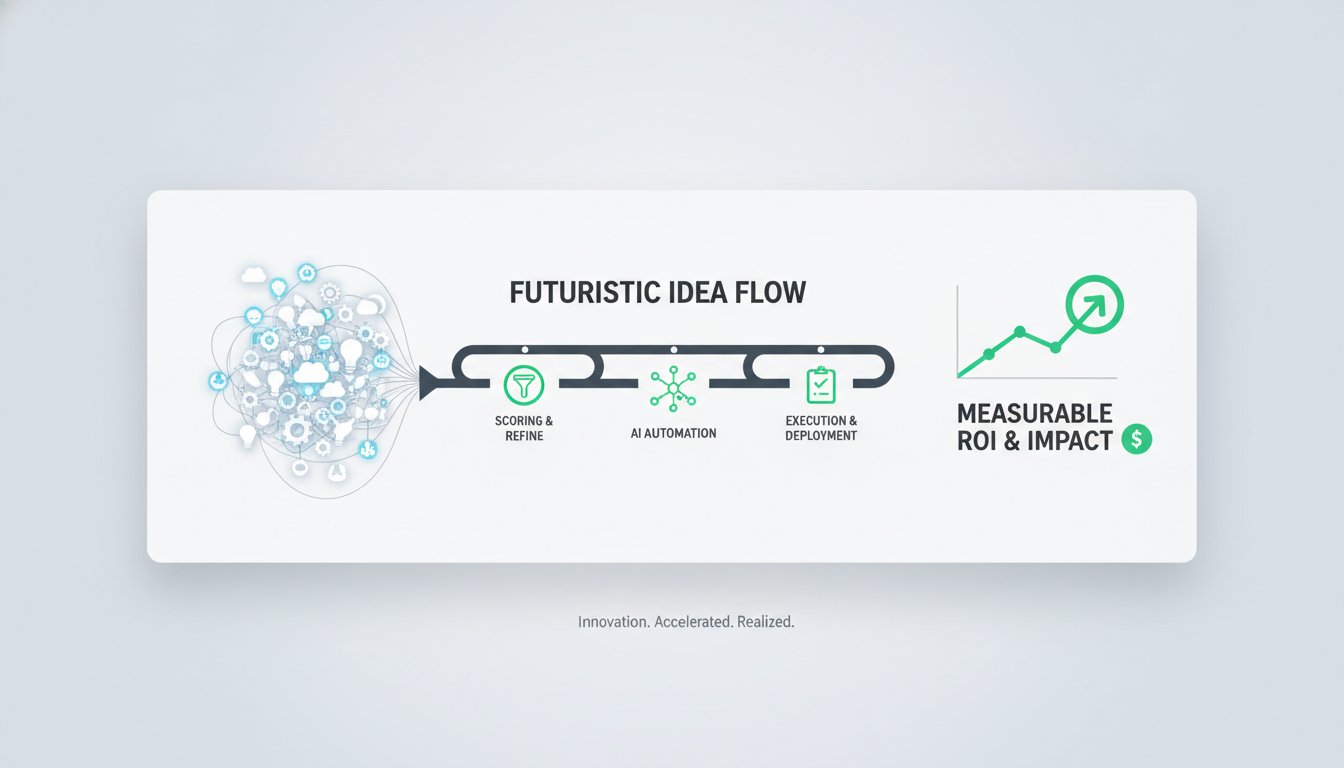
Stop treating your innovation pipeline like a dumping ground. Most organizations fail because they lack a filter, allowing low-value “noise” to drown out the billion-dollar breakthroughs. A high-performance innovation lifecycle management system acts as a rigorous sieve, designed for speed and absolute accountability. You need a model that moves fast but refuses to compromise on quality. Each stage must have strict “gate” criteria to stop resource waste before it starts. If a concept can’t prove its worth at the gate, it dies. This isn’t cruelty; it’s a competitive necessity. This lifecycle is a continuous loop that feeds back into your continuous improvement efforts, ensuring that every launch informs the next spark.

Stage 1 & 2: Capture and Refine

Innovation is a team sport, not an executive privilege. You must crowdsource ideas from your employees, customers, and partners simultaneously to gain a 360-degree view of your potential. Raw ideas are often messy. Use collaborative refinement to let your community polish those concepts into something viable. This is where gamification becomes your best friend. Use voting and leaderboards to spark healthy competition; it’s the fastest way to drive high-quality participation. When the stakes are visible, the best ideas naturally rise to the top. If you want to see this in action, consider how an automated idea management platform can handle this volume without breaking a sweat.

Stage 3 & 4: Evaluate and Validate

Remove the “who you know” bias from your selection process. You need objective scoring models that weigh ideas against your strategic goals, technical feasibility, and market demand. This keeps the process fair and results-driven. These stages serve as the ultimate stress tests. Use rapid prototyping and business case development to find the cracks in a concept before you commit serious capital. For a deeper look at how to structure these gates, the Innovation Management Framework provides a research-backed approach to balancing risk and reward. You can also run targeted innovation challenges to solve specific, high-stakes problems with laser precision.

Stage 5: Implement and Measure ROI

This is where the rubber meets the road. Successful concepts must transition seamlessly from the innovation pipeline to your project management office for full-scale execution. ROI tracking is the only true metric of innovation success. If you can’t measure the financial impact, you’re just playing around. You must link every implemented idea back to hard financial or operational KPIs, such as cost savings, new revenue streams, or hours of labor recovered. This data doesn’t just justify your program; it fuels the next cycle of growth by proving that innovation is a profit center, not a cost center.

Stop the Chaos: Why Most Innovation Lifecycles Fail

Most innovation programs are dead on arrival. They quickly devolve into a “Black Hole” where brilliant ideas go to die, swallowed by bureaucratic silence and indecision. This is the ultimate failure of innovation lifecycle management. When your best people realize their contributions vanish without a trace, they stop contributing entirely. You can’t run a high-performance engine on an empty tank. If your intake process isn’t followed by immediate, visible action, you aren’t managing innovation; you’re just hosting a digital graveyard.

Subjectivity is the enemy of ROI. Far too often, the “HIPPO”, which is the Highest Paid Person’s Opinion, dictates which projects move forward. This ego-driven selection process ignores market data and technical feasibility, leading to massive resource waste on vanity projects. Worse yet, a lack of executive visibility means leadership can’t see the value being created. Without clear dashboards and real-time reporting, innovation looks like a nebulous expense. When the next budget cycle hits, these invisible programs are the first to be gutted. You need data to defend your seat at the table.

The Administrative Overhead Trap

Administrative Paralysis is the #1 killer of enterprise innovation. If your process relies on a chaotic mess of emails and spreadsheets, you’re bleeding time and money. Consider the hidden financial drain of manual tracking. Managers spend countless hours updating status reports and chasing approvals through fragmented channels. This friction leads to inconsistent evaluations and missed opportunities. High-impact concepts stall in the pipeline while mediocre ideas stay on life support simply because no one has the data to kill them. Manual “Email and Spreadsheet” innovation isn’t just slow; it’s a recipe for total stagnation. To break this cycle, organizations need enterprise innovation tools designed for execution rather than just ideation.

The Engagement Gap

Top-down mandates fail because they ignore the goldmine of frontline insights. The most dangerous failure in the lifecycle is the broken feedback loop. When a contributor is left in the dark, the psychological fallout is devastating. They don’t just stop submitting ideas; they lose faith in the organization’s mission. A non-transparent process breeds a culture of cynicism where employees feel like their expertise is irrelevant. You don’t just lose a single idea; you lose the very spirit of innovation across your workforce. To dominate in 2026, you must replace this “Black Hole” with radical transparency and automated updates that keep every contributor in the loop.

Modernizing the Workflow: AI and Automation in 2026

AI-Powered Idea Evaluation

Stop drowning in a sea of duplicate submissions and fragmented data. AI now automatically categorizes and deduplicates hundreds of entries in seconds, ensuring your pipeline remains lean and relevant. It uses sophisticated sentiment analysis to gauge community excitement, identifying the “hidden gems” that resonate most with your workforce. By leveraging historical data, AI-driven scoring models flag high-potential concepts with surgical precision. This removes human bias and ensures that the most impactful winners get the attention they deserve. It’s not just about efficiency. It’s a total reimagining of how we value and prioritize human creativity.

Automating the Implementation Pipeline

The transition from a winning idea to a live project is usually where momentum dies. Automation fixes this by triggering workflows the moment a “gate” approval is granted. You don’t need to send another “status update” email ever again. These systems keep every stakeholder informed through automated notifications, ensuring absolute accountability across the board. By integrating your innovation lifecycle management platform directly with execution tools like Jira or Trello, you bridge the gap between inspiration and implementation. If you’re ready to weaponize these tools and eliminate administrative friction, explore how the Ideawake Idea Management Platform can automate your entire workflow from spark to scale.

The Ideawake Edge: Innovation Lifecycles Built for Scale

Stop settling for fragmented tools that only handle half the job. Most platforms are nothing more than glorified digital suggestion boxes that leave you stranded when it’s time to actually execute. Ideawake is the modern architecture built for high-impact results. It provides a relentless, end-to-end framework that takes you from the first raw spark to a definitive ROI calculation. This is the only innovation lifecycle management solution designed to eliminate administrative friction and maximize output. It’s built for leaders who demand speed and refuse to accept mediocrity. By automating the grunt work, you can dramatically slash implementation time and focus your energy on scaling the winners.

End-to-End Visibility and Accountability

Chaos is the enemy of growth. Ideawake provides a “Single Source of Truth” that brings every stakeholder into alignment. No more chasing updates across multiple departments or losing track of high-potential concepts in buried email threads. Our executive dashboard turns your innovation pipeline into a predictable line item, giving leadership the real-time data they need to make bold decisions. We don’t just ask for participation; we engineer it. Our gamification features ensure total engagement from the frontline, turning the ideation process into a high-energy competition where everyone is invested in the outcome. This isn’t just software. It’s a culture shift.

ROI Measurement That Numbers Don’t Lie About

Innovation without measurement is just a hobby. Ideawake provides specialized tools that track the hard financial impact of every implemented idea. Whether it’s direct cost savings or new revenue streams, you’ll have the data to prove exactly how much value your program is generating. This level of transparency is your strongest weapon during budget season. Use our data-driven analytics to justify your spend and expand your innovation initiatives with total confidence. You aren’t just guessing anymore. You’re operating with a level of precision that makes success inevitable. See how Ideawake turns ideas into ROI today and stop leaving your organization’s future to chance.

Dominate the Future of Innovation

The era of “hoping for the best” is over. You’ve seen how a high-velocity innovation lifecycle management framework replaces administrative chaos with a streamlined engine for growth. By leveraging AI-driven innovation insights and gamified participation engines, you can finally capture the untapped potential of your entire workforce. It’s time to stop letting brilliant ideas die in the void and start scaling the concepts that actually move your bottom line. Mediocrity is a choice, and it’s one your organization can no longer afford to make.

You have the roadmap. Now you need the high-performance engine to drive it. Ideawake provides the end-to-end visibility and specialized ROI tracking capabilities required to turn innovation from a nebulous cost center into a massive, predictable profit driver. Don’t let your competition outpace you while you’re stuck managing manual spreadsheets and broken feedback loops. Take absolute control of your organization’s destiny and build a culture where measurable results are the only metric that matters. Your transformation into a market leader starts with a single, decisive step.

Ready to turn raw ideas into pure ROI? Book a high-energy demo of Ideawake today.

Success isn’t a happy accident. It’s engineered. Go out and build the future you’ve been talking about.

Frequently Asked Questions

What is the main goal of innovation lifecycle management?

The primary objective is to transform raw, chaotic ideas into measurable business value with maximum velocity and zero waste. It isn’t just about collecting suggestions; it’s about engineering a repeatable, high-performance flow from the initial spark to full-scale implementation. By creating a disciplined system, you ensure that innovation becomes a predictable revenue driver rather than a series of lucky accidents.

How does innovation lifecycle management differ from project management?

Innovation management focuses on the “what” and “why,” while project management handles the “how.” While project management is about execution and efficiency within defined parameters, innovation lifecycle management is about discovery, vetting, and validating concepts before they ever reach the project stage. It acts as the critical filter that ensures your project management office only works on high-impact winners.

Can innovation lifecycle management work for small teams or is it just for enterprises?

Structure is essential for small teams that cannot afford to waste limited resources on low-value experiments. Small teams actually have a speed advantage, allowing them to iterate through failure loops much faster than bloated enterprises. Implementing a structured lifecycle early prevents the administrative chaos that typically kills growth as a team begins to scale and the volume of ideas increases.

How do you measure the success of an innovation lifecycle?

Success is measured by hard financial and operational KPIs, specifically ROI, cost savings, and new revenue generated. You should also track velocity metrics, such as the time it takes to move an idea from intake to implementation. If you can’t link an innovation initiative back to a line item on your balance sheet, you haven’t reached the end of the lifecycle yet.

What role does AI play in the innovation lifecycle in 2026?

In 2026, AI acts as a force multiplier by automating idea categorization, deduplication, and predictive scoring. It removes the manual grunt work of vetting hundreds of submissions and identifies market trends before they become obvious to your competitors. This allows managers to shift from reactive tracking to proactive strategy, using data-driven insights to launch targeted innovation challenges that solve future problems today.

How do you prevent an innovation pipeline from becoming a “black hole” for ideas?

Radical transparency and automated feedback loops are the only way to kill the black hole effect. Contributors must receive instant, visible updates on the status of their ideas at every stage of the gate process. When you use an innovation lifecycle management platform to automate these communications, you maintain high engagement and prove to your team that their insights are actually being valued.

What are the most common bottlenecks in the innovation lifecycle?

The most frequent bottlenecks occur at the evaluation and approval stages due to subjective decision-making and slow manual sign-offs. Programs often stall when they rely on a single executive’s opinion rather than objective scoring models. Transitioning from the innovation pipeline to the execution team is another common friction point that can be solved through automated workflow triggers and deep platform integration.

Is innovation lifecycle management software worth the investment for a startup?

It is a critical investment because startups live or die by their ability to pivot and scale the right ideas. Relying on ad-hoc methods leads to inconsistent results and burned capital. A dedicated platform provides the structure needed to attract investors by showing a disciplined, data-backed approach to product development and market disruption from day one.

Article by

Coby Skonord

Coby Skonord is the co-founder and CEO of Ideawake. Since 2013 he has worked with enterprise innovation, continuous improvement, and HR leaders to turn employee ideas into measurable business impact.