
Tag Archives: innovation platform

Best Platform for Innovation Challenges: The 2026 Buyer’s Comparison Guide

Best Platform for Innovation Challenges: The 2026 Buyer’s Comparison Guide
Coby Skonord|
June 30, 2026

One organization using a top-tier innovation platform recently reported a realized Annual Operating Income Contribution of $262 million, proving that selecting the best platform for innovation challenges transforms ideation from a cost center into a massive profit engine. You likely already know that manual spreadsheets and passive suggestion boxes are where great ideas go to die. It’s frustrating to watch your team spend dozens of hours on administrative data entry while employee engagement numbers continue to crater. Most leaders are tired of “innovation theater” that fails to move the needle on the bottom line.

This 2026 guide will help you cut through the noise by breaking down the top-rated platforms and the specific criteria you need to evaluate to drive high engagement and measurable ROI. You’ll learn how to leverage new AI capabilities for trend reporting and decision coaching, ensuring your program produces viable business outcomes without doubling your workload. We’ll examine the shift toward customized pricing and end-to-end lifecycle support to help you choose a partner that provides a superior path forward. It’s time to stop settling for average results and start scaling your impact.

Key Takeaways

  • Understand why user experience is the primary driver of adoption and how intuitive design prevents employee engagement from plummeting.
  • Identify the best platform for innovation challenges by prioritizing agile, lightweight architectures that favor rapid deployment over legacy administrative bloat.
  • Learn to eliminate “innovation theater” by implementing multi-stage evaluation workflows that move beyond ideation toward measurable execution.
  • Discover how to secure executive buy-in by presenting performance metrics and data-backed insights that align directly with C-suite financial priorities.
  • Explore how AI-powered automation can strip away the most tedious administrative tasks, allowing your team to focus on high-value strategic growth.

What is an Innovation Challenge Platform?

An innovation challenge platform isn’t just a digital repository; it’s a high-impact engine designed to solve specific business problems through structured, time-bound initiatives. It provides a centralized environment where organizations launch, manage, and scale their most critical problem-solving efforts. Unlike passive systems, it operates on a “pull” model. This means leadership identifies a specific operational bottleneck or market opportunity and invites the workforce to solve it. This proactive approach is exactly why the best platform for innovation challenges must offer more than just a place to submit ideas. It must coordinate cross-functional teams, manage external crowdsourcing, and track the financial impact of every successful pilot directly against the company’s bottom line.

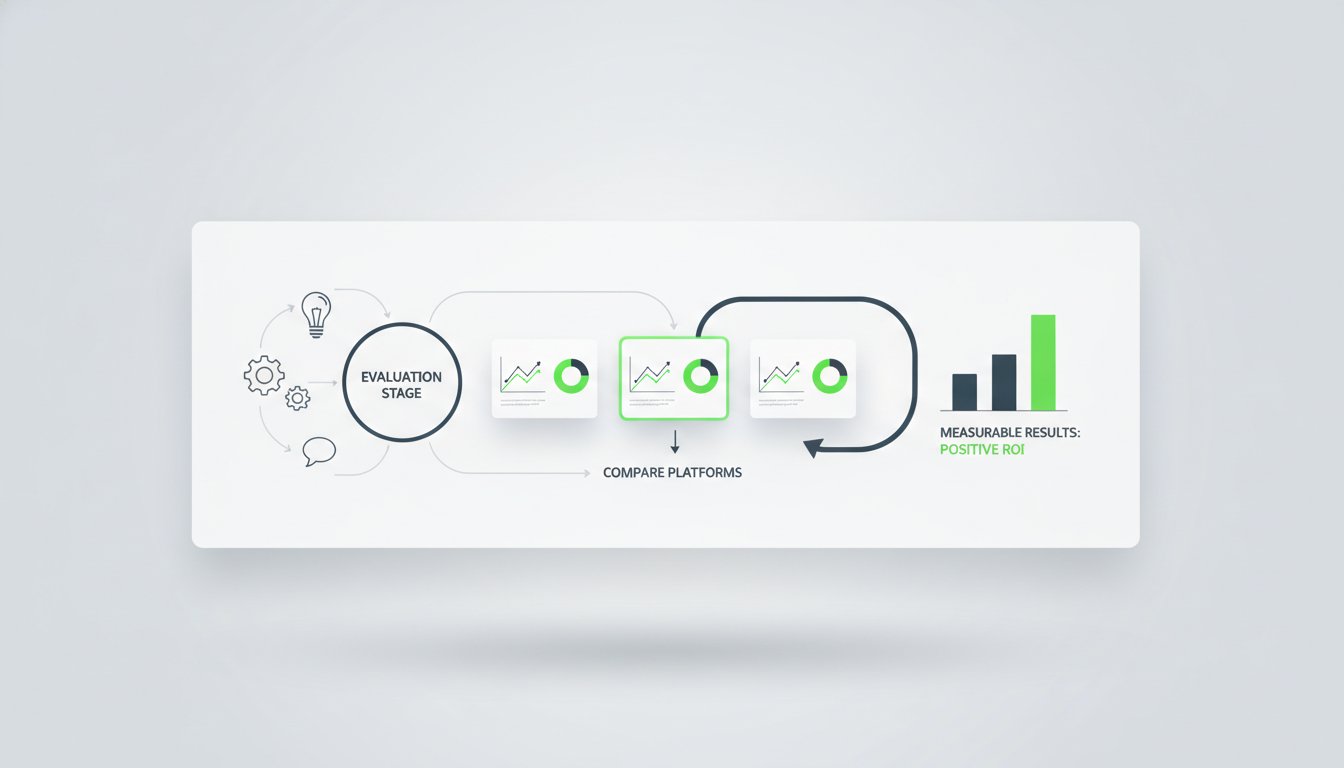
The core components of these platforms involve submission portals that capture structured data, evaluation workflows that utilize multi-stage scoring, and impact tracking modules that link innovation to the P&L. Without these elements, you aren’t innovating; you’re just hosting a digital suggestion box. High-performance platforms ensure that every stakeholder, from the frontline employee to the C-suite executive, has visibility into the process, turning abstract creativity into a repeatable, data-driven workflow.

Innovation Challenges vs. Traditional Idea Management

Traditional idea management often suffers from the “evergreen” trap where ideas trickle in without context, leading to a massive backlog of irrelevant suggestions. Innovation challenges flip the script. By using structured Challenge Briefs, you guide participants toward high-priority strategic goals. This focused approach is a core tenet of open innovation, where internal and external talent collaborate on specific outcomes. Organizations that leverage idea crowdsourcing within these time-bound windows see significantly higher engagement rates because there’s a clear deadline and a defined “why” behind the effort. It creates a sense of urgency that passive suggestion loops simply cannot replicate.

The Role of Modern Architecture in 2026

Legacy R&D systems are failing to meet the speed requirements of modern business. They’re too slow, too rigid, and disconnected from the frontline. Modern architecture is cloud-based and mobile-first, ensuring that a technician on the factory floor has the same level of access as an analyst in the corporate office. Speed is the new currency of competitive advantage. In 2026, the best platform for innovation challenges must incorporate AI-driven analytics to automate the most tedious parts of the manager’s job, such as trend reporting and decision coaching. Computing innovation is the process of creating and implementing new technologies, such as cloud-native software and AI-driven analytics, to solve complex problems and improve organizational efficiency. By utilizing this modern architecture, organizations can move ideas from submission to implementation in days rather than quarters, ensuring they don’t miss critical windows of opportunity.

Key Criteria for Selecting the Best Platform for Innovation Challenges

Beyond the interface, your evaluation workflow must be robust enough to handle the volume of a global organization. You don’t want 500 ideas dumped on one manager’s desk. You need a system capable of multi-stage reviews and expert scoring. This ensures that only the top 5% of submissions, those with the highest potential for impact, move toward implementation. Real-world examples like the Community College Innovation Challenge demonstrate how structured, engaging environments drive significant participation in complex problem-solving. To see how these criteria translate into actual results, you can schedule a personalized walkthrough of our platform.

Real-time reporting is non-negotiable. You need visibility into the innovation pipeline to defend your budget. The best platform for innovation challenges provides dashboards that translate raw engagement data into projected ROI. This allows you to show stakeholders exactly how much value is being generated at every stage of the funnel. To maintain this momentum, look for gamification for employee engagement features like leaderboards and social voting. These aren’t just “fun” additions; they’re psychological triggers that keep your workforce engaged over the long term.

Administrative Efficiency and AI Integration

Manual de-duplication is a productivity killer. When you receive hundreds of submissions, AI should handle the heavy lifting of categorizing and flagging duplicates. Using AI tools for innovation managers allows your team to focus on strategic coaching rather than data entry. Automated notifications and follow-ups are equally vital. They ensure that no idea falls into a “black hole,” which is the fastest way to kill employee trust in your program.

Build vs. Buy: The Strategic Decision

Developing an internal tool often seems cost-effective at first glance. However, the hidden costs of maintenance, security compliance, and feature updates quickly erode any perceived savings. Before committing your dev team, consult a build vs buy idea management software guide to help you calculate the true total cost of ownership. Specialized platforms offer immediate speed-to-market and robust security that custom-built tools rarely match. This allows you to start generating results in days rather than waiting months for a development cycle to finish.

Top Innovation Challenge Platforms Compared

Selecting the best platform for innovation challenges requires looking past marketing brochures to the actual architectural philosophy of the software. The market in 2026 has split into two distinct categories. On one side, you have legacy enterprise suites designed for massive, multi-year deployments. On the other, agile solutions focus on immediate impact and high user adoption. Your choice depends entirely on whether you prioritize exhaustive feature lists or the speed of actual business results. Most leaders are moving away from bloated systems that require months of training in favor of intuitive solutions that integrate into existing workflows.

Deployment speed is the most critical differentiator. Legacy systems often take three to six months to fully implement, involving complex data migrations and extensive IT oversight. Modern architecture reduces this timeline to days. These newer platforms prioritize “plug-and-play” functionality, allowing you to launch your first challenge almost immediately. This agility is essential for responding to sudden market shifts or urgent operational bottlenecks. Scalability is equally vital; a platform must be capable of starting with a single department pilot and expanding to a global enterprise without a total system overhaul. Integration is seamless in the modern stack, connecting directly with Microsoft Teams, Slack, and Jira to ensure innovation becomes a natural part of the daily tech stack.

Traditional Enterprise Suites: Complexity vs. Control

Legacy innovation management systems are built for organizations with highly complex, multi-layered innovation departments. These platforms offer unparalleled depth in configuration, making them a fit for users who need to manage thousands of concurrent projects with intricate governance requirements. They provide high levels of customization for every stage of the funnel. However, this complexity is a double-edged sword. The administrative overhead required to maintain these systems often necessitates dedicated full-time staff just to manage the software, which can lead to administrative friction that slows down the very innovation it’s meant to accelerate.

Modern Agile Platforms: The Ideawake Approach

Modern solutions have gained significant ground by prioritizing the user experience and low administrative friction. These best ideation platforms software solutions are built on architecture that favors mobile accessibility and frontline engagement. They recognize that if a factory floor worker or a field technician can’t submit an idea in 30 seconds, they simply won’t participate. By focusing on an end-to-end lifecycle from a single dashboard, Ideawake automates the most tedious parts of the process. This ensures that the best platform for innovation challenges doesn’t just collect data, but provides a clear, automated path to implementation and measurable ROI reporting.

Overcoming the Common Pitfalls of Innovation Challenges

Even the best platform for innovation challenges will fail if the underlying process is designed for “Innovation Theater” rather than actual execution. This trap occurs when leadership celebrates the sheer volume of ideas while ignoring the implementation rate. It’s a hollow exercise that eventually leads to cynicism. To drive real results, you must move beyond the vanity metric of “total submissions” and focus on how many concepts actually reach the pilot stage. Administrative friction is the primary culprit here; when managers are buried in spreadsheets, they lack the capacity to move winning ideas forward.

Engagement drop-off is another silent killer. Statistics show that most challenges experience a massive surge in the first 48 hours followed by a steep decline. Maintaining momentum requires more than just an initial announcement. You need a system that uses social proof, automated triggers, and peer recognition to keep the conversation alive. Without these psychological drivers, your challenge risks becoming a one-off event rather than a sustained problem-solving effort. Solving these bottlenecks is the difference between a program that generates “good vibes” and one that generates a measurable return on investment.

Establishing Clear Evaluation Criteria

Transparency is the foundation of participant trust. If employees don’t understand how their contributions are being judged, they won’t participate in the next round. You must establish a visible scoring rubric that aligns with your strategic goals from day one. Utilizing a structured idea evaluation process and criteria ensures that every submission is handled fairly and objectively. Expert Review Panels play a critical role here, providing the technical validation needed to separate high-potential concepts from those that aren’t feasible for the current market.

Measuring What Matters: ROI and Impact

Executive buy-in is won or lost on the P&L, not the suggestion count. To secure long-term funding, you must present data that resonates with C-suite financial priorities. Stop reporting on “engagement” in isolation and start reporting on projected financial impact. By using an idea management ROI calculator, you can translate raw innovation data into hard dollars. This allows you to track implementation progress and ensure that winning ideas aren’t just celebrated, but actually reach the market to drive growth. If you’re ready to eliminate the administrative friction that stalls your innovation program, book a free demo today to see our automated evaluation workflows in action.

Why Ideawake is the Strategic Choice for 2026 Challenges

Choosing the best platform for innovation challenges isn’t just about selecting software; it’s about selecting a partner that understands the urgency of business transformation. Ideawake is engineered to eliminate the administrative friction that stalls most enterprise programs. While legacy systems often require months of configuration and heavy IT oversight, our platform is built for speed. You can move from procurement to your first live challenge in days. This rapid deployment ensures that your organization captures market opportunities while they’re still relevant rather than waiting for a long development cycle to finish.

Efficiency is driven by Ideawake AI, which automates the most tedious aspects of the innovation manager’s role. Our system handles de-duplication, categorization, and initial sentiment analysis, allowing your team to focus on high-value strategic coaching. We provide full lifecycle support that spans from the initial spark of a hackathon to the final ROI report. By integrating directly into the tools your team already uses, like Microsoft Teams and Slack, we ensure that innovation becomes a seamless extension of the workday. We don’t just collect ideas; we provide the architecture to execute them.

The Ideawake Advantage: Modern Architecture

Get Started with Your First Challenge

Success begins with a guided implementation process designed to ensure your first challenge delivers immediate value. We don’t just hand you the keys; we provide the framework for a repeatable, scalable innovation engine. You can explore our extensive library of innovation resources to find templates and challenge briefs that have proven successful in other enterprise environments. For a detailed technical blueprint on how to structure and launch your program, our internal innovation challenge platform enterprise launch template provides a step-by-step framework proven to drive measurable results. If you’re ready to see how our platform can transform your organization’s output and eliminate the “innovation theater” trap, sign up for a personalized walkthrough. It’s time to stop settling for average engagement and start driving measurable financial impact.

Scale Your Innovation Impact in 2026

Transitioning from a passive suggestion box to a proactive, challenge-driven model is the only way to ensure your innovation program survives the scrutiny of the 2026 fiscal year. By prioritizing user experience and modern architecture, you eliminate the administrative friction that typically kills employee participation. Identifying the best platform for innovation challenges requires a partner that values execution over “innovation theater,” moving your team from simple ideation to verifiable financial impact. Organizations like HP and United Healthcare have already made this shift, leveraging tools that prioritize security and speed.

Our SOC 2 Type II Certified platform is designed to reduce administrative time by up to 80%, allowing your managers to focus on strategic growth rather than manual data entry. We provide the transparency and automated workflows needed to build lasting trust with your workforce while delivering the ROI metrics your C-suite demands. Don’t let another quarter pass with untapped potential sitting in a spreadsheet. Ready to see how Ideawake can scale your innovation program? Book a demo today.

Your organization already has the talent to solve its toughest problems. We simply provide the system to unlock it.

Frequently Asked Questions

What is the best platform for innovation challenges for a large enterprise?

The best platform for innovation challenges for a large enterprise is one that balances robust governance with high user adoption. While legacy systems often target organizations with multi-layered requirements, modern platforms focus on reducing administrative friction to ensure frontline engagement. Enterprise buyers should prioritize SOC 2 compliance and seamless integrations with existing stacks like Microsoft Teams or Slack to ensure the tool becomes a natural part of the daily workflow.

How much does innovation challenge software typically cost?

Most industry leaders have moved to a customized pricing model, requiring direct consultation to determine costs based on seat count and feature requirements. However, industry benchmarks like Traction Technology list pricing at $4,000 per standard seat per year as of June 2026. Buyers should evaluate the total cost of ownership, including potential setup fees and the internal resource hours required to manage the system, rather than just the initial licensing fee.

Can I run a virtual hackathon using these platforms?

Yes, these platforms are specifically designed to host virtual hackathons by providing a centralized environment for team formation, idea submission, and expert judging. Unlike generic collaboration tools, an innovation platform tracks the entire lifecycle of the event, from initial brainstorming to the final ROI report. This structure prevents the “black hole” effect where ideas from a hackathon are celebrated but never implemented, ensuring a clear path from creativity to production.

How do I ensure high employee engagement in an innovation challenge?

High engagement is achieved through a mix of intuitive user experience and consistent feedback loops. If the submission process takes longer than 30 seconds, participation rates will drop significantly. Successful programs use gamification for employee engagement features like leaderboards and social voting to maintain momentum beyond the first 48 hours. Most importantly, you must demonstrate that ideas are being evaluated and implemented, as perceived “innovation theater” is the fastest way to kill future participation.

What is the difference between idea management and innovation challenges?

Idea management is typically an “evergreen” process where suggestions are collected continuously, often leading to administrative backlogs and irrelevant submissions. Innovation challenges are time-bound, structured initiatives focused on solving a specific business problem. This “pull” model creates a sense of urgency and provides participants with a clear “Challenge Brief,” resulting in higher quality ideas that align directly with current strategic priorities and executive goals.

How does AI help in managing innovation challenges?

AI significantly reduces administrative overhead by automating the de-duplication and categorization of hundreds of submissions. Modern platforms use AI for sentiment analysis, trend reporting, and even decision coaching to help managers identify high-potential concepts faster. By stripping away the most tedious parts of the evaluation process, AI allows your innovation team to focus on strategic implementation and coaching rather than manual data entry and spreadsheet management.

Is it better to build our own internal innovation tool or buy a platform?

Buying a specialized platform is almost always superior to building an internal tool due to speed-to-market and lower maintenance costs. Custom-built tools often suffer from security vulnerabilities and lack the robust feature sets, such as AI-powered de-duplication, found in dedicated software. Specialized providers offer immediate SOC 2 compliance and continuous updates, allowing your internal development team to focus on your core product while you start generating ROI in days. If you’re evaluating how to structure your rollout, the 2026 enterprise launch template for an internal innovation challenge platform offers a practical framework for getting your program off the ground quickly.

Article by

Coby Skonord

Coby Skonord is the co-founder and CEO of Ideawake. Since 2013 he has worked with enterprise innovation, continuous improvement, and HR leaders to turn employee ideas into measurable business impact.

The Definitive Guide to Innovation Management Platforms in 2026

The Definitive Guide to Innovation Management Platforms in 2026
Coby Skonord|
June 7, 2026

Stop treating your company’s future like a digital suggestion box. Most organizations are currently buried under a mountain of uncoordinated spreadsheets and siloed projects that ultimately go nowhere. It’s a recipe for mediocrity. Modern innovation management is not about collecting ideas; it’s about eliminating the administrative friction that kills them before they can scale. You’ve likely felt the frustration of watching high-potential concepts die in a manual tracking system while employee engagement hits rock bottom. It is exhausting to manage a program that delivers zero measurable impact.

Key Takeaways

  • Replace the “dead suggestion box” with a high-velocity innovation management platform designed to capture and execute high-impact internal intelligence.
  • Implement the three critical pillars of scalable capture, transparent evaluation, and rapid scaling to eliminate the administrative friction that kills potential breakthroughs.
  • Leverage modern AI-driven architecture to slash implementation timelines from months to weeks while bypassing the adoption hurdles of legacy software.
  • Shift from tracking vanity metrics like “number of ideas” to a hard ROI framework that measures cost savings, revenue growth, and cultural impact.
  • Deploy a zero-complexity system that ensures immediate employee engagement and provides total visibility into the financial value of every new initiative.

What is an Innovation Management Platform? (Unlocking Organizational Potential)

Forget the dusty box in the breakroom. An innovation management platform is a centralized, high-performance engine built to capture and execute internal intelligence at scale. It transforms raw employee insights into measurable financial growth. While the “Dead Suggestion Box” of the past acted as a graveyard for good ideas, the modern platform is a living system that forces accountability and drives action. In 2026, top-down mandates are too slow. Markets move at the speed of light; to survive, you need a bottom-up strategy that empowers those closest to the problems to solve them. This isn’t about being “nice” to employees. It’s about competitive survival in a market that rewards speed and punishes hesitation.

Effective innovation requires three distinct roles working in total sync. Leadership sets the strategic “North Star” to ensure efforts aren’t wasted on trivialities. Managers act as the critical filters, using data-driven workflows to evaluate ideas based on hard evidence rather than gut feelings. Finally, employees provide the boots-on-the-ground execution and the creative spark that keeps the organization ahead of the curve. When these three groups collaborate within a unified system, the result is a repeatable cycle of high-impact growth.

The Shift from Passive Collection to Active Management

Stop waiting for “lightning to strike.” Passive collection is a relic of the pre-digital era. Active management means creating a culture where every employee knows exactly which strategic problems the company needs to solve. When you align individual creativity with corporate objectives, you turn a chaotic brainstorm into a laser-focused strike. What is Innovation Management? It is the disciplined process of turning possibilities into profits. The innovation management platform is the nervous system of an agile organization.

Innovation Management vs. Project Management: Knowing the Difference

Don’t confuse discovery with execution. Project management tools are built to track known tasks with fixed deadlines. They’re excellent at getting things done but terrible at finding out what needs to be done. Innovation management is about discovering unknown opportunities. If you try to force the ideation phase into a rigid project management tool, you’ll suffocate the very creativity you’re trying to foster. These systems must integrate, not compete. You use the platform to find the signal in the noise, then you move the winning initiatives into your execution pipeline. Using the wrong tool at the start is a guaranteed way to ensure your best ideas never see the light of day.

The 3 Critical Pillars of a High-Impact Innovation Lifecycle

Most innovation programs fail because they lack a functional backbone. They start with a burst of creative energy and end in a bureaucratic bottleneck where ideas go to die. To drive massive organizational ROI, you must move beyond ad-hoc brainstorming and implement a repeatable, high-velocity lifecycle. A unified innovation management platform prevents high-potential initiatives from stalling in the middle of the funnel by providing a structured path from the first spark of an idea to the final product launch. Stop settling for disjointed efforts; you need a system that enforces accountability at every stage.

Pillar 1: Crowdsourcing Intelligence at Scale

Scalable idea capture is about more than just having a place to submit thoughts. It’s about leveraging the collective brainpower of your entire ecosystem, including employees, customers, and partners. Instead of waiting for random suggestions, use specialized innovation challenges to point that brainpower at specific, high-stakes business problems. A “zero-barrier” entry point is essential here. If the submission process is difficult, your best people won’t participate. You need to make it as easy as possible for front-line workers to identify inefficiencies that leadership might never see from the boardroom. Building a robust idea management system that removes these barriers is the foundation of any high-performance innovation program.

Pillar 2: Eliminating Bias Through Collaborative Evaluation

The “HiPPO” (Highest Paid Person’s Opinion) is the natural enemy of true innovation. Relying on a single leader’s gut feeling leads to expensive mistakes and missed opportunities. Modern systems use peer-voting and expert scoring to filter the signal from the noise, ensuring that “hidden gem” ideas rise to the top based on merit rather than politics. According to recent Innovation Management Market Trends, the shift toward transparent, data-driven selection is a primary driver of market growth. Automating these evaluation workflows ensures every contributor receives a timely response, which is the single most important factor in maintaining long-term engagement. You can start optimizing your evaluation process today to ensure no profitable idea is ever ignored again.

Pillar 3: From Ideation to ROI Measurement

Bridging the “Innovation Gap” requires a direct link between a good idea and a live implementation. If your ideation system doesn’t talk to your execution tools, you’re just running a high-priced hobby. You must integrate with project management software to track progress post-approval and maintain a constant feedback loop with the original innovator. This transparency keeps the momentum high and allows you to scale your innovation efforts without adding a massive administrative team. By focusing on hard ROI metrics like cost savings and revenue growth, you transform innovation from a vague cultural goal into a predictable financial engine.

Why Modern Platforms Crush Legacy Innovation Software: The AI Advantage

Legacy software is a productivity killer. It’s often disguised as “comprehensive,” but in reality, it’s a labyrinth of complex menus and administrative bloat that takes six months to deploy. By the time you’ve finished onboarding, your market has already shifted. A modern innovation management platform rejects this stagnation. Instead of months of setup, high-performance architecture allows you to go live in weeks. This speed isn’t just a convenience; it’s a competitive weapon. While your competitors are still configuring permissions, you’re already capturing high-impact insights and driving revenue.

The true differentiator in 2026 is the AI force multiplier. Managing a global innovation program used to require a small army of analysts to sift through thousands of submissions. That’s a losing game. Modern tools use machine learning to evaluate ideas 10x faster than any human team. This eliminates the “Administrative Headache” that causes most programs to collapse under their own weight. You don’t need more headcount; you need a smarter system that handles the heavy lifting of data processing while your leaders focus on strategic decision-making.

The AI Revolution in Idea Evaluation

AI has transformed the evaluation phase from a bottleneck into a high-speed pipeline. By using natural language processing, the system can automatically summarize thousands of individual submissions into actionable strategic themes. It also solves the “I’ve heard this before” fatigue through automated duplicate detection, ensuring that evaluators only spend time on truly unique concepts. By leveraging these advanced tools, an organization can reduce its innovation administrative overhead by up to 80%. This shift allows your team to focus on scaling winners rather than managing spreadsheets.

Gamification: Turning Innovation into a High-Performance Sport

Participation isn’t something you can mandate; it’s something you must inspire. Gamification is the engine that drives recurring engagement by tapping into the psychology of competition and recognition. Leaderboards, badges, and prizes aren’t just “fun” additions. They are essential components of a self-sustaining culture. When employees see their names on a leaderboard or receive public recognition for a winning idea, they move from forced participation to intrinsic motivation. This creates a high-energy environment where innovation feels like a high-performance sport rather than another corporate chore. In 2026, if your platform isn’t engaging, it’s invisible.

Measuring What Matters: A Framework for Innovation ROI and Analytics

Counting ideas is for amateurs. If you’re reporting the “number of submissions” to your CFO, you’ve already lost the room. This is the “Vanity Metric Trap.” It creates a false sense of progress while masking a total lack of financial impact. A high-performance innovation management platform must function as a financial ledger, not just a creative outlet. You need to track the hard ROI-revenue growth and cost savings-to justify your seat at the executive table. Organizations that master this framework don’t just see incremental improvements; they achieve 10x returns on their initial investment by identifying and scaling the highest-value opportunities within their workforce. Stop measuring activity. Start measuring impact.

Your innovation pipeline should be visualized as a financial asset. Every idea in the funnel has a potential valuation, and as it moves through evaluation toward implementation, that value becomes more concrete. By the time an initiative reaches the scale-up phase, you should have total visibility into its projected contribution to the bottom line. This level of transparency transforms innovation from a “nice-to-have” cultural perk into a core business driver that leadership can bank on. Before committing to a solution, reviewing a comprehensive idea management platform buyer’s guide can help you identify the exact features and ROI benchmarks your organization needs to evaluate vendors with confidence.

Tracking the Full Lifecycle Value

True accountability requires direct attribution. You must be able to link specific revenue gains or operational savings back to the original employee-generated idea. High-impact platforms provide real-time dashboards that allow you to report to the board with absolute confidence. Beyond just the dollar amount, you must track “Time to Implementation” as a critical KPI. In a disrupted market, speed is a currency. If your system takes six months to move a cost-saving measure from approval to execution, you’re bleeding money. Efficiency in the pipeline is just as important as the ideas themselves.

Cultural Impact: The Invisible ROI

While hard numbers win budgets, the soft ROI of innovation is what builds long-term resilience. A centralized platform surfaces “Hidden Talent” across your organization, identifying high-performers who may be stuck in roles that don’t utilize their full potential. This engagement directly correlates with higher employee retention. When people feel their intelligence is valued and their ideas are implemented, they stay. You aren’t just building products; you’re building a change-ready workforce that can pivot instantly when market conditions shift. This cultural resilience is the ultimate competitive advantage. If you’re ready to stop guessing and start measuring, you can calculate your potential innovation ROI and build a bulletproof business case today.

Choosing Your Partner: Why Ideawake is the Disruptive Choice for 2026

Settling for legacy bloatware is a choice to remain stagnant. Most traditional tools are high-friction nightmares that prioritize complex consulting contracts over actual organizational results. Ideawake is the unapologetic, modern alternative. We have engineered a cloud-based innovation management platform that strips away the unnecessary complexity of enterprise software and replaces it with a high-velocity engine designed for immediate impact. If your current system takes months to configure and requires an internal specialist just to launch a simple campaign, you aren’t innovating; you’re just managing overhead. Ideawake is the partner of choice for organizations that value speed, accountability, and the relentless pursuit of measurable financial gain.

Our architecture is built on the principle of zero-complexity. We know that if a tool isn’t intuitive, your employees won’t use it. While competitors hide behind “comprehensive” features that nobody understands, we provide a streamlined, end-to-end capability that handles everything from the initial challenge to the final ROI measurement. This is a system built for the disruptors who are tired of watching high-potential ideas die in a bureaucratic bottleneck. We don’t just provide software; we provide a high-performance framework for total organizational transformation. We have eliminated the administrative friction that kills momentum, allowing you to move from ideation to implementation at a pace that legacy platforms simply cannot match.

Built for the Modern Workforce

Get Started with a High-Performance Innovation Pilot

You don’t need a year-long roadmap to start seeing results. We believe in proving value fast. With Ideawake, you can launch your first innovation challenge in less than 30 days. This rapid deployment allows you to start small, prove hard ROI with a single high-stakes problem, and then scale the framework across the entire enterprise with total confidence. It is a disciplined, low-risk path to becoming an innovation powerhouse. Don’t let another quarter slip away while your best ideas remain trapped in spreadsheets. Stop wasting potential and start driving results with Ideawake and transform your organization into a high-performance innovation engine today.

Stop Settling for Mediocrity and Start Scaling Impact

The era of the digital suggestion box is officially over. You now possess the high-performance framework required to build a repeatable, high-velocity engine that transforms raw employee intelligence into a permanent competitive advantage. By deploying a modern innovation management platform, you’re choosing to eliminate the administrative friction that has historically killed growth. You’ve seen how AI can slash your workload and how a disciplined ROI framework can turn cultural shifts into hard financial gains. It’s time to stop managing spreadsheets and start leading a revolution.

Ideawake is built for this exact moment. Our system reduces administrative overhead by 80% and provides rigorous, end-to-end ROI tracking from the first spark of an idea to its final implementation. With our AI-driven evaluation engine, you’ll never miss a high-potential opportunity again. Stop watching your competitors move faster while your best ideas remain trapped in a manual funnel. Book a Demo to See How Ideawake Drives 10x Innovation ROI and take control of your organization’s future. Your team’s untapped potential is waiting. Go unlock it.

Frequently Asked Questions

What is the primary benefit of an innovation management platform?

The primary benefit is the ability to scale high-impact internal intelligence and transform it into measurable financial growth. While ad-hoc brainstorming relies on luck, a centralized system creates a repeatable engine for identifying and executing the most profitable opportunities within your workforce. It eliminates the administrative bottlenecks that kill potential breakthroughs, ensuring that your organization remains agile and stays ahead of market disruptions.

How does innovation software differ from a simple suggestion box?

A suggestion box is a graveyard for ideas, while a modern innovation management platform is a high-velocity execution engine. Suggestion boxes lack transparency, feedback loops, and data-driven evaluation, which leads to low engagement and zero impact. In contrast, a modern platform forces accountability through automated workflows, peer-review systems, and clear implementation paths that bridge the gap between a raw concept and a live product.

Can an innovation platform integrate with my existing project management tools?

Yes, seamless integration is critical for moving from discovery to delivery. An innovation platform discovers unknown opportunities, but you need your existing project management tools to execute the known tasks required to launch them. By connecting these systems, you create a unified pipeline that tracks every initiative from the initial spark of an idea through to final implementation and ROI measurement.

How do you measure the ROI of an innovation management system?

You measure ROI by tracking hard financial metrics like cost savings, revenue growth, and operational efficiency gains directly attributed to implemented ideas. High-performance systems provide real-time dashboards that visualize the financial value of your innovation pipeline at every stage. You should also monitor soft ROI, such as employee retention and engagement levels, which contribute to long-term organizational resilience and a more change-ready workforce.

Is AI really necessary for managing employee ideas?

AI is absolutely necessary for any organization that values speed and efficiency in 2026. Manually evaluating thousands of submissions is a losing game that drains resources and causes delays. Tools like Ideawake AI act as a force multiplier, using machine learning to summarize themes, detect duplicates, and prioritize high-potential concepts 10x faster than a human team. It’s the only way to scale without adding massive administrative headcount.

How long does it take to implement a modern innovation platform?

A modern, cloud-based system can be fully operational in weeks, not the six-month timelines typical of legacy enterprise software. The key is a zero-complexity architecture that allows you to launch your first high-stakes innovation challenge in less than 30 days. Starting with a targeted pilot allows you to prove ROI quickly and then scale the framework across the entire organization with total confidence.

What features should I look for in an enterprise-grade idea platform?

Look for SOC 2 compliance, an open API for easy integrations, and robust AI-driven evaluation engines. You need a platform that supports complex workflows but remains intuitive enough for rapid user adoption. Essential features also include gamification elements like leaderboards and badges to drive recurring engagement, alongside advanced analytics that provide total visibility into your program’s financial impact and time-to-implementation. For a complete breakdown of how to evaluate your options against these criteria, consult the 2026 Idea Management Platform Buyer’s Guide to ensure you select a solution engineered for rapid innovation ROI.

How do we ensure high employee engagement in our innovation challenges?

High engagement is driven by transparency and the psychological power of gamification. Employees need to see that their ideas are actually evaluated and implemented, or they’ll stop contributing. Use specific innovation challenges to point their brainpower at relevant business problems, and reward participation with public recognition and leaderboards. When you move from forced participation to intrinsic motivation, your innovation culture becomes self-sustaining and high-energy. For a deeper dive into building this kind of high-participation culture, explore our complete guide to mastering the modern idea management system and learn how to link employee creativity directly to your bottom line.

Article by

Coby Skonord

Coby Skonord is the co-founder and CEO of Ideawake. Since 2013 he has worked with enterprise innovation, continuous improvement, and HR leaders to turn employee ideas into measurable business impact.