Tag Archives: idea management

Gamification for Employee Engagement: The 2026 Guide to Gamified Innovation

Gamification for Employee Engagement: The 2026 Guide to Gamified Innovation
Coby Skonord|
July 3, 2026

Recent research indicates that 90% of employees report that gamification makes them more productive at work, yet many leaders still struggle to implement effective gamification for employee engagement that actually moves the needle. You’ve likely felt the frustration of launching a challenge only to be met with silence or low-quality submissions that don’t solve core business problems. It’s difficult to justify the budget when you can’t link participation directly to financial growth. We know that burnout is real and traditional suggestion boxes are dead.

This guide will show you how to leverage behavioral psychology and gamified mechanics to transform passive staff into active innovators who drive measurable ROI. We’ll provide a structured framework for generating higher quality ideas and the clear metrics needed to prove the financial impact of your initiatives. It’s time to stop guessing and start building a culture where innovation is a high-performance habit rather than a one-off event.

Key Takeaways

  • Understand how a centralized hub for crowdsourcing ideas replaces outdated suggestion boxes to build a high-performance culture.
  • Learn how to apply Self-Determination Theory and the “Goldilocks zone” of rewards to optimize gamification for employee engagement.
  • Discover a two-stage framework for gamifying the entire innovation lifecycle, from initial ideation to “Shark Tank” style evaluations.
  • Identify critical data points like idea velocity and participation rates to prove the financial impact of your engagement initiatives.
  • Explore how AI-driven insights and automated workflows reduce administrative friction while maximizing the quality of idea submissions.

What is a Gamified Innovation Platform? Defining the 2026 Standard

A gamified innovation platform functions as a centralized hub for managing idea crowdsourcing and evaluation at an enterprise scale. By 2026, these systems have moved beyond the “engagement theater” of previous years, specifically addressing the disengagement peak seen in 2022 where traditional methods failed to connect remote and office-based staff. High-performance cultures now rely on these platforms to transform passive feedback into a transparent, competitive environment where every contribution is tracked and valued. Unlike the static suggestion boxes that often lead to “idea graveyards” due to lack of feedback, a modern platform provides real-time visibility into the innovation process, ensuring that no valuable insight is lost in administrative silos.

To build a successful strategy, leaders must first understand What is Gamification? in a professional context. It’s not about turning the office into a playground or trivializing serious work; it’s the strategic use of game-design elements to solve complex business problems. Implementing gamification for employee engagement allows organizations to lower the psychological barriers that prevent staff from sharing high-stakes insights or challenging the status quo. By distinguishing between “play” as a mindset and “mechanics” as a tool, you can create a system that rewards meaningful progress and expert-level contributions rather than just superficial activity.

The Core Mechanics of Engagement

Why Enterprise Innovation Needs Structure

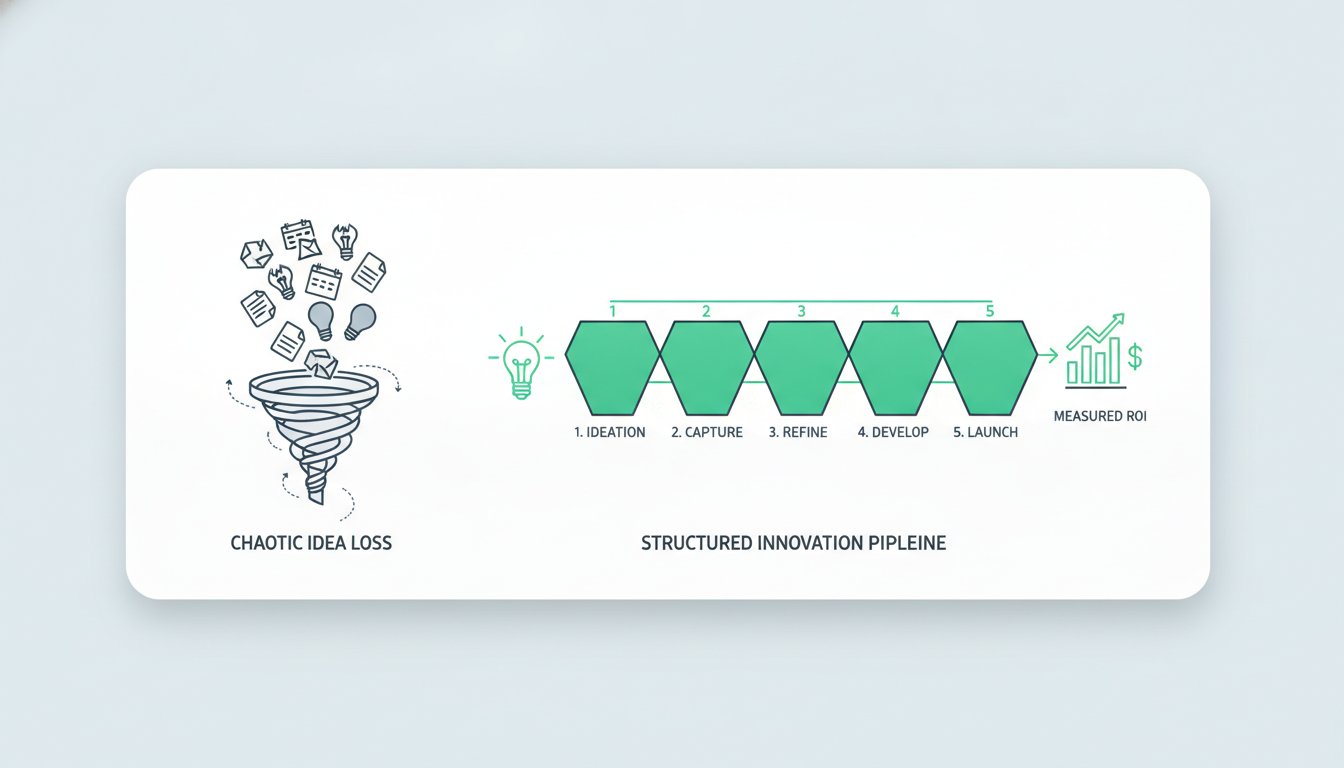
Engagement without alignment is a drain on resources. A structured employee suggestion program ensures that every challenge is tied to a specific KPI or strategic goal. Modern architecture reduces the administrative burden of managing thousands of ideas by using automated workflows to filter concepts. This structure is vital because the innovation lifecycle represents the entire journey from raw concept to implemented ROI, requiring a clear path for every submission to ensure it reaches its full potential.

The Psychology of Participation: Why Gamification Drives Results

Gamification isn’t a gimmick. It’s a calculated response to human psychology. While most engagement strategies fail because they treat employees like cogs in a machine, effective gamification for employee engagement leverages Self-Determination Theory (SDT) to tap into what actually drives human behavior. SDT suggests that for people to be truly motivated, they need to feel three things: autonomy, competence, and relatedness. A gamified platform satisfies these needs by giving staff the freedom to choose which challenges to tackle, the tools to master the innovation process, and a shared space to connect with their peers.

The key to long-term success lies in finding the “Goldilocks zone” between intrinsic and extrinsic motivation. Extrinsic rewards like prizes or points are excellent for sparking initial interest, but they can’t sustain a culture alone. If rewards are too high, people focus only on the prize; if they’re too low, the effort feels wasted. High-performance organizations use gamified mechanics to supplement intrinsic purpose, ensuring that the act of innovating is as rewarding as the recognition that follows. Research from 2026 shows that 72% of employees state that gamification inspires them to work harder because it makes their contributions visible and meaningful.

We also utilize the “Endowed Progress Effect” to maintain momentum. This psychological principle proves that people are more likely to complete a task if they feel they’ve already made a head start. By showing an employee they are already 20% finished with a challenge just by logging in or completing a profile, you drastically reduce the friction of the “blank page.” When combined with social proof, where seeing a colleague’s success triggers a desire to participate, you create a self-sustaining engine of adoption across the entire enterprise.

Tapping into Intrinsic Motivation

True engagement happens when you empower employees by giving them a direct voice in company strategy. Using idea crowdsourcing builds a powerful sense of belonging that traditional top-down management cannot replicate. There is a profound psychological impact when a staff member sees their raw concept move through the pipeline to actual implementation. It transforms their relationship with the company from a simple paycheck to a shared mission. If you want to see how this looks in practice, you can book a free demo to explore the platform architecture.

The Feedback Loop as a Reward

Instant feedback is significantly more motivating than a yearly bonus that arrives months after the effort was exerted. Gamified platforms use automated status updates to keep the “dopamine hit” consistent, ensuring employees don’t feel their ideas have fallen into a black hole. Peer recognition, such as “likes” and comments on a submission, provides immediate social validation. This real-time loop keeps the workforce focused and eager to contribute to the next challenge.

Gamifying the Innovation Lifecycle: From Submission to ROI

Gamification for employee engagement is frequently misapplied as a tool for general HR tasks like attendance or wellness. In a high-performance enterprise, however, it serves as the primary engine for the innovation lifecycle. This journey requires more than just a place to post ideas; it needs a structured path that guides a concept from a raw submission to a measurable return on investment. By gamifying each transition point, organizations can eliminate the “innovation valley of death” where good ideas typically go to die due to lack of momentum. This structured approach ensures that participation leads directly to business outcomes rather than just vanity metrics.

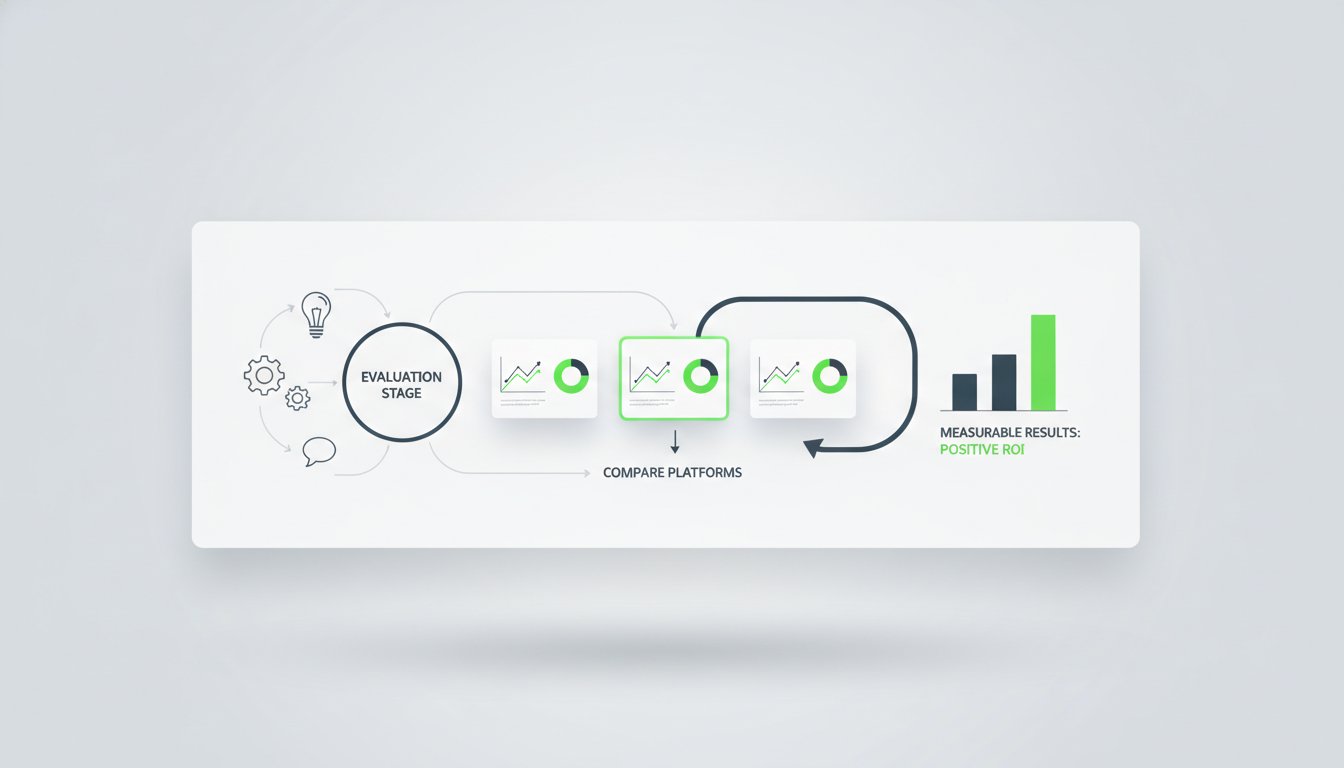
The lifecycle consists of four distinct stages. Stage 1 is Ideation, where challenges and hackathons spark initial creativity. Stage 2 focuses on Evaluation, turning the review process into a competitive, transparent ranking system. Stage 3 is Implementation, where the real work of development is recognized and rewarded. Finally, Stage 4 is Measurement, which tracks the long-term success of projects to prove financial impact. Each stage uses specific mechanics to ensure that the workforce remains focused on high-value problems rather than low-impact suggestions.

Innovation Challenges and Hackathons

Stage 1 relies on creating a sense of urgency. Instead of a permanent suggestion box that employees eventually ignore, leaders should set time-bound goals. Using prize dynamics—where rewards are scaled based on the complexity of the problem—attracts diverse talent from different departments who might not otherwise collaborate. For organizations looking to execute intensive, high-impact events, our high-impact hackathon ideas provide the necessary framework for success. These events move the needle by forcing teams to prototype and validate ideas in a high-energy environment.

Collaborative Evaluation Mechanics

Stage 2 addresses the “messy middle” of innovation. Traditional review boards are often slow and prone to internal bias. Gamifying the idea evaluation process through crowdvoting or prediction markets allows the “wisdom of the crowd” to rank the most promising concepts. This “Shark Tank” style review process keeps subject matter experts engaged by turning the evaluation task into a transparent, visual ranking system. It builds trust because employees can see exactly why an idea was moved forward or archived, maintaining the integrity of the gamification for employee engagement strategy. This transparency is what separates 2026 high-performance cultures from the opaque management styles of the past. For a complete technical blueprint on structuring these challenges at scale, the internal innovation challenge platform enterprise launch template provides a repeatable, automated system for leaders tasked with delivering documented financial impact.

Measuring Success: Data-Driven KPIs for Gamified Engagement

Stop treating engagement like an abstract sentiment. In a high-performance culture, engagement is a measurable asset that directly impacts the bottom line. While competitors often cite vague profitability increases, we focus on the hard data that proves your strategy is working. The first baseline is your participation rate. Companies implementing gamification see a 36% increase in employee engagement rates on average. This isn’t just about log-ins; it’s about the percentage of your workforce actively contributing to challenges and peer reviews. If your participation is stagnant, your mechanics aren’t aligned with employee motivations.

The second critical metric is idea velocity. This tracks the speed at which a concept moves from initial submission to the final implementation stage. A slow pipeline is a silent killer of innovation; it signals to employees that their effort doesn’t lead to action. By monitoring velocity, you can identify exactly where bottlenecks occur, whether in the evaluation phase or during technical feasibility checks. We balance this speed with a strict focus on quality vs. quantity. Using standardized scoring rubrics within your gamification for employee engagement strategy ensures that only high-impact concepts receive resources, preventing your team from chasing low-value distractions.

The ROI of Employee Ideation

The true power of a gamified platform lies in its ability to capture “incremental innovation.” These are the small, daily improvements suggested by thousands of employees that, when aggregated, result in massive cost savings or new revenue streams. To move beyond guesswork, you should use our idea management ROI calculator to forecast the potential value of your program based on your specific headcount and industry benchmarks. Beyond the financial wins, you must also track “soft” benefits like improved employee retention and cultural alignment. When staff feel their expertise is recognized through gamified rewards, they are less likely to seek opportunities elsewhere.

Continuous Improvement Metrics

Gamification is the perfect engine for driving the various phases of continuous improvement. It keeps the workforce focused on iterative gains rather than waiting for a single “eureka” moment. By analyzing engagement data, you can see which departments are leading the charge and which require more support or better-defined challenges. Reporting these successes to stakeholders becomes a seamless process with automated analytics that link participation directly to project milestones. If you are ready to see how data-driven mechanics can transform your organization, book a free demo to explore our reporting suite.

The Ideawake Advantage: Modern Gamification for High-Performance Cultures

Choosing the right platform is the difference between a failed experiment and a transformative business engine. Ideawake provides a specific advantage by combining AI-driven insights with intuitive mechanics that actually lower the barrier to entry for your staff. Most tools focus on the “fun” of badges, but we prioritize a “relevance-first” approach. This ensures every interaction is tied to a strategic goal, reducing the administrative complexity that often kills large-scale initiatives. Whether you’re managing a small team of 50 or a global enterprise with thousands of users, the platform scales to meet your specific security and workflow requirements.

Our approach to gamification for employee engagement isn’t just about rewards; it’s about reducing the friction of innovation. By automating the “messy” parts of the process, your leadership team can focus on implementation rather than spreadsheet management. This efficiency is why 70% of Global 2000 companies now use some form of gamification to stay competitive. We don’t just provide software. We provide a high-performance partnership that ensures your innovation program produces tangible, data-backed results.

AI-Enhanced Innovation

The integration of Ideawake AI is a game-changer for maintaining long-term momentum. One of the biggest killers of engagement is “submission fatigue,” where employees feel overwhelmed by the effort required to draft a proposal. Our AI assists users in refining their ideas in real-time. This improves the quality of submissions before they even reach a reviewer. Additionally, the system uses automated feedback loops to keep the gamified engine running 24/7. It categorizes and scores ideas based on your specific criteria, providing instant validation that acts as a psychological reward. This ensures your gamification for employee engagement strategy remains active even when your managers are offline.

Getting Started with Gamified Innovation

Many organizations face the “Build vs Buy” debate when considering new tech. While custom development seems attractive, the ongoing maintenance and lack of specialized features often lead to failure. We recommend reviewing the pros and cons in our guide on build vs buy idea management software to see why a purpose-built platform is more cost-effective. A typical implementation timeline takes about 90 days to see full cultural adoption. During the first month, we focus on setting your strategic challenges; by day 60, your evaluation mechanics are live; and by day 90, you’re tracking implemented ROI. Stop settling for average participation. Start driving high-impact innovation. To see the platform in action, sign up for a free trial or book a personalized demo today.

Building a High-Performance Innovation Engine for 2026

The shift toward high-performance cultures requires more than just better tools; it requires a fundamental understanding of human motivation. By leveraging gamification for employee engagement, organizations can bridge the gap between passive ideation and implemented ROI. We’ve explored how behavioral psychology drives participation and why a structured innovation lifecycle is essential for capturing high-value concepts. The data is clear: when you align game mechanics with business objectives, you don’t just increase participation; you accelerate growth.

Ideawake is trusted by global enterprises to manage thousands of ideas through a modern architecture designed for 2026 performance standards. With built-in ROI tracking and AI-driven evaluation, the platform removes the administrative friction that typically stalls innovation initiatives. It’s time to move past outdated suggestion boxes and embrace a system that turns every employee into a potential innovator. Your organization’s next breakthrough is already sitting in the minds of your workforce, waiting for the right framework to bring it to life.

Ready to see how gamification can drive your innovation ROI? Sign up for a demo of Ideawake today.

The potential within your workforce is massive. Let’s start building your future together.

Frequently Asked Questions

What is the difference between gamification and playfulness in the workplace?

Gamification is the strategic application of game-design elements to non-game contexts to drive specific, measurable business results. Playfulness is a general mindset or attitude that lacks a structured framework or defined goals. While playfulness might improve office morale, gamification provides the rigorous architecture needed to track participation and ensure that employee efforts lead to tangible outcomes like higher quality idea submissions.

Can gamification actually improve long-term employee engagement?

Research indicates that gamification sustains commitment by tapping into intrinsic motivators like autonomy, mastery, and purpose. Effective gamification for employee engagement creates a continuous feedback loop that makes individual contributions visible across the organization. This prevents the “engagement cliff” typical of one-off initiatives by ensuring employees feel a sense of progress as their concepts move from submission to implementation.

What are the most effective gamification mechanics for innovation?

Innovation thrives on collaborative mechanics such as time-bound challenges, hackathons, and prediction markets. These tools utilize the “wisdom of the crowd” to evaluate and rank concepts based on their potential impact. Unlike standard leaderboards that reward individual tasks, innovation-focused mechanics prioritize peer review and cross-departmental collaboration to ensure the most promising ideas receive the resources they need to succeed.

How do I prevent “gaming the system” in a leaderboard-based platform?

You prevent system abuse by shifting the focus from submission volume to submission value through weighted scoring and expert validation. Points shouldn’t be awarded for the quantity of ideas alone; instead, reward participants when their ideas pass through specific evaluation gates. Implementing a “relevance-first” approach ensures that only ideas aligned with strategic company challenges earn high-tier rewards, discouraging low-effort participation.

Does gamification work for remote and hybrid teams?

How do I calculate the ROI of a gamified innovation program?

ROI is calculated by linking implemented ideas to specific financial outcomes like cost reductions, process efficiencies, or new revenue streams. You should also factor in “soft” ROI metrics such as improved employee retention and reduced administrative overhead. A data-driven approach to gamification for employee engagement allows you to track the exact journey of an idea from a raw concept to its final financial impact.

What kind of rewards work best for employee suggestion programs?

The most effective programs balance extrinsic prizes with intrinsic recognition. While tangible rewards like bonuses or gift cards can spark initial interest, employees are often more motivated by seeing their ideas implemented or receiving professional development opportunities. Recognition badges that highlight specialized expertise also play a critical role in identifying high-performers and fostering a culture where mastery is valued as much as the result.

Is gamification suitable for highly regulated or conservative industries?

Gamification is highly effective in regulated sectors because it provides a transparent and auditable trail of the entire innovation process. It adds a layer of structure that traditional brainstorming lacks, ensuring that all ideas are evaluated against strict compliance and feasibility criteria. This methodical approach allows conservative organizations to innovate safely while maintaining the high levels of accountability required by their specific industry standards.
Article by

Coby Skonord

Coby Skonord is the co-founder and CEO of Ideawake. Since 2013 he has worked with enterprise innovation, continuous improvement, and HR leaders to turn employee ideas into measurable business impact.

Collaborative Idea Management Platform: The 2026 Guide to Enterprise Synergy

Collaborative Idea Management Platform: The 2026 Guide to Enterprise Synergy
Coby Skonord|
July 2, 2026

Did you know the global market for idea management software is projected to reach $19.21 billion by 2035? According to Market Research Future, this 11.32% compound annual growth rate reflects a major shift in how enterprises prioritize internal innovation. You’ve likely experienced the frustration of seeing brilliant employee suggestions die in an overflowing inbox or a static spreadsheet. Most leaders agree that manual evaluation creates an administrative bottleneck that stifles growth and kills engagement. Adopting a collaborative idea management platform is the only way to scale these efforts without losing momentum.

This guide demonstrates how modern platforms transform fragmented feedback into a high-octane innovation engine that drives measurable ROI. We’ll explore how to build a structured, automated pipeline that increases cross-departmental collaboration while providing clear data on the financial impact of every implemented idea. You’ll gain a comprehensive look at the AI-driven tools and engagement strategies that will define enterprise synergy through 2026. It’s time to move beyond simple collection and start executing ideas that move the needle.

Key Takeaways

  • Learn how to transition from passive suggestion boxes to active engagement hubs that centralize collective intelligence across every department.
  • Discover how a collaborative idea management platform uses AI-powered duplication detection and automated triaging to eliminate administrative bottlenecks.
  • Identify the hidden costs and scalability issues associated with using spreadsheets or internal SharePoint builds for enterprise innovation programs.
  • Implement a data-driven framework for idea evaluation that utilizes crowdsourced filtering to identify high-impact opportunities with measurable ROI.
  • Master a structured 30-day roadmap for launching innovation challenges that integrate directly with your existing tools like Slack and Microsoft Teams.

The Evolution of the Collaborative Idea Management Platform

The traditional suggestion box is dead. In its place, the collaborative idea management platform has emerged as a high-performance ecosystem designed to harness collective intelligence at scale. While legacy tools treated employee feedback as a passive data stream, modern platforms function as active engagement hubs. This shift is largely driven by the broader evolution of Innovation management, which now prioritizes real-time interaction over static submissions. In 2026, true collaboration requires more than a shared document; it demands a structured environment where ideas are debated, refined, and scored using objective data.

The role of what is computing innovation is essential here, as underlying technology now enables organizations to process thousands of inputs without increasing administrative overhead. It’s no longer enough to just gather ideas. You need a system that filters the noise and focuses on the 1% of concepts that will actually drive performance. This transition from “suggestion collection” to “synergy management” represents the new standard for enterprise growth.

From Internal Crowdsourcing to Open Innovation

Internal crowdsourcing taps into the frontline expertise of your entire workforce. Employees on the ground often identify inefficiencies that leadership misses, providing a direct path to operational excellence. This model thrives on three specific pillars:

  • Frontline Visibility: Capturing insights from those closest to the customer or product.
  • Cognitive Diversity: Combining perspectives from different departments to solve problems.
  • Scalable Engagement: Moving beyond small focus groups to company-wide participation.

The modern landscape is also expanding toward open innovation. This involves collaborating with customers, partners, and even suppliers to solve complex challenges. The challenge lies in balancing transparency with intellectual property security. A robust platform ensures that while the synergy is global, sensitive data remains protected through granular access controls and secure workflows.

The Synergy Between Creativity and Execution

Distinguishing between creativity vs innovation is critical for enterprise success. Creativity is the generation of novel ideas, but innovation is the successful implementation of those ideas to create value. An enterprise-grade collaborative idea management platform shouldn’t just be a “digital playground” for brainstorming. It must bridge the gap between initial ideation and project management. When collaboration is structured, it naturally dissolves organizational silos. Marketing, R&D, and Operations can finally work in tandem, ensuring that the best ideas don’t just exist on paper but actually reach the market. This integrated approach transforms a company’s culture from one of “having ideas” to one of “delivering results.”

Core Features That Drive High-Impact Engagement

A high-performance collaborative idea management platform is more than a digital bulletin board. It’s a structured engine designed to move concepts through a rigorous validation process. While basic tools offer simple comment threads, enterprise-grade solutions utilize sophisticated features to maintain momentum and ensure quality. For organizations with thousands of employees, manual oversight is impossible. You need automated systems that handle the heavy lifting while keeping the crowd engaged and productive. This shift from passive collection to active management is what separates market leaders from those stuck in administrative gridlock.

AI-Driven Insights and Automation

Administrative bottlenecks are the primary reason innovation programs fail. By leveraging Ideawake AI, managers can instantly categorize and score submissions based on strategic alignment. Using specific AI tools for innovation managers can reduce administrative overhead by up to 80%, allowing leaders to focus on execution rather than data entry. AI-powered duplication detection keeps the pipeline clean by identifying similar concepts in real time. This prevents the idea fatigue that occurs when the same problems are submitted repeatedly. Predictive analytics further enhance this by flagging potential winners before they enter expensive prototyping phases, ensuring resources are allocated to the highest-potential projects.

The Psychology of Gamification in 2026

Engagement isn’t accidental; it’s engineered. Modern platforms use social proof—likes, comments, and shares—to create a sense of community and urgency. Gamification elements like leaderboards and virtual prizes drive participation by tapping into human psychology. However, the most successful designs reward the quality of contributions over sheer volume. History shows that structured autonomy works. For example, Google’s 20% time program demonstrated that giving employees the space to innovate leads to world-changing products, but only when supported by a culture of accountability. To see how these features can be tailored to your specific organizational goals, you might consider how to customize your innovation workflow.

Finally, a mobile-first approach is non-negotiable in 2026. Frontline workers in manufacturing, healthcare, or retail don’t spend their days behind a desk. They need the ability to capture insights the moment they occur. By providing a mobile-optimized experience, you ensure that ideas move seamlessly through the phases of continuous improvement, regardless of where the employee is located. This accessibility, combined with automated workflows, ensures that your collaborative idea management platform acts as a catalyst for tangible results rather than just a repository for suggestions.

Legacy Software vs. Modern Collaborative Platforms

Many enterprises still attempt to manage innovation through a patchwork of general-purpose tools. They rely on SharePoint sites, Jira tickets, or static documents that were never designed for the unique lifecycle of an idea. While these systems are excellent for structured tasks, they fail to provide the high-energy engagement required for a collaborative idea management platform to thrive. Relying on outdated methods creates friction. It turns what should be a dynamic exchange of insights into a bureaucratic chore. Modern architecture prioritizes speed-to-implementation, allowing organizations to launch global initiatives in days rather than months.

The manual effort required to maintain legacy systems is often the silent killer of innovation programs. When you compare ideawake vs spreadsheets, the difference in administrative load is staggering. Spreadsheets lack real-time collaboration, automated notifications, and data visualization. This forces managers to spend more time cleaning data than actually implementing ideas. To scale from a single department to a global enterprise, you need a system that handles the complexity of thousands of participants without losing momentum.

The Build vs. Buy Framework

IT departments frequently argue for custom-built solutions, but the total cost of ownership (TCO) often tells a different story. Custom builds require ongoing maintenance, security updates, and feature development that can drain internal resources. Choosing specialized idea management software ensures you have access to industry-standard features like AI-driven triaging and advanced analytics immediately. General project management tools simply don’t offer the specific workflows needed to move an idea from a rough concept to a validated project. In a SaaS environment, you also benefit from enterprise-grade security and compliance standards that are updated automatically, protecting your organization’s intellectual property without additional internal effort.

Overcoming the “Suggestion Box” Stigma

Traditional employee suggestion programs have a reputation for being “idea cemeteries.” Ideas go in, but nothing ever comes out. This one-way communication destroys employee trust and kills future participation. A modern collaborative idea management platform transforms this “box” into a transparent, two-way portal. It forces accountability by making the status of every submission visible to the entire crowd. Closing the feedback loop is the most critical factor in maintaining long-term engagement. When employees see their peers’ ideas being evaluated, debated, and implemented, they’re far more likely to contribute high-value insights themselves. Transparency isn’t just a feature; it’s the foundation of a high-performance innovation culture.

A Data-Driven Framework for Idea Evaluation

Intuition is a poor substitute for evidence. In most organizations, the evaluation process is crippled by subjective “gut feelings” or the influence of the highest-paid person’s opinion. A high-performance collaborative idea management platform replaces this bias with a quantitative scoring model. By moving toward a data-driven framework, you ensure that resources are only funneled into projects with a high probability of success. This shift doesn’t just improve the quality of implemented ideas; it provides the accountability that leadership demands.

Collaborative triaging is the engine that makes this possible at scale. Instead of a small committee reviewing every submission, you let the “crowd” perform the first pass of filtering. When employees vote, comment, and provide feedback, they are effectively triaging the pipeline. This distributed evaluation identifies high-potential concepts early, ensuring that the innovation team only spends time on needle-moving opportunities. It’s a method that turns a potential administrative nightmare into a streamlined, self-filtering ecosystem.

Establishing Winning Criteria

Success requires clear idea selection criteria for innovation. Every submission should be measured against the triple-threat of feasibility, desirability, and viability. Feasibility asks if you can build it; desirability asks if anyone wants it; and viability asks if it makes financial sense. You must also customize your scoring rubrics based on the challenge type. A cost-cutting initiative needs different metrics than a new product launch. Managing the balance between radical vs incremental innovation is equally vital. Incremental ideas provide quick wins, while radical concepts drive long-term transformation. A robust platform allows you to track both in the same pipeline without confusing their distinct value propositions.

Measuring ROI and Financial Impact

If you can’t prove the financial impact, your innovation program is dead on arrival. Using an idea evaluation and scoring tool allows you to track an idea from the moment of submission through to its final P&L impact. This level of transparency is essential for securing executive buy-in and justifying continued investment. An idea management ROI calculator helps you estimate potential gains before you commit a single dollar to development. When ROI reporting is transparent, it drives higher levels of future collaboration because employees see that their contributions result in tangible organizational growth. Data isn’t just for the board; it’s the fuel that keeps the entire innovation engine running.

Ready to see how data-driven scoring can transform your innovation pipeline? Book a free demo today to explore our advanced evaluation frameworks.

Implementation: Turning Synergy Into Results

Strategy without execution is merely a hallucination. To move from a theoretical framework to a high-performance collaborative idea management platform, you need an aggressive but realistic implementation plan. Most successful enterprises follow a 30-day roadmap to launch their first innovation challenge. This timeline prevents the “analysis paralysis” that often stalls digital transformation. By integrating the platform directly into your existing tech stack, including Slack, Microsoft Teams, and Salesforce, you meet employees where they already work. This eliminates the friction of learning a new interface and ensures that ideation becomes a natural part of the daily workflow.

Winning the hearts and minds of middle management is often the most difficult hurdle in cultural change. Managers often fear that innovation programs will add to their already heavy workloads. You must demonstrate that the benefits of employee ideation programs actually solve their specific pain points by identifying efficiencies they didn’t know existed. When middle management sees innovation as a tool for their own success rather than a distraction, adoption rates skyrocket across the entire organization.

Best Practices for Launching Your First Challenge

The success of your pilot depends on the clarity of your ask. Instead of requesting general suggestions, define a problem statement that inspires specific action. If you ask for “new ideas,” you’ll likely receive a volume of low-value noise. If you ask “How can we reduce supply chain waste by 10% in the next quarter?” you’ll generate targeted, actionable solutions. During this phase, it’s vital to identify “Innovation Champions.” These are bottom-up advocates who drive adoption within their teams, bypassing the typical skepticism found in large organizations. Setting realistic KPIs, such as a 20% participation rate for the first challenge, provides a baseline for future growth.

The Ideawake Advantage: Modern Innovation at Scale

Ideawake is designed to handle the complexities of global enterprise innovation without the administrative drag. Our platform helps you automate innovation management workflow tasks, which can reduce administrative time by up to 90%. This efficiency allows your team to focus on the 1% of ideas that drive 99% of the ROI rather than getting bogged down in manual data entry or duplicate submissions.

This end-to-end capability takes you from initial crowdsourcing to final financial measurement, making synergy a measurable asset rather than a vague corporate concept. If you’re ready to disrupt the status quo and build a high-octane innovation engine that delivers tangible results, sign up for a demo of Ideawake today. It’s time to stop collecting suggestions and start executing the future of your business.

Mastering the Future of Enterprise Innovation

Success in 2026 requires moving beyond the “suggestion box” mentality and toward a fully integrated innovation ecosystem. Throughout this guide, we’ve analyzed how a collaborative idea management platform transforms raw employee insights into a structured pipeline for growth. By implementing AI-driven filtering and data-backed scoring rubrics, you’ll ensure that only the most viable, high-impact projects receive your organization’s resources. This shift eliminates the administrative bottlenecks that have historically stifled corporate creativity.

Ideawake is built on a modern 2026 architecture for rapid deployment, allowing you to launch global challenges in days. Our platform is trusted by global enterprises to drive millions in ROI and has been proven to reduce innovation administrative overhead by up to 90%. It’s time to stop managing spreadsheets and start scaling results. You already have the collective intelligence within your workforce; now you have the framework to execute it.

Ready to see Ideawake in action? Book your personalized demo now.

The potential for transformation is already present in your organization. We’re here to help you unlock it.

Frequently Asked Questions

What is a collaborative idea management platform?

A collaborative idea management platform is a centralized digital ecosystem designed to crowdsource, evaluate, and execute insights from your entire workforce. It provides a structured framework that moves beyond simple collection, turning raw employee feedback into a high-octane innovation engine. By centralizing collective intelligence, these platforms ensure that every department can contribute to strategic goals in real time.

How does an idea management platform differ from a suggestion box?

Accountability and transparency are the primary differentiators. Traditional suggestion boxes are often one-way streets where submissions disappear without feedback, leading to low engagement. A modern platform creates a two-way dialogue where every idea’s status is visible, and the feedback loop is closed through automated notifications and public scoring. This transparency builds trust and encourages long-term participation.

Can we integrate a collaborative idea platform with Slack or Microsoft Teams?

Yes, enterprise-grade platforms offer native integrations with Slack and Microsoft Teams to meet employees where they already work. This removes the friction of switching between applications and allows users to submit ideas or vote on concepts directly within their existing communication channels. Integration is essential for maintaining high engagement levels among remote and distributed teams.

How do you encourage employees to collaborate on ideas?

You drive engagement by leveraging social proof and gamification elements like leaderboards, badges, and virtual prizes. When employees see their peers’ contributions being publicly recognized and implemented, it creates a self-sustaining culture of innovation. It’s also vital to provide clear “Problem Statements” that give employees a specific target to focus their creative energy on.

Is AI really necessary for managing ideas in 2026?

AI is essential for organizations that want to scale their innovation programs without increasing administrative headcount. It handles the heavy lifting of duplication detection, automated categorization, and initial scoring. This allows innovation managers to bypass the noise and focus their limited resources on executing the high-potential ideas that will actually move the needle for the business.

How long does it take to implement a collaborative innovation platform?

A standard implementation typically follows a 30-day roadmap from initial setup to the launch of your first challenge. This timeline includes configuring the platform to match your organizational structure, integrating your existing tech stack, and training your internal “Innovation Champions.” Rapid deployment is a key competitive advantage, ensuring you begin seeing results almost immediately.

How do you measure the ROI of a collaborative idea management program?

You measure ROI by tracking the tangible financial impact of implemented ideas, such as direct cost savings, new revenue generation, or measurable productivity gains. By using an integrated collaborative idea management platform, you can link every implemented concept back to a specific P&L impact. This data-driven approach provides the hard evidence needed to justify the program’s value to executive leadership.

Article by

Coby Skonord

Coby Skonord is the co-founder and CEO of Ideawake. Since 2013 he has worked with enterprise innovation, continuous improvement, and HR leaders to turn employee ideas into measurable business impact.

Best Platform for Innovation Challenges: The 2026 Buyer’s Comparison Guide

Best Platform for Innovation Challenges: The 2026 Buyer’s Comparison Guide
Coby Skonord|
June 30, 2026

One organization using a top-tier innovation platform recently reported a realized Annual Operating Income Contribution of $262 million, proving that selecting the best platform for innovation challenges transforms ideation from a cost center into a massive profit engine. You likely already know that manual spreadsheets and passive suggestion boxes are where great ideas go to die. It’s frustrating to watch your team spend dozens of hours on administrative data entry while employee engagement numbers continue to crater. Most leaders are tired of “innovation theater” that fails to move the needle on the bottom line.

This 2026 guide will help you cut through the noise by breaking down the top-rated platforms and the specific criteria you need to evaluate to drive high engagement and measurable ROI. You’ll learn how to leverage new AI capabilities for trend reporting and decision coaching, ensuring your program produces viable business outcomes without doubling your workload. We’ll examine the shift toward customized pricing and end-to-end lifecycle support to help you choose a partner that provides a superior path forward. It’s time to stop settling for average results and start scaling your impact.

Key Takeaways

  • Understand why user experience is the primary driver of adoption and how intuitive design prevents employee engagement from plummeting.
  • Identify the best platform for innovation challenges by prioritizing agile, lightweight architectures that favor rapid deployment over legacy administrative bloat.
  • Learn to eliminate “innovation theater” by implementing multi-stage evaluation workflows that move beyond ideation toward measurable execution.
  • Discover how to secure executive buy-in by presenting performance metrics and data-backed insights that align directly with C-suite financial priorities.
  • Explore how AI-powered automation can strip away the most tedious administrative tasks, allowing your team to focus on high-value strategic growth.

What is an Innovation Challenge Platform?

An innovation challenge platform isn’t just a digital repository; it’s a high-impact engine designed to solve specific business problems through structured, time-bound initiatives. It provides a centralized environment where organizations launch, manage, and scale their most critical problem-solving efforts. Unlike passive systems, it operates on a “pull” model. This means leadership identifies a specific operational bottleneck or market opportunity and invites the workforce to solve it. This proactive approach is exactly why the best platform for innovation challenges must offer more than just a place to submit ideas. It must coordinate cross-functional teams, manage external crowdsourcing, and track the financial impact of every successful pilot directly against the company’s bottom line.

The core components of these platforms involve submission portals that capture structured data, evaluation workflows that utilize multi-stage scoring, and impact tracking modules that link innovation to the P&L. Without these elements, you aren’t innovating; you’re just hosting a digital suggestion box. High-performance platforms ensure that every stakeholder, from the frontline employee to the C-suite executive, has visibility into the process, turning abstract creativity into a repeatable, data-driven workflow.

Innovation Challenges vs. Traditional Idea Management

Traditional idea management often suffers from the “evergreen” trap where ideas trickle in without context, leading to a massive backlog of irrelevant suggestions. Innovation challenges flip the script. By using structured Challenge Briefs, you guide participants toward high-priority strategic goals. This focused approach is a core tenet of open innovation, where internal and external talent collaborate on specific outcomes. Organizations that leverage idea crowdsourcing within these time-bound windows see significantly higher engagement rates because there’s a clear deadline and a defined “why” behind the effort. It creates a sense of urgency that passive suggestion loops simply cannot replicate.

The Role of Modern Architecture in 2026

Legacy R&D systems are failing to meet the speed requirements of modern business. They’re too slow, too rigid, and disconnected from the frontline. Modern architecture is cloud-based and mobile-first, ensuring that a technician on the factory floor has the same level of access as an analyst in the corporate office. Speed is the new currency of competitive advantage. In 2026, the best platform for innovation challenges must incorporate AI-driven analytics to automate the most tedious parts of the manager’s job, such as trend reporting and decision coaching. Computing innovation is the process of creating and implementing new technologies, such as cloud-native software and AI-driven analytics, to solve complex problems and improve organizational efficiency. By utilizing this modern architecture, organizations can move ideas from submission to implementation in days rather than quarters, ensuring they don’t miss critical windows of opportunity.

Key Criteria for Selecting the Best Platform for Innovation Challenges

Beyond the interface, your evaluation workflow must be robust enough to handle the volume of a global organization. You don’t want 500 ideas dumped on one manager’s desk. You need a system capable of multi-stage reviews and expert scoring. This ensures that only the top 5% of submissions, those with the highest potential for impact, move toward implementation. Real-world examples like the Community College Innovation Challenge demonstrate how structured, engaging environments drive significant participation in complex problem-solving. To see how these criteria translate into actual results, you can schedule a personalized walkthrough of our platform.

Real-time reporting is non-negotiable. You need visibility into the innovation pipeline to defend your budget. The best platform for innovation challenges provides dashboards that translate raw engagement data into projected ROI. This allows you to show stakeholders exactly how much value is being generated at every stage of the funnel. To maintain this momentum, look for gamification for employee engagement features like leaderboards and social voting. These aren’t just “fun” additions; they’re psychological triggers that keep your workforce engaged over the long term.

Administrative Efficiency and AI Integration

Manual de-duplication is a productivity killer. When you receive hundreds of submissions, AI should handle the heavy lifting of categorizing and flagging duplicates. Using AI tools for innovation managers allows your team to focus on strategic coaching rather than data entry. Automated notifications and follow-ups are equally vital. They ensure that no idea falls into a “black hole,” which is the fastest way to kill employee trust in your program.

Build vs. Buy: The Strategic Decision

Developing an internal tool often seems cost-effective at first glance. However, the hidden costs of maintenance, security compliance, and feature updates quickly erode any perceived savings. Before committing your dev team, consult a build vs buy idea management software guide to help you calculate the true total cost of ownership. Specialized platforms offer immediate speed-to-market and robust security that custom-built tools rarely match. This allows you to start generating results in days rather than waiting months for a development cycle to finish.

Top Innovation Challenge Platforms Compared

Selecting the best platform for innovation challenges requires looking past marketing brochures to the actual architectural philosophy of the software. The market in 2026 has split into two distinct categories. On one side, you have legacy enterprise suites designed for massive, multi-year deployments. On the other, agile solutions focus on immediate impact and high user adoption. Your choice depends entirely on whether you prioritize exhaustive feature lists or the speed of actual business results. Most leaders are moving away from bloated systems that require months of training in favor of intuitive solutions that integrate into existing workflows.

Deployment speed is the most critical differentiator. Legacy systems often take three to six months to fully implement, involving complex data migrations and extensive IT oversight. Modern architecture reduces this timeline to days. These newer platforms prioritize “plug-and-play” functionality, allowing you to launch your first challenge almost immediately. This agility is essential for responding to sudden market shifts or urgent operational bottlenecks. Scalability is equally vital; a platform must be capable of starting with a single department pilot and expanding to a global enterprise without a total system overhaul. Integration is seamless in the modern stack, connecting directly with Microsoft Teams, Slack, and Jira to ensure innovation becomes a natural part of the daily tech stack.

Traditional Enterprise Suites: Complexity vs. Control

Legacy innovation management systems are built for organizations with highly complex, multi-layered innovation departments. These platforms offer unparalleled depth in configuration, making them a fit for users who need to manage thousands of concurrent projects with intricate governance requirements. They provide high levels of customization for every stage of the funnel. However, this complexity is a double-edged sword. The administrative overhead required to maintain these systems often necessitates dedicated full-time staff just to manage the software, which can lead to administrative friction that slows down the very innovation it’s meant to accelerate.

Modern Agile Platforms: The Ideawake Approach

Modern solutions have gained significant ground by prioritizing the user experience and low administrative friction. These best ideation platforms software solutions are built on architecture that favors mobile accessibility and frontline engagement. They recognize that if a factory floor worker or a field technician can’t submit an idea in 30 seconds, they simply won’t participate. By focusing on an end-to-end lifecycle from a single dashboard, Ideawake automates the most tedious parts of the process. This ensures that the best platform for innovation challenges doesn’t just collect data, but provides a clear, automated path to implementation and measurable ROI reporting.

Overcoming the Common Pitfalls of Innovation Challenges

Even the best platform for innovation challenges will fail if the underlying process is designed for “Innovation Theater” rather than actual execution. This trap occurs when leadership celebrates the sheer volume of ideas while ignoring the implementation rate. It’s a hollow exercise that eventually leads to cynicism. To drive real results, you must move beyond the vanity metric of “total submissions” and focus on how many concepts actually reach the pilot stage. Administrative friction is the primary culprit here; when managers are buried in spreadsheets, they lack the capacity to move winning ideas forward.

Engagement drop-off is another silent killer. Statistics show that most challenges experience a massive surge in the first 48 hours followed by a steep decline. Maintaining momentum requires more than just an initial announcement. You need a system that uses social proof, automated triggers, and peer recognition to keep the conversation alive. Without these psychological drivers, your challenge risks becoming a one-off event rather than a sustained problem-solving effort. Solving these bottlenecks is the difference between a program that generates “good vibes” and one that generates a measurable return on investment.

Establishing Clear Evaluation Criteria

Transparency is the foundation of participant trust. If employees don’t understand how their contributions are being judged, they won’t participate in the next round. You must establish a visible scoring rubric that aligns with your strategic goals from day one. Utilizing a structured idea evaluation process and criteria ensures that every submission is handled fairly and objectively. Expert Review Panels play a critical role here, providing the technical validation needed to separate high-potential concepts from those that aren’t feasible for the current market.

Measuring What Matters: ROI and Impact

Executive buy-in is won or lost on the P&L, not the suggestion count. To secure long-term funding, you must present data that resonates with C-suite financial priorities. Stop reporting on “engagement” in isolation and start reporting on projected financial impact. By using an idea management ROI calculator, you can translate raw innovation data into hard dollars. This allows you to track implementation progress and ensure that winning ideas aren’t just celebrated, but actually reach the market to drive growth. If you’re ready to eliminate the administrative friction that stalls your innovation program, book a free demo today to see our automated evaluation workflows in action.

Why Ideawake is the Strategic Choice for 2026 Challenges

Choosing the best platform for innovation challenges isn’t just about selecting software; it’s about selecting a partner that understands the urgency of business transformation. Ideawake is engineered to eliminate the administrative friction that stalls most enterprise programs. While legacy systems often require months of configuration and heavy IT oversight, our platform is built for speed. You can move from procurement to your first live challenge in days. This rapid deployment ensures that your organization captures market opportunities while they’re still relevant rather than waiting for a long development cycle to finish.

Efficiency is driven by Ideawake AI, which automates the most tedious aspects of the innovation manager’s role. Our system handles de-duplication, categorization, and initial sentiment analysis, allowing your team to focus on high-value strategic coaching. We provide full lifecycle support that spans from the initial spark of a hackathon to the final ROI report. By integrating directly into the tools your team already uses, like Microsoft Teams and Slack, we ensure that innovation becomes a seamless extension of the workday. We don’t just collect ideas; we provide the architecture to execute them.

The Ideawake Advantage: Modern Architecture

Get Started with Your First Challenge

Success begins with a guided implementation process designed to ensure your first challenge delivers immediate value. We don’t just hand you the keys; we provide the framework for a repeatable, scalable innovation engine. You can explore our extensive library of innovation resources to find templates and challenge briefs that have proven successful in other enterprise environments. For a detailed technical blueprint on how to structure and launch your program, our internal innovation challenge platform enterprise launch template provides a step-by-step framework proven to drive measurable results. If you’re ready to see how our platform can transform your organization’s output and eliminate the “innovation theater” trap, sign up for a personalized walkthrough. It’s time to stop settling for average engagement and start driving measurable financial impact.

Scale Your Innovation Impact in 2026

Transitioning from a passive suggestion box to a proactive, challenge-driven model is the only way to ensure your innovation program survives the scrutiny of the 2026 fiscal year. By prioritizing user experience and modern architecture, you eliminate the administrative friction that typically kills employee participation. Identifying the best platform for innovation challenges requires a partner that values execution over “innovation theater,” moving your team from simple ideation to verifiable financial impact. Organizations like HP and United Healthcare have already made this shift, leveraging tools that prioritize security and speed.

Our SOC 2 Type II Certified platform is designed to reduce administrative time by up to 80%, allowing your managers to focus on strategic growth rather than manual data entry. We provide the transparency and automated workflows needed to build lasting trust with your workforce while delivering the ROI metrics your C-suite demands. Don’t let another quarter pass with untapped potential sitting in a spreadsheet. Ready to see how Ideawake can scale your innovation program? Book a demo today.

Your organization already has the talent to solve its toughest problems. We simply provide the system to unlock it.

Frequently Asked Questions

What is the best platform for innovation challenges for a large enterprise?

The best platform for innovation challenges for a large enterprise is one that balances robust governance with high user adoption. While legacy systems often target organizations with multi-layered requirements, modern platforms focus on reducing administrative friction to ensure frontline engagement. Enterprise buyers should prioritize SOC 2 compliance and seamless integrations with existing stacks like Microsoft Teams or Slack to ensure the tool becomes a natural part of the daily workflow.

How much does innovation challenge software typically cost?

Most industry leaders have moved to a customized pricing model, requiring direct consultation to determine costs based on seat count and feature requirements. However, industry benchmarks like Traction Technology list pricing at $4,000 per standard seat per year as of June 2026. Buyers should evaluate the total cost of ownership, including potential setup fees and the internal resource hours required to manage the system, rather than just the initial licensing fee.

Can I run a virtual hackathon using these platforms?

Yes, these platforms are specifically designed to host virtual hackathons by providing a centralized environment for team formation, idea submission, and expert judging. Unlike generic collaboration tools, an innovation platform tracks the entire lifecycle of the event, from initial brainstorming to the final ROI report. This structure prevents the “black hole” effect where ideas from a hackathon are celebrated but never implemented, ensuring a clear path from creativity to production.

How do I ensure high employee engagement in an innovation challenge?

High engagement is achieved through a mix of intuitive user experience and consistent feedback loops. If the submission process takes longer than 30 seconds, participation rates will drop significantly. Successful programs use gamification for employee engagement features like leaderboards and social voting to maintain momentum beyond the first 48 hours. Most importantly, you must demonstrate that ideas are being evaluated and implemented, as perceived “innovation theater” is the fastest way to kill future participation.

What is the difference between idea management and innovation challenges?

Idea management is typically an “evergreen” process where suggestions are collected continuously, often leading to administrative backlogs and irrelevant submissions. Innovation challenges are time-bound, structured initiatives focused on solving a specific business problem. This “pull” model creates a sense of urgency and provides participants with a clear “Challenge Brief,” resulting in higher quality ideas that align directly with current strategic priorities and executive goals.

How does AI help in managing innovation challenges?

AI significantly reduces administrative overhead by automating the de-duplication and categorization of hundreds of submissions. Modern platforms use AI for sentiment analysis, trend reporting, and even decision coaching to help managers identify high-potential concepts faster. By stripping away the most tedious parts of the evaluation process, AI allows your innovation team to focus on strategic implementation and coaching rather than manual data entry and spreadsheet management.

Is it better to build our own internal innovation tool or buy a platform?

Buying a specialized platform is almost always superior to building an internal tool due to speed-to-market and lower maintenance costs. Custom-built tools often suffer from security vulnerabilities and lack the robust feature sets, such as AI-powered de-duplication, found in dedicated software. Specialized providers offer immediate SOC 2 compliance and continuous updates, allowing your internal development team to focus on your core product while you start generating ROI in days. If you’re evaluating how to structure your rollout, the 2026 enterprise launch template for an internal innovation challenge platform offers a practical framework for getting your program off the ground quickly.

Article by

Coby Skonord

Coby Skonord is the co-founder and CEO of Ideawake. Since 2013 he has worked with enterprise innovation, continuous improvement, and HR leaders to turn employee ideas into measurable business impact.

Innovation Management for Remote Teams: A Data-Driven Guide to Distributed Creativity

Innovation Management for Remote Teams: A Data-Driven Guide to Distributed Creativity
Coby Skonord|
June 29, 2026

Organizations with well-managed remote and hybrid environments report productivity improvements of 10% to 20%, yet many enterprise leaders still struggle to capture a single breakthrough idea outside of a physical conference room. The reality is that innovation management for remote teams isn’t about recreating the office. It’s about building a superior, data-driven system that thrives on distribution.

You’ve likely felt Zoom fatigue stifle your team’s creative energy while the loss of spontaneous hallway conversations leaves your innovation pipeline feeling stagnant. Managing a creative lifecycle across multiple time zones shouldn’t feel like a logistical nightmare that yields little more than frustration. It’s a common hurdle, but it’s one that your competitors are likely failing to clear because they’re stuck using outdated, synchronous habits.

This guide provides the roadmap to solve these challenges by introducing asynchronous frameworks that turn global distribution into a creative engine. You’ll learn how to replace physical whiteboards with high-impact tools and implement methodologies to measure remote innovation ROI with total clarity. We’re moving past the “watercooler” myth to help you build a repeatable, scalable system for distributed creativity.

Key Takeaways

  • Build a resilient framework for innovation management for remote teams that eliminates proximity bias and ensures the best ideas rise to the top, regardless of geography.
  • Apply cognitive science principles to mitigate screen fatigue and “visual narrowing,” ensuring your distributed talent remains capable of high-level divergent thinking.
  • Master a 5-stage asynchronous innovation lifecycle—Capture, Evaluate, Refine, Implement, and Measure—to maintain momentum without meeting-heavy schedules.
  • Leverage targeted Innovation Challenges to focus your organization’s creative energy on solving high-priority business problems with measurable financial impact.
  • Discover how to consolidate your innovation stack and reduce administrative overhead by up to 80% through specialized automation and tracking tools.

The Remote Innovation Paradox: Why Traditional Methods Fail in 2026

The traditional innovation model died the moment the office became optional. In 2026, hybrid work is the standard for 52% of remote-capable employees, yet many organizations still try to force 20th-century creativity into a 21st-century reality. This disconnect creates a paradox: remote work offers the focus needed for deep work, but it often kills the spontaneous spark that ignites new projects. Solving this requires a transition to formal innovation management for remote teams.

Effective innovation management for remote teams is the structured discipline of capturing, evaluating, and implementing ideas across distributed networks. It’s the move from accidental discovery to intentional systemization. We’ve moved past the “physical whiteboard” era. Those analog tools were messy, localized, and impossible to scale. Today, a digital-first mandate is required to ensure that a breakthrough idea in London isn’t lost because the decision-makers are in New York.

The Death of the Spontaneous Idea

The loss of “watercooler moments” isn’t just a cultural shift. It’s a data-backed threat to R&D pipelines. Research indicates that videoconferencing can reduce the number of creative ideas generated because it narrows the visual and cognitive field. When every interaction is a scheduled meeting, creativity feels like a chore. Scheduled “brainstorming calls” often backfire by fueling groupthink and screen fatigue. To counter this, teams need digital spaces for low-stakes idea sharing that exist outside of the calendar. This allows for the “slow hunch” to develop without the pressure of a ticking clock.

Overcoming Proximity Bias in Hybrid Settings

Proximity bias is the silent killer of remote R&D. It’s a cognitive shortcut where managers naturally favor ideas from the people they see in person. Remote employees are frequently sidelined during high-level innovation cycles because they aren’t “in the room.” This exclusion isn’t just a morale issue; it’s a strategic failure that ignores a significant portion of your intellectual capital. Overcoming this requires a shift to centralised idea management. By moving the process to a digital environment, you level the playing field through:

  • Transparent Evaluation: Use standardized criteria that focus on data rather than the contributor’s location.
  • Asynchronous Refinement: Allow team members to build on ideas across different time zones.
  • Equitable Visibility: Ensure every submitted idea is tracked and visible to leadership, regardless of where it originated.

This approach ensures that merit, not geography, drives your innovation pipeline.

The Cognitive Science of Virtual Creativity and Screen Fatigue

Staring at a screen isn’t just tiring; it’s a biological barrier to breakthrough thinking. Research from 2025 indicates that “visual narrowing” caused by fixed monitor focus restricts peripheral awareness, which is the exact neurological state required for creative insight. Cognitive scope is the mental breadth of attention and associative capacity available for divergent thinking during a specific task. When this scope is restricted by the physical confines of a laptop screen, the brain naturally shifts into a detail-oriented, convergent mode that is excellent for spreadsheets but detrimental to ideation.

Why Video Calls Kill Divergent Thinking

Eye contact on a screen is a simulation that the brain recognizes as “uncanny,” leading to a constant state of low-level social anxiety. The presence of the “self-view” window acts like a digital mirror, triggering heightened self-consciousness. This makes participants more risk-averse and less likely to share unpolished or radical ideas, effectively sterilizing the creative process. Implementing “camera-off” sessions for the initial ideation phase can alleviate this pressure, allowing the brain to focus entirely on the problem at hand without the tax of social performance.

Leveraging Asynchronous Advantages

Asynchronous, text-based ideation often outperforms live sessions because it respects the “incubation period” required for deep thought. It allows team members to “sleep on it,” letting the subconscious mind process complex challenges away from the pressure of a live call. This structure also clarifies the difference between creativity vs innovation by giving contributors the time to move from a raw spark to a refined, viable concept.

Digital platforms provide a level of egalitarianism that physical rooms lack. By utilizing anonymous submission features, you remove the social friction that prevents junior staff from challenging established norms. This data-driven approach ensures that the most impactful ideas move forward based on their potential ROI rather than the charisma of the presenter. It’s a fundamental shift in innovation management for remote teams, prioritizing intellectual merit over social hierarchy. If you’re ready to move beyond the limitations of video calls, you can explore how modern platforms automate these creative workflows.

Building a High-Impact Asynchronous Innovation Lifecycle

Innovation management for remote teams isn’t a single event; it’s a continuous, data-driven cycle that operates independently of real-time presence. To move beyond the limitations of “visual narrowing” discussed previously, organizations must implement a structured 5-stage lifecycle: Capture, Evaluate, Refine, Implement, and Measure. This framework ensures that creativity isn’t left to chance but is instead systematized into a predictable engine for growth. By shifting to an asynchronous model, you eliminate the pressure of performing on-camera and allow the best ideas to mature at their own pace.

Stage 1 & 2: Distributed Capture and Evaluation

Capture must be frictionless. High-impact innovation often originates with frontline workers who aren’t sitting at a desk. Utilizing mobile-first platforms allows these team members to submit insights the moment they occur, preventing “idea decay.” Once captured, the process moves to evaluation. Implementing transparent idea evaluation criteria is critical to building trust within a remote workforce. When employees understand the “why” behind a decision, they remain invested in the system. Peer-voting mechanisms can then be used to surface high-potential concepts quickly, using the “wisdom of the crowd” to filter out noise before leadership intervention.

Stage 3 & 4: Virtual Refinement and Execution

Once an idea is validated, it moves into refinement. In a distributed setting, this is best handled by cross-functional “squads” working across time zones. These small, agile groups use digital collaboration tools to develop prototypes and business cases without the need for constant synchronous check-ins. It’s also where you must proactively manage innovation failures. In a transparent digital environment, a failed experiment isn’t a setback; it’s a data point that informs the next cycle. Streamlining the handoff from these innovation squads to implementation leads ensures that breakthroughs don’t stall in the “digital drawer” but move rapidly toward measurable ROI.

Essential Frameworks and Tools for Remote Innovation Managers

Follow this five-step framework to modernize your remote innovation stack:

  • Step 1: Audit for Remote Compatibility. Review your current tools to see if they support asynchronous contribution. If your process relies on everyone being in a room at once, it’s not remote-compatible.
  • Step 2: Implement a Dedicated Platform. Move beyond spreadsheets and chat threads. Use a specialized innovation management platform to centralize submissions, tracking, and evaluation in one transparent location.
  • Step 3: Establish Virtual Hackathons. Drive short-term bursts of creativity by hosting 24 to 48-hour digital events. These provide the high-energy “sprints” needed to move from concept to prototype rapidly.
  • Step 4: Deploy AI Clustering. Use machine learning to group similar ideas together automatically. This prevents your innovation managers from drowning in repetitive data.
  • Step 5: Integrate Existing Workflows. Ensure your platform connects with tools like Jira or Slack. This meets employees where they already work, reducing the “app fatigue” that often hinders participation.

The Role of AI in Scaling Remote Idea Management

Measuring Success: Data Over Distance

You cannot manage what you do not measure. In a remote setting, physical presence is no longer a proxy for productivity. You must rely on hard metrics like participation rates, idea-to-implementation velocity, and projected financial impact. It’s critical to assess idea management ROI early to justify your program spend to stakeholders. Transparent leaderboards can also be used to drive healthy competition across time zones, rewarding the quality of contributions rather than just the volume. This data-driven approach replaces the “gut feel” of traditional management with objective proof of value. To see how these tools work in a live environment, you can book a free demo of our innovation platform.

Driving ROI with Ideawake: The Modern Remote Innovation Solution

The transition to a digital-first model isn’t a multi-year ordeal. The implementation process for global enterprises is designed for speed, ensuring that you can launch your first challenge and begin collecting data-backed insights in weeks, not months. This efficiency is what enables true employee-led innovation. When every team member, from the frontline to the C-suite, has an equitable platform to contribute, the organization becomes more resilient and better equipped to handle the shifting economic realities of 2026.

Why Ideawake Beats Spreadsheets for Remote Teams

Many organizations attempt to manage their R&D pipeline using static documents, but the hidden costs are staggering. Managing a growing list of ideas in a spreadsheet leads to “data silos” where transparency dies and proximity bias thrives. Comparing Ideawake vs spreadsheets reveals a fundamental difference in remote transparency. While a document is a passive record, a dedicated platform is an active ecosystem that uses real-time notifications and peer-voting to keep the momentum alive. We’ve seen remote teams find “The Next Big Thing” simply by opening the floor to digital crowdsourcing, surfacing ideas that would have otherwise been lost in a localized office conversation.

Ready to Scale Your Remote Innovation?

The paradox of remote work is that it can either isolate your best thinkers or provide them with the ultimate environment for deep work. The choice depends entirely on the systems you provide. If you’re ready to move past the limitations of screen fatigue and accidental ideation, it’s time to systematize your approach. You can explore our extensive library of innovation resources to see how other enterprise leaders are driving measurable ROI through employee engagement.

Don’t let your next breakthrough idea get lost in a meeting that should’ve been an asynchronous thread. Start your remote innovation journey with Ideawake today and turn your distributed workforce into your greatest competitive advantage.

The Future of Distributed R&D: Turning Geography into a Competitive Advantage

Transitioning to a high-performance model for innovation management for remote teams requires moving past the “virtual watercooler” myth and adopting a structured, asynchronous lifecycle. We’ve seen that divergent thinking thrives when teams have the cognitive space to work outside the visual narrowing of video calls. By replacing static documents with a centralized platform, you eliminate proximity bias and ensure that breakthrough ideas move from capture to implementation with total transparency.

Ideawake is trusted by global enterprises to manage thousands of ideas through AI-powered features that eliminate manual administrative work. It’s a proven system for increasing employee engagement in distributed environments while providing the hard metrics needed to justify every dollar of R&D spend. Book a demo to see how Ideawake powers innovation for the world’s leading remote teams. Your organization’s next breakthrough is already out there; it’s just waiting for the right system to bring it to life.

Frequently Asked Questions

How do you encourage innovation in a remote team?

You encourage innovation by shifting from accidental “watercooler” moments to structured, time-bound Innovation Challenges that target specific business goals. This creates a psychological “safe zone” for ideation that isn’t dependent on real-time presence. By gamifying the process with leaderboards and digital recognition, you maintain engagement across distributed networks. This ensures that innovation management for remote teams becomes a repeatable habit rather than a sporadic event.

What are the best tools for managing innovation remotely?

The best tools are those that separate real-time communication from long-term idea tracking and evaluation. While Slack and Microsoft Teams are excellent for daily chat, they lack the data structure needed for an R&D pipeline. You need a dedicated Idea Management Platform to house the 5-stage lifecycle of Capture, Evaluate, Refine, Implement, and Measure. Modern stacks also include AI-driven clustering tools to reduce administrative noise and mobile-first capture apps for frontline workers.

Can remote teams be as creative as in-person teams?

Remote teams can outperform in-person teams if they leverage asynchronous workflows to eliminate cognitive biases. Traditional brainstorming often rewards the loudest voice, but digital environments allow for anonymous submissions and “incubation periods” that improve idea quality. Research indicates that organizations with well-managed remote environments report productivity improvements of 10% to 20%. Success depends on mitigating screen fatigue and allowing for deep, divergent thinking away from the camera.

How do you measure the ROI of a remote innovation program?

Measuring ROI requires tracking hard metrics like pipeline velocity, participation rates, and the financial impact of implemented ideas. You should use a specialized calculator to assess the projected value of your innovation funnel against the cost of the program. Tracking “cost avoidance” and “revenue generation” from employee suggestions provides the objective proof needed to justify R&D spend. This data-driven approach replaces subjective “gut feels” with verifiable organizational transformation.

What is the biggest challenge for innovation in remote work?

The biggest challenge is proximity bias, where leaders unconsciously favor ideas from those they see in person. This often leaves remote workers excluded from high-level innovation cycles, leading to “innovation decay” and disengagement. Without a centralized system, spontaneous ideation also declines because it isn’t intentionally scheduled. Overcoming this requires a digital-first mandate that ensures every idea is evaluated on its merit rather than the contributor’s physical location.

How do virtual hackathons work for global companies?

Virtual hackathons work by gathering cross-functional “squads” in a time-bound digital environment to solve specific business problems. Participants use collaborative whiteboards and asynchronous threads to move from raw concepts to working prototypes within 24 to 48 hours. These events drive short-term bursts of creativity and help global companies bridge time zones. They’re a powerful tool for accelerating innovation management for remote teams by focusing collective intelligence on high-stakes objectives.

Is innovation management software necessary for small remote teams?

How does AI help in remote idea management?

AI helps by automating the deduplication and clustering of similar ideas, which reduces the administrative burden on innovation managers by up to 80%. Machine learning can identify patterns across global departments that human reviewers might miss, surfacing radical breakthroughs faster. Additionally, AI-assisted sentiment analysis monitors engagement levels within your challenges. This allows you to proactively address burnout and ensure your remote innovation pipeline remains active and high-performing.

Article by

Coby Skonord

Coby Skonord is the co-founder and CEO of Ideawake. Since 2013 he has worked with enterprise innovation, continuous improvement, and HR leaders to turn employee ideas into measurable business impact.

Stop Losing Employee Ideas: A Strategic Guide to Capturing Intellectual Capital

Stop Losing Employee Ideas: A Strategic Guide to Capturing Intellectual Capital
Coby Skonord|
June 27, 2026

Your organization is bleeding capital every time a brilliant insight is shared in a hallway and never documented. This isn’t just a missed opportunity; it’s a systemic failure that directly fuels financial waste and talent turnover. Disengaged employees worldwide account for an estimated $8.8 trillion in lost productivity, according to research from October 2025. To remain competitive, you must stop losing employee ideas to the black hole of manual spreadsheets and outdated suggestion boxes that offer no feedback or visibility.

You already know that your team’s best insights are often lost in the noise of daily operations, leading to an administrative nightmare that kills morale. This guide will show you how to stop the drain of valuable employee insights and transform them into measurable ROI through structured innovation management. We’ll explore how to replace manual tracking with a high-performance framework that captures intellectual capital at scale. By the end of this article, you’ll have a clear roadmap to turn raw suggestions into a high-impact engine for organizational growth and documented performance shifts.

Key Takeaways

  • Quantify the hidden financial and cultural costs of “idea leakage” and how it serves as a leading indicator for employee disengagement.
  • Identify the specific administrative friction points in manual tracking that cause high-value insights to disappear into organizational “black holes.”
  • Implement a strategic 5-step framework to stop losing employee ideas by centralizing intake and establishing transparent, stage-gate evaluation workflows.
  • Compare the scalability limits of spreadsheets against purpose-built innovation management platforms to determine the right fit for your organization.
  • Leverage AI and automation to close the feedback loop, ensuring every contributor receives timely updates without increasing management’s manual workload.

The High Cost of Lost Intellectual Capital

Organizations often suffer from “idea leakage,” a silent drain where frontline insights vanish before they reach decision-makers. This isn’t just a missed suggestion; it’s a failure to document and act on the very intelligence that drives competitive advantage. When you fail to stop losing employee ideas, you aren’t just missing a single spark of creativity. You’re signaling to your workforce that their expertise is optional. This creates a culture of silence that is a leading indicator of systemic disengagement.

The data confirms the financial stakes are high. Research from 2025 by Wellable shows that companies with highly engaged workforces are 23% more profitable. This profitability isn’t a byproduct of luck. It’s the direct result of a workforce that feels empowered to solve problems and optimize processes. Every lost idea is a missed opportunity for operational excellence and a tangible hit to your bottom line.

How Unheard Ideas Drive Talent Turnover

There’s a deep psychological link between having a “voice” and organizational commitment. When employees feel their contributions are ignored, they stop caring. We’ve moved far beyond the antiquated history of suggestion systems where a physical box collected dust in a breakroom. Modern talent expects transparency and a visible feedback loop. Your high-performers are the most likely to leave when their insights are sidelined. They don’t just want a paycheck; they want to see their professional expertise shape the company’s future. If they can’t innovate at your organization, they’ll find a competitor that listens.

The Financial Impact of Innovation Leaks

The cost of lost ideas often shows up as invisible waste in manual processes. Your frontline staff sees the “hidden factory” every day. They know where the redundant checks live and where the bottlenecks stall production. When these insights aren’t captured, you’re effectively subsidizing inefficiency. These leaks often fall into the 8 forms of lean waste, specifically the waste of non-utilized talent. It’s a massive oversight. Structured innovation management changes the math. Instead of viewing employee feedback as a burden, high-performance organizations treat it as a high-yield asset. By creating a system to stop losing employee ideas, you transform raw suggestions into a measurable engine for growth and cost reduction.

Why Organizations Struggle to Capture Employee Innovation

Capturing innovation isn’t a matter of intent; it’s a matter of architecture. Most organizations lose high-value insights because they lack a dedicated infrastructure for intellectual capital. When you rely on fragmented tools, you create an administrative nightmare that eventually kills the desire to contribute. To stop losing employee ideas, you must first identify the technical and psychological barriers that turn brilliant suggestions into forgotten artifacts.

The “Black Hole” effect is the primary reason innovation programs fail. This occurs when an idea is submitted but the contributor receives no status update. Without a visible feedback loop, the psychological contract between the employee and the organization breaks. They assume their input doesn’t matter. Administrative friction compounds this issue. Manual evaluation processes are slow, inconsistent, and prone to human error. If your system requires a manager to manually copy data from an email into a spreadsheet, you’ve already lost.

Informal capture methods like Post-it notes or whiteboard sessions are excellent for brainstorming but fail at scale. They lack the metadata required for strategic decision-making. Without a centralized database, your organization’s intellectual property remains trapped in silos. This fragmentation prevents you from identifying trends, avoiding duplicate efforts, and calculating the true ROI of your innovation efforts. If your current process feels like a manual struggle, you can see how automation streamlines capture.

The Failure of the Digital Suggestion Box

Email aliases and dedicated Slack channels are where great ideas go to die. They lack the transparency required for a high-performance culture. Top-down feedback loops are inherently opaque, leaving employees to wonder if their ideas were even read. Many innovation failures originate here. It’s not that the ideas were bad; it’s that the capture method was too chaotic to allow for proper execution. These digital boxes offer no way to track progress, leading to a complete breakdown in trust.

The Manager Bottleneck

Managers are often the unintended gatekeepers of innovation. Under the weight of initiative fatigue, many see new ideas as additional tasks rather than solutions. If every suggestion requires a manager’s immediate attention, the system will eventually clog. As noted in Inc. Magazine, effective suggestion systems must distribute the evaluation load to remain sustainable. Transitioning to a model that includes peer-to-peer evaluation can bypass this bottleneck entirely, allowing the best ideas to rise to the top without draining management resources.

Comparing Solutions: Manual Tracking vs. Idea Management Software

Many leaders attempt to hack together a solution using Excel or shared documents. It works for five ideas. It fails at fifty. To stop losing employee ideas, you need a system that scales without adding administrative headcount. Spreadsheets are static repositories, not active drivers of innovation. They lack the automation required to move a concept from a raw suggestion to a finished project, often resulting in a graveyard of unimplemented potential.

The choice between building a custom tool and purchasing a dedicated idea management platform is a pivot point for your strategy. Custom software often leads to bloated development timelines and maintenance nightmares that distract your IT team. Specialized platforms offer immediate implementation and a significantly lower Total Cost of Ownership (TCO). These tools are built specifically for the innovation lifecycle, providing mobile accessibility that ensures frontline workers can submit insights the moment they occur, rather than waiting until they reach a desktop.

The Hidden Costs of Ideawake vs. Spreadsheets

Excel is only free if you value your time at zero. Manual data entry and fragmented reporting turn innovation managers into data clerks. Our Ideawake vs. Spreadsheets comparison highlights how manual systems fail to provide real-time ROI tracking. You can’t prove the value of your program to stakeholders if your data is trapped in disconnected tabs. High-performance organizations use automation to eliminate this friction, allowing managers to focus on execution rather than administrative upkeep.

Key Features of a Modern Idea Management Platform

Software doesn’t just store data; it drives behavior. Gamification elements like voting and leaderboards turn participation into a high-energy cultural shift. This social proof is vital for sustained engagement. Crucially, modern tools utilize structured idea evaluation criteria to ensure every submission is judged objectively. This protects institutional knowledge. When a key manager leaves, their evaluation history and the ideas they championed stay in your centralized database. Your intellectual capital remains secure, searchable, and ready for implementation regardless of staff turnover.

A 5-Step Framework to Stop Losing Employee Ideas

Turning intent into action requires a repeatable architecture. To stop losing employee ideas, you must shift from a passive collection mindset to an active management strategy. This framework provides the tactical steps necessary to capture, evaluate, and implement insights while maintaining high levels of engagement across your workforce. It works because it replaces individual effort with systemic reliability.

  • Step 1: Centralize Intake. Eliminate fragmented feedback by creating a single, authoritative source for all submissions. This removes the chaos of disconnected emails and verbal suggestions.
  • Step 2: Implement Stage-Gate Evaluation. Use transparent workflows where ideas move through predefined phases. This ensures consistency and prevents the manager bottleneck from stalling progress.
  • Step 3: Incentivize Participation. Use gamification and public recognition to drive contribution volume. High-performance cultures reward the behavior they want to see repeated.
  • Step 4: Automate Feedback Loops. Ensure every contributor receives a status update regardless of the outcome. Automation is the only way to scale this without increasing administrative overhead.
  • Step 5: Measure and Communicate ROI. Track the financial impact of every implemented idea. Sharing these wins validates the program and secures long-term executive support.

Standardizing the Idea Submission Process

A well-designed submission form is the foundation of quality data. Instead of asking for generic suggestions, design forms that require employees to articulate the specific problem and the potential impact of their solution. This “why-centric” approach filters out noise and highlights high-value opportunities. Leveraging idea crowdsourcing allows you to gather diverse perspectives on these submissions, refining raw concepts into actionable projects. You can also focus creativity by launching specific innovation challenges that target your organization’s most pressing strategic goals.

Building a Culture of Continuous Improvement

Innovation shouldn’t be an annual event. Transitioning to a formal continuous improvement process embeds problem-solving into the daily workflow. Executive sponsorship is the catalyst for this shift. When leaders publicly validate and reward contributions, they signal that innovation is a core competency, not a side project. This validation is critical for retention. High-performers stay when they see their work making a documented difference. If you’re ready to build this framework in your organization, you can book a free demo today to see these steps in action.

Ideawake: Closing the Loop with AI and Automation

Ideawake serves as the modern architecture for enterprise innovation, providing the necessary structure to stop losing employee ideas at every level of the organization. While previous sections detailed the cultural and procedural shifts required, this platform provides the technical backbone to sustain those changes. It integrates directly with existing enterprise workflows, such as Microsoft Teams and Slack, to meet employees where they already work. This removes the friction that often kills participation before it begins.

The platform’s capability to track an idea from the initial submission through to the final ROI ensures that no insight is ever lost in an organizational “black hole.” This visibility is what builds long-term trust and high-performance cultures. By centralizing intellectual capital, leaders can finally move away from the administrative nightmare of manual tracking and focus on high-impact execution.

Leveraging AI for Idea Evaluation

Executing with Confidence

Capture is only half the battle. Execution is where the financial value is realized. A structured implementation process is essential for turning raw concepts into operational reality. Ideawake provides the project management framework to move ideas through the stage-gate evaluation discussed earlier, ensuring accountability at every step. To validate the success of these initiatives, managers can use the ROI calculator to quantify the exact impact on the bottom line. This data-driven approach turns innovation from a subjective exercise into a core business driver. It’s time to replace fragmented tools with a high-performance system designed for scale. You can sign up for a demo today to stop losing employee ideas and start building a measurable engine for growth.

Transforming Intellectual Capital into Measurable Growth

The decision to stop losing employee ideas is a fundamental commitment to organizational high performance. We’ve established that relying on manual spreadsheets creates an administrative burden that kills innovation before it can scale. By implementing a centralized framework, you replace the “black hole” of unheard suggestions with a transparent, automated engine for continuous improvement. This shift doesn’t just protect your institutional knowledge; it turns every frontline insight into a potential driver of operational excellence.

Ideawake provides the modern architecture needed to capture this untapped potential. Trusted by global enterprise leaders, our platform utilizes AI-driven evaluation to reduce administrative time by 80%, allowing your managers to focus on high-impact execution. With end-to-end ROI tracking for every implemented idea, you can finally quantify the financial value of your team’s creativity with absolute certainty.

Don’t let your organization’s next breakthrough vanish into a hallway conversation. Stop losing ideas and start driving ROI with Ideawake—Book your demo today. Your team is ready to contribute. It’s time to give them the platform they deserve.

Frequently Asked Questions

What is the most effective way to capture employee ideas?

Centralized digital platforms are the gold standard for modern organizations. They replace fragmented emails and hallway chats with a structured intake form that captures the specific problem and its potential impact. This architecture allows for real-time tracking and ensures every submission is documented in a searchable database rather than lost in a manager’s inbox.

Why do most employee suggestion programs fail?

Programs fail primarily due to the “black hole” effect, where contributors receive no feedback or status updates. When employees feel their input is ignored, they stop participating entirely. Additionally, manual evaluation processes often create a manager bottleneck that stalls progress and kills the momentum necessary for a high-performance culture.

How do you incentivize employees to share their ideas?

Use a combination of gamification and public recognition to drive engagement. High-performance organizations implement leaderboards, voting systems, and tangible rewards to validate contributions. Demonstrating that an idea was actually implemented and had a measurable impact is often the most powerful incentive for long-term participation.

How much time does it take to manage an idea management platform?

Modern platforms utilize AI to reduce administrative overhead by up to 80%. Automated duplicate detection and trend analysis allow innovation managers to focus on high-level strategy rather than manual data entry. Total management time typically scales down as the system automates feedback loops and evaluation workflows.

Can idea management software integrate with Slack or Microsoft Teams?

Yes, top-tier platforms integrate directly with these enterprise collaboration tools to meet employees where they already work. This integration allows users to submit and vote on ideas without leaving their daily communication channels. It significantly lowers the barrier to entry for frontline workers who don’t spend their day at a desk.

How do you measure the ROI of an employee idea?

ROI is measured by tracking specific outcomes such as cost savings, hours recovered, or new revenue generated from implemented concepts. Using a dedicated ROI calculator allows you to quantify these performance shifts and present clear financial data to stakeholders. This proves the program’s bottom-line impact with absolute certainty.

What is the difference between creativity and innovation in the workplace?

Creativity is the generation of novel concepts, while innovation is the successful implementation of those concepts to create tangible value. You must stop losing employee ideas by moving beyond simple brainstorming and establishing a structured execution pipeline. This transforms creative sparks into documented organizational results and measurable growth.

How do I handle unfeasible employee ideas without discouraging them?

Provide transparent, objective feedback that explains the specific criteria used for the decision. Instead of a flat rejection, frame the response around current strategic goals or resource constraints. This maintains the psychological contract and encourages the contributor to refine their next submission based on the organization’s practical needs.

Article by

Coby Skonord

Coby Skonord is the co-founder and CEO of Ideawake. Since 2013 he has worked with enterprise innovation, continuous improvement, and HR leaders to turn employee ideas into measurable business impact.

Continuous Improvement Software: The 2026 Buyer’s Guide to Operational Excellence

Continuous Improvement Software: The 2026 Buyer’s Guide to Operational Excellence
Coby Skonord|
June 26, 2026

Why are 77% of organizations still flying blind while their competitors use real-time process intelligence to outpace them? Research indicates that only 23% of firms currently use process intelligence to support business transformation, which often results in a total disconnect between frontline activity and executive strategy. You likely recognize the frustration of watching high-potential ideas vanish into a black hole of spreadsheets and disconnected emails. Without the right continuous improvement software, it’s nearly impossible to track the financial impact of small changes or maintain the momentum needed for true operational excellence.

We agree that your organizational growth shouldn’t be a guessing game based on fragmented data. This guide will show you exactly how to evaluate and select a platform that bridges the gap between raw insights and measurable ROI. We’ll explore how to move toward a centralized source of truth for all projects, automate your reporting workflows, and implement the AI-augmented strategies that Gartner predicts will define 80% of organizations by 2030. It’s time to stop settling for average results and start scaling the intelligence already sitting on your factory floors and in your office cubicles.

Key Takeaways

  • Learn why modern continuous improvement software must function as a centralized digital ecosystem rather than a passive suggestion box to ensure ideas move from capture to execution.
  • Identify the 2026 must-have enterprise features that balance administrative oversight with the high adoption rates needed to sustain a culture of innovation.
  • Apply an objective framework to the “build vs. buy” debate and see why generic project management tools often lack the specialized workflows required for operational excellence.
  • Follow a clear roadmap for scaling your program from initial procurement to full organizational adoption while navigating the complexities of cultural change management.
  • Discover how AI-augmented platforms and gamification strategies can finally bridge the gap between frontline insights and measurable financial impact.

What is Continuous Improvement Software? The 2026 Enterprise Definition

Continuous improvement software is a centralized digital ecosystem designed to capture, evaluate, and execute incremental improvements across an entire organization. It’s the infrastructure that transforms the abstract continual improvement process into a repeatable, data-driven workflow. In the current landscape, simply having a “suggestion box” isn’t enough. Modern platforms provide the execution framework required to turn a frontline insight into a measurable result, ensuring that no high-value idea is left to wither in an inbox.

Leading enterprises in 2026 have moved beyond reactive problem-solving. They now utilize these platforms to foster a culture of proactive, employee-led innovation. This shift is essential for maintaining a competitive edge. When every team member is empowered to identify inefficiencies, the organization gains a massive advantage in agility. The software acts as a force multiplier, aggregating thousands of small changes that collectively drive significant shifts in performance and profitability.

The Evolution from Kaizen Boards to AI-Driven Platforms

The journey of operational excellence began with physical Kaizen boards on factory floors. While effective for localized teams, these boards couldn’t scale across global operations. The first digital shift brought basic task managers, but these lacked the strategic oversight needed for true transformation. Today’s intelligent platforms have changed the game by integrating predictive analytics and automation. Modern systems use Ideawake AI to automatically identify duplicate ideas and predict potential impact based on historical data. Continuous improvement software is the engine of modern operational excellence.

Why Spreadsheets Stifle Operational Excellence

Essential Features of a Modern Continuous Improvement Platform

The right continuous improvement software integrates seamlessly into your existing tech stack, ensuring that insights don’t stay trapped in a single department. These platforms function as a central nervous system for change, connecting disparate teams and aligning their efforts with high-level corporate strategy. When features like automated notifications and visual Kanban boards work together, they eliminate the “black hole” effect where employees never hear back about their suggestions. Transparency is the fuel that keeps the improvement engine running.

AI-Powered Evaluation and Prioritization

Administrative overhead is the silent killer of improvement programs. Ideawake AI addresses this by automating the initial heavy lifting, which can reduce manual administrative tasks by as much as 50%. The system uses machine learning to score submissions based on strategic alignment and technical feasibility. Automated workflows then move these ideas through the pipeline without requiring manual intervention from a manager at every step. This ensures that the most impactful projects receive immediate attention while lower-priority suggestions are handled systematically.

Gamification and Employee Engagement Dynamics

Top-down mandates rarely produce lasting change. Crowdsourcing is far more effective because it leverages the collective intelligence of your entire workforce. By incorporating leaderboards, digital points, and social recognition, you create a competitive yet collaborative environment. These benefits of employee ideation programs extend beyond simple suggestions; they build a culture of ownership. When workers see their peers being recognized for improvements, participation rates naturally climb. Modern continuous improvement software integrates these tools into widely used methods of continuous improvement like PDCA or Lean, making excellence a daily habit rather than a quarterly chore.

Automated ROI Tracking and Reporting

Executives don’t care about “good ideas”; they care about impact. Real-time dashboards must provide a granular view of both hard financial savings and “soft” benefits like safety improvements or reduced turnover. You shouldn’t have to spend weeks compiling a report for leadership. The software should do it for you. Utilizing an idea management ROI calculator helps justify the initial investment by projecting long-term gains based on current participation rates. If you want to see how these features can transform your specific operation, you can schedule a personalized walkthrough of the platform.

Evaluating Your Options: Build vs. Buy and Platform Comparison

Choosing the right continuous improvement software is a high-stakes decision that determines whether your program scales or stalls. Many organizations make the mistake of using generic project management tools like Trello or Jira to manage their improvement pipeline. These tools excel at managing structured tasks, but they weren’t built to handle the high-volume, unstructured nature of frontline ideation. Without purpose-built features for crowdsourcing and automated evaluation, your team will spend more time managing the tool than implementing the actual improvements.

A true comparison framework for continuous improvement software must account for organizational maturity. Smaller teams might start with basic task managers, but enterprise-grade operations require a platform that provides a single source of truth across global sites. The goal is to minimize friction at every touchpoint. If your software requires extensive training just to submit a suggestion, your participation rates will plummet. You need a system that balances simplicity for the user with robust analytical power for the administrator.

The Hidden Costs of Building In-House Solutions

It’s tempting to think that your IT department can build a custom solution that perfectly fits your unique needs. However, the initial development cost is only the tip of the iceberg. Custom builds often suffer from “feature creep” and lack the dedicated support needed for long-term success. Maintaining a proprietary system requires constant updates to keep pace with security standards and browser compatibility, drawing resources away from your core business. You can find a detailed breakdown of these risks in our build vs buy idea management software guide. 2026 enterprises prioritize speed-to-value over custom development chaos.

Legacy Innovation Software vs. Modern Agile Platforms

Legacy platforms are often characterized by high complexity and low adoption rates. These systems were built for a “top-down” era where only a few experts were responsible for innovation. In contrast, modern agile platforms are designed for the “bottom-up” shift, prioritizing user experience to drive maximum engagement. Modern architecture is leaner, integrates more easily with your existing tech stack, and places a much lower burden on your IT department. For a deeper look at how to navigate these choices, you can explore our resources on best innovation management software. Shifting from legacy bloat to agile efficiency is the fastest way to see tangible returns on your operational excellence initiatives.

How to Implement Continuous Improvement Software at Scale

Procuring continuous improvement software is only the first step toward operational excellence. The real challenge lies in driving adoption across a diverse, often skeptical workforce. Successful implementation requires a shift from viewing software as a simple tool to seeing it as the foundation of your organizational culture. We recommend a “start small, scale fast” philosophy. By launching a pilot program in a single department, you can iron out workflow kinks and generate the social proof needed to convince the rest of the enterprise that their ideas actually matter.

Cultural change management is the engine of software success. You must clearly communicate the specific value proposition to your frontline staff. If employees believe their suggestions vanish into a digital void, they’ll stop contributing. Transparency in the evaluation process and visible recognition for implemented ideas are non-negotiable requirements. When workers see that the platform leads to tangible changes in their daily tasks, adoption rates climb. This bottom-up momentum is what separates high-performing organizations from those stuck in legacy mindsets.

Defining Success Metrics and ROI Benchmarks

You can’t manage what you don’t measure. Before launching your continuous improvement software, you must establish baseline metrics to track progress accurately. We recommend focusing on five key performance indicators:

  • Participation Rate: The percentage of your workforce actively submitting or voting on ideas.
  • Implementation Rate: The ratio of submitted ideas that actually move to completion.
  • Cycle Time: The average duration from idea submission to final implementation.
  • Hard Cost Savings: Direct financial impact generated by improved processes.
  • Soft Savings: Quantifiable improvements in safety, employee retention, or customer satisfaction.

Setting these benchmarks early allows you to demonstrate the platform’s value to leadership within the first quarter of operation. For a deeper dive into these stages, see our guide on the phases of continuous improvement.

The 90-Day Implementation Roadmap

A structured timeline prevents implementation fatigue and ensures consistent momentum. Phase 1: Alignment and Configuration (Days 1-30) focuses on defining your strategic challenges, setting up user permissions, and integrating the software with your existing communication tools. Phase 2: Pilot Launch and Feedback Loop (Days 31-60) involves deploying the platform to a high-engagement team to gather feedback on the submission process and refine your evaluation criteria. Finally, Phase 3: Enterprise-Wide Rollout and Optimization (Days 61-90) scales the platform across all departments using success stories from the pilot to drive excitement. To ensure your rollout doesn’t stall at the execution stage, review our detailed framework on how to streamline idea implementation process workflows from submission to measurable result. If you’re looking for professional guidance during this transition, explore our ideawake implementation services to ensure a seamless rollout. To see how this roadmap fits your specific organizational needs, book a free demo today.

Ideawake: The Modern Choice for Continuous Improvement

After evaluating the market landscape and understanding the roadmap to implementation, the choice for enterprise leaders becomes clear. Ideawake is the only continuous improvement software designed to eliminate the friction that typically kills innovation programs before they can scale. We don’t just provide a digital place to store suggestions; we provide a high-performance engine that drives those suggestions through to completion. By combining advanced AI with intuitive gamification, Ideawake ensures your operational excellence initiatives move at the speed of your business rather than the speed of a static spreadsheet.

Bridging the Gap Between Idea Submission and Execution

Ideawake’s workflow engine acts as the backbone of your program, ensuring that no high-value insight is ever left behind in a digital void. From the initial submission to the final ROI report, our product features support every critical stage of the innovation lifecycle. To reduce friction even further, we offer seamless integrations with enterprise staples like Microsoft Teams and Slack. This allows your frontline workers to contribute to the continuous improvement process without ever leaving their primary workspace, which is the fastest way to achieve the high adoption rates we discussed in previous sections.

Transforming Culture Through Transparent Progress

Trust is the primary currency of any successful improvement program. Our platform for continuous improvement ideas builds this trust through radical transparency across all levels of the organization. When employees can see exactly where their suggestion sits in the pipeline and who is responsible for the next step, they feel a genuine sense of ownership over the outcome. Ideawake turns the suggestion box into a high-performance engine for growth. This cultural shift is what transforms a company from a reactive organization into a proactive, data-driven leader. Ready to see these results in your own operation? Sign up for a demo today and discover how we can bridge the gap between your frontline ideas and measurable ROI.

The Future of Operational Excellence Starts Today

Operational excellence is no longer a static goal but a dynamic capability powered by the right digital infrastructure. By transitioning from fragmented spreadsheets to a centralized continuous improvement software, you eliminate the data silos that currently trap high-potential ideas in disconnected email chains. You’ve learned that success in 2026 requires a shift toward AI-augmented evaluation and high-engagement gamification to ensure your program remains self-sustaining and transparent across the entire enterprise.

The path forward is clear. Organizations that leverage modern architecture and proven ROI tracking see a 50% reduction in administrative overhead while maintaining a direct line from frontline submission to measurable financial impact. You don’t have to settle for the inefficiency of legacy systems or the development chaos of custom builds. It’s time to empower your workforce and turn every employee into a catalyst for growth. Ready to see how Ideawake can scale your improvement efforts? Book a personalized demo today.

Your organization’s untapped potential is waiting. We look forward to helping you bridge the gap between frontline intelligence and your most ambitious performance targets.

Frequently Asked Questions

What is the difference between project management and continuous improvement software?

Project management tools are designed for top-down, structured tasks with specific start and end dates. In contrast, continuous improvement software is built for the ongoing, bottom-up collection and execution of incremental changes across an entire workforce. It prioritizes the ideation and evaluation phases that generic tools ignore, focusing on long-term culture and ROI tracking rather than just task completion.

How does AI help in the continuous improvement process?

AI eliminates the administrative “noise” that often stalls manual programs. It identifies duplicate submissions instantly and uses predictive modeling to estimate the potential impact of a new idea based on historical data. This allows managers to skip the manual filtering and move straight to high-value implementation tasks.

Can continuous improvement software integrate with our existing ERP or HR systems?

Modern platforms use robust APIs to connect with your existing tech stack. You can link improvement data to ERP systems for resource planning or HRIS platforms to align employee contributions with performance reviews. These integrations ensure that operational excellence is a core business function rather than a siloed activity.

How long does it typically take to see ROI from a continuous improvement platform?

Most organizations report a noticeable shift in employee engagement within the first thirty days. Hard financial ROI typically materializes between three and six months as the first wave of pilot projects reaches full implementation. This timeline depends on the speed of your internal approval workflows and the complexity of the initial projects.

Is continuous improvement software suitable for small teams or just large enterprises?

What are the most important KPIs to track in a continuous improvement program?

Focus on participation rates, the percentage of ideas implemented, and the net financial impact. You should also monitor the average cycle time from submission to completion. Tracking these metrics helps you identify bottlenecks in your pipeline and proves the program’s value to executive leadership.

How do we encourage frontline employees to actually use the software?

Mobile access is the most critical factor for frontline adoption. Workers need to submit ideas in seconds without leaving their stations or finding a desktop computer. Combining this accessibility with transparent feedback loops ensures they feel their contributions are valued and acted upon, which naturally drives long-term engagement.

What is the cost of implementing a continuous improvement solution?

Pricing is typically structured as an annual subscription based on your total user count or specific feature requirements. Beyond the license fee, you should account for the internal time dedicated to training and cultural alignment. Investing in a dedicated continuous improvement software prevents the massive opportunity costs associated with manual tracking and lost ideas.

Article by

Coby Skonord

Coby Skonord is the co-founder and CEO of Ideawake. Since 2013 he has worked with enterprise innovation, continuous improvement, and HR leaders to turn employee ideas into measurable business impact.

How to Drive Organizational Growth Through Ideas: The 2026 Framework

How to Drive Organizational Growth Through Ideas: The 2026 Framework
Coby Skonord|
June 25, 2026

Your organization is likely leaking its most valuable asset every single day: the untapped intelligence of your frontline workforce. While the global innovation management software market is projected to grow to $5.76 billion by 2026, most companies remain trapped in “innovation theater” where ideas are captured but never executed. It’s a recipe for stagnation. If you want to drive organizational growth through ideas, you must move beyond the passive suggestion box. You need a high-impact system that transforms raw insights into a scalable engine for revenue and operational efficiency.

We know it’s frustrating to watch R&D spending rise while organic growth stays flat. You’re likely tired of seeing top talent leave because they don’t feel their insights actually matter to the bottom line. This article provides the evidence-based framework you need to bridge that gap. We’ll show you how to implement a repeatable process for identifying high-value ideas and using AI-driven workflows to reduce implementation time by over 50%. You’ll learn how to replace guesswork with data and finally secure a quantifiable ROI from your internal innovation programs.

Key Takeaways

  • Learn how to drive organizational growth through ideas by replacing passive suggestion boxes with a high-impact framework designed for rapid execution.
  • Understand the “Cost of Ignored Ideas” and why compounding incremental innovations often yields a higher, more sustainable ROI than high-risk radical bets.
  • Discover how to leverage the “wisdom of the crowd” and diverse groups to solve complex business challenges faster than isolated experts.
  • Follow a proven five-step roadmap to align frontline ideation with specific strategic objectives, ensuring every insight serves your core business goals.
  • See how AI-native innovation management platforms eliminate administrative overhead and accelerate the transition from raw concept to measurable financial gain.

Understanding Idea-Driven Growth: Beyond the Suggestion Box

Idea-driven growth is the systematic capture and execution of stakeholder insights to improve the bottom line. It’s not a nebulous concept; it’s a measurable business discipline. In the 2026 economy, the capacity to drive organizational growth through ideas has become a critical differentiator. While growth through acquisition is often slow and fraught with cultural risk, organic growth powered by internal insights is inherently sustainable. Most organizations sit on a “Cognitive Surplus,” an untapped reserve of intellectual energy from employees who see inefficiencies every day. Leaders who fail to harvest this surplus are leaving a primary financial asset on the table.

The Evolution of Corporate Ideation

Corporate ideation has traveled a long road from the 1950s physical wooden box to the 2026 AI-augmented innovation ecosystem. Early attempts at “suggestion programs” were often passive and lacked a clear path to execution, leading to what we now call innovation theater. You can spot innovation theater by its symptoms: ideas are collected in a vacuum, review cycles take months, and there’s no dedicated budget for implementation. This creates innovation fatigue, where the most creative employees simply stop speaking up. Modern innovation management has shifted toward a decentralized model. It moves the power of change from a centralized R&D lab directly to the frontline, where problems are actually solved in real-time.

Why Employee Ideas Are Your Most Undervalued Asset

Your frontline workforce sees what executives cannot. They’re the ones encountering “Lean Waste” in every shift, identifying overproduction, unnecessary motion, or process bottlenecks that never show up in a high-level report. In manufacturing and healthcare, the ROI of employee-led initiatives frequently outperforms top-down strategic shifts because the solutions are grounded in operational reality. When organizations formalize this process, they unlock the benefits of employee ideation programs, which extend far beyond simple cost-cutting. These programs improve employee retention by providing a sense of agency and purpose. If you’re only using your employees’ hands and not their heads, you’re paying for their full shift but only utilizing a fraction of their value. Transitioning to an idea-driven model ensures you’re capturing the full spectrum of your human capital to drive organizational growth through ideas and fuel long-term expansion.

The Economics of Innovation: How Ideas Scale Growth

Growth is a mathematical certainty when you treat ideas as capital rather than mere suggestions. Most executives obsess over “big bets,” yet the real engine to drive organizational growth through ideas lies in the compounding effect of the innovation funnel. By running a high volume of low-cost experiments, you effectively mitigate risk and diversify your intellectual assets. You aren’t gambling on one radical shift that might fail; you’re building a robust portfolio where small, incremental wins consistently fund the high-value breakthroughs of tomorrow. This structured approach transforms innovation from a series of lucky strikes into a repeatable, financial process.

There’s also a silent predator in your balance sheet: the “Cost of Ignored Ideas.” When frontline insights are dismissed, the price isn’t just a missed efficiency. It’s the compounding expense of employee disengagement, lower productivity, and rising turnover rates. Leadership is responsible for Fostering Successful Innovation by creating a culture where contribution is expected and rewarded. Ignoring this cognitive surplus leads to a specific type of organizational stagnation that no amount of R&D spending can fix. It’s an invisible tax on your potential that competitors will eventually exploit.

Incremental vs. Radical Innovation: Balancing the Portfolio

A healthy growth strategy follows the 70-20-10 rule for resource allocation. Allocate 70% of your efforts to incremental innovations that optimize current operations, 20% to adjacent opportunities in related markets, and 10% to radical, market-creating breakthroughs. Incremental ideas are the workhorses of your strategy; they provide the immediate cash flow and operational stability needed to drive organizational growth through ideas in the short term. Meanwhile, radical ideas secure your position in the markets of 2026 and beyond. Balancing this portfolio ensures you aren’t just surviving today but actively dominating your industry. For a deeper dive into these categories, explore the technical nuances of incremental vs radical innovation.

Calculating the ROI of an Idea Management Program

Measuring success requires moving beyond vanity metrics like “number of ideas submitted.” The hard ROI formula is straightforward: (Value of Implemented Ideas – Program Costs) / Program Costs. However, elite organizations also track “soft” ROI, such as cultural agility and the reduction of “Lean Waste” identified by the frontline. These factors are leading indicators of long-term financial health and organizational resilience. You can validate your program’s potential by using a dedicated ROI calculator to project tangible gains based on your specific headcount and industry benchmarks. If your current system doesn’t provide this level of transparency, it’s worth considering how a structured platform can automate this tracking.

The “Genius in the Corner Office” model is a relic of the 20th century. Relying solely on executive intuition to steer a global enterprise is not just risky; it’s inefficient. To effectively drive organizational growth through ideas, leaders must pivot toward the “Wisdom of the Crowds.” This approach recognizes that the collective intelligence of an entire workforce will always outperform a handful of specialists. Diverse, heterogeneous groups bring a variety of perspectives that help identify market shifts and operational bottlenecks much faster than isolated experts.

Top-down strategies are frequently paralyzed by cognitive biases and the “Not Invented Here” (NIH) syndrome. This cultural barrier causes management to reject high-value insights simply because they didn’t originate within the traditional hierarchy. Crowdsourcing acts as a powerful antidote to this stagnation. It creates a meritocracy where data determines an idea’s worth, stripping away the political friction that often kills innovation before it starts.

The Power of Internal Crowdsourcing

In an enterprise context, idea crowdsourcing is the practice of soliciting solutions and insights from your entire workforce rather than just specific departments. It’s a proven method for uncovering “black swan” opportunities. Consider the story of Flamin’ Hot Cheetos; this multi-billion dollar product line didn’t come from a lab, but from the mind of a janitor who saw an opportunity others missed. To reach participation rates above 50%, elite organizations use gamification elements like voting and leaderboards. These tools turn innovation into a social, engaging experience that captures the collective attention of the frontline.

Overcoming the Administrative Bottleneck

The greatest threat to a successful crowdsourcing initiative is administrative friction. Managing hundreds of insights in static spreadsheets or fragmented email threads is a guaranteed way to fail. It leads to slow response times and employee disillusionment. Modern platforms solve this by automating the evaluation process. By using AI-driven scoring and centralized hubs, you can filter through thousands of submissions to find the highest-value opportunities in a fraction of the time. Comparing Ideawake vs Spreadsheets reveals that automation isn’t just about convenience; it’s about the speed required to drive organizational growth through ideas in a competitive market.

5 Steps to Establish a Sustainable Idea-to-Growth Pipeline

To drive organizational growth through ideas, you need a disciplined workflow that converts raw concepts into tangible results. Most programs stall because they lack a clear roadmap for execution. A sustainable pipeline isn’t a passive collection point; it’s an active filter designed to isolate and accelerate the highest-value insights. By following a structured five-step process, you can transform a chaotic stream of suggestions into a predictable engine for revenue and efficiency.

  • Step 1: Define Strategic Challenges. Innovation is most effective when it solves specific, pre-defined business problems such as reducing customer churn or optimizing supply chain costs.
  • Step 2: Transparent Capture. Using a centralized hub ensures every voice is heard and prevents high-value insights from being lost in fragmented email threads.
  • Step 3: Collaborative Refinement. Raw ideas are rarely perfect; use the “crowd” to improve them through structured comments and peer voting before they reach the evaluation stage.
  • Step 4: Objective Evaluation. Apply a standardized rubric to identify “winners” based on their potential impact and feasibility rather than the seniority of the person who suggested them.
  • Step 5: Rapid Implementation. Use the “Build-Measure-Learn” loop to execute the highest-scoring ideas quickly, gathering real-world data to validate your assumptions.

The Idea Evaluation Process

Establishing rigorous evaluation criteria is the only way to prevent “pet projects” from draining your resources. Evaluation should be objective, using a standardized rubric that scores ideas based on strategic fit, technical feasibility, and projected financial impact. Subject matter experts play a vital role here, providing the final vetting stage to ensure that the highest-scoring ideas are actually viable in a live environment. Modern systems now utilize AI to identify duplicate ideas and cluster similar themes automatically, which saves hundreds of hours of manual administrative labor.

Moving from Idea to Implementation

The “Implementation Gap” is the primary reason 90% of innovation programs fail; it’s the disconnect between having a great concept and actually executing it in a live environment. Bridging this gap requires a commitment to a rapid execution loop where ideas are tested in small batches to validate assumptions before a full-scale rollout. When implementing innovative ideas, the goal is to integrate them smoothly without disrupting daily operations. Enterprises that want to streamline idea implementation process workflows can significantly reduce time-to-market by decoupling evaluation from execution and applying clear ROI tracking at every stage. You must also close the feedback loop by telling contributors exactly why their idea was or was not moved forward. This transparency builds the trust necessary to drive organizational growth through ideas over the long term. If you’re ready to see how a structured pipeline can transform your bottom line, book a free demo of our innovation platform today.

Scaling Growth with an AI-Driven Innovation Management Platform

Scaling a global innovation program without dedicated infrastructure is a logistical nightmare. While the five-step pipeline discussed earlier provides the logic, an AI-driven platform provides the engine. By 2026, the global Artificial Intelligence Platform market is forecasted to reach $38.5 billion, reflecting a significant shift toward automated decision-making in the enterprise. For innovation leaders, this means moving away from manual data entry and toward high-impact oversight. An AI-native platform can reduce the time between idea generation and implementation by over 50%, allowing you to drive organizational growth through ideas at a pace that manual systems simply cannot match.

A modern architecture ensures fast user adoption and low administrative overhead. Instead of chasing down status updates, your team can focus on high-level strategy. Integrated ROI tracking is the final piece of the puzzle. It shifts the perception of your innovation department from a discretionary “cost center” to a measurable “profit center.” By providing real-time transparency into the financial impact of every implemented insight, the platform becomes the essential infrastructure for any Continuous Improvement initiative.

Why “Build vs. Buy” is the Wrong Question

Many organizations mistakenly believe that building an internal tool is the most cost-effective path. This oversight ignores the hidden expenses of ongoing maintenance, security compliance, and the lack of feature parity with specialized tools. Professional idea management software typically pays for itself within the first few challenges by providing best-practice workflows and high user adoption rates from day one. You aren’t just buying a database; you’re investing in a refined system designed to maximize participation and minimize friction. Building internally often results in a “zombie” platform that lacks the engagement features necessary to sustain a long-term innovation culture.

Future-Proofing Growth with Ideawake AI

The next frontier of innovation lies in predictive analytics. With Ideawake AI, the platform assists in generating, summarizing, and scoring ideas based on historical success data. This removes human bias and identifies which concepts have the highest probability of success before you commit significant capital. AI-native platforms are built for machine learning and can better understand your specific business needs compared to legacy tools with bolted-on features. In 2026, the competitive edge belongs to those who can operationalize creativity at the speed of software. By leveraging these tools, you ensure your organization doesn’t just collect ideas but actually executes them to drive organizational growth through ideas and secure long-term market dominance.

Mastering the 2026 Innovation Landscape

The ability to drive organizational growth through ideas is no longer a luxury; it’s a fundamental requirement for survival in a software-driven economy. We’ve seen that shifting from a legacy “genius in the corner office” model to a decentralized, crowdsourced pipeline creates a more resilient and profitable enterprise. By implementing a structured five-step framework and leveraging AI-native infrastructure, you can finally eliminate the administrative bottlenecks that once killed promising innovation programs. The transition from a cost center to a profit center is achievable when you prioritize transparency and objective evaluation.

Ideawake is trusted by global enterprises to manage thousands of ideas while providing end-to-end ROI tracking from submission to implementation. Our platform uses AI-powered insights that reduce administrative work by 80%, allowing your team to focus on high-value execution rather than manual data entry. It’s time to stop settling for “innovation theater” and start building a high-impact engine for continuous improvement. Ready to turn your team’s ideas into measurable ROI? Book a demo with Ideawake today. We’re excited to help you unlock the full potential of your workforce and lead your industry into the future.

Frequently Asked Questions

How do you foster a culture where employees feel safe sharing ideas?

Psychological safety is established by closing the feedback loop and ensuring every contributor receives a transparent response. When employees see that their insights are evaluated against objective rubrics rather than executive whims, trust grows. You must celebrate the act of submission itself, not just the “winning” ideas, to prevent innovation fatigue and maintain a steady flow of frontline intelligence.

What are the best metrics to track for an idea-driven growth program?

Hard ROI and implementation velocity are the most critical metrics for measuring success. You should track the financial value of implemented ideas minus the total program costs to determine the net gain. Leading indicators like participation rates and the time it takes to move from capture to execution provide a clear picture of your innovation health.

How much time should employees spend on innovation vs. their core jobs?

Elite organizations typically allocate between 10% and 20% of employee time to structured ideation and refinement. This isn’t about reducing productivity on core tasks; it’s a strategic investment to drive organizational growth through ideas that solve long-term problems. Dedicated “innovation hours” or hackathons ensure that creative thinking doesn’t get buried under daily operational fires.

Can a small company drive growth through ideas as effectively as an enterprise?

What is the difference between creativity and innovation in a business context?

Creativity is the generation of novel concepts, while innovation is the successful execution of those concepts to deliver measurable business value. In a corporate environment, creativity without execution is just a hobby. True innovation requires a disciplined pipeline that filters raw imagination through the lens of feasibility, strategic alignment, and projected financial impact.

How do you handle “bad” ideas without discouraging the contributor?

Reframe “bad” ideas as “not a current strategic fit” and provide specific, data-backed reasoning for the rejection. Using a standardized rubric allows you to point to concrete factors like cost, technical feasibility, or lack of alignment with current goals. This transparency ensures the employee feels heard and understands the criteria for future success, keeping them engaged in the process.

What role does a Chief Innovation Officer play in driving organizational growth?

The Chief Innovation Officer acts as the architect of the innovation ecosystem, ensuring that decentralized ideation aligns with high-level corporate strategy. They are responsible for removing internal roadblocks and securing the resources needed for implementation. By directing the “Cognitive Surplus” toward specific strategic challenges, they transform innovation from a sporadic event into a repeatable profit center.

How can AI help in the idea management process?

AI eliminates the administrative friction that traditionally stalls large-scale programs by automating the clustering and summarization of thousands of submissions. Modern platforms use machine learning to predict success probabilities based on historical data and technical feasibility scores. This allows leadership to drive organizational growth through ideas by focusing their energy on execution rather than manual data entry. Organizations looking to maximize these gains should also evaluate purpose-built continuous improvement software to ensure their operational workflows keep pace with the volume of insights being generated.

Article by

Coby Skonord

Coby Skonord is the co-founder and CEO of Ideawake. Since 2013 he has worked with enterprise innovation, continuous improvement, and HR leaders to turn employee ideas into measurable business impact.

How to Implement a Scalable Innovation Management Solution in 2026

How to Implement a Scalable Innovation Management Solution in 2026
Coby Skonord|
June 23, 2026

Research indicates that 61% of newly implemented innovation platforms in 2025 integrated AI-powered evaluation tools to solve the “noise” problem. (Source: Innovation Management Software Market Industry Report & Forecast 2035). Despite this technological shift, many enterprise leaders are still drowning in manual idea screening. It’s a common paradox: the more successful your program becomes, the more it threatens to crush your team under administrative weight. You need a scalable innovation management solution that doesn’t just collect thoughts but actively filters and prioritizes them. You likely feel the frustration of watching high-potential concepts die in a spreadsheet because your team lacks the bandwidth to move them forward.

You can break this cycle by deploying a system that automates the transition from raw ideas to high-impact projects without adding a single hour of overhead. This article outlines the precise framework for building an automated, enterprise-grade ecosystem that drives high adoption across every department. We’ll explore how to leverage the ISO 56000:2025 standards to create a structured, data-driven pipeline. You’ll learn how to replace manual bottlenecks with a predictable system that turns employee creativity into a measurable competitive advantage.

Key Takeaways

  • Identify the “Scalability Wall” where manual administrative effort begins to outweigh program value and learn the three pillars to bypass it.
  • Discover the technical requirements for a scalable innovation management solution that leverages AI for automated idea clustering and duplicate detection.
  • Evaluate the “build vs. buy” trade-offs by uncovering the hidden long-term costs of hosting innovation portals on generic tools like SharePoint or Jira.
  • Master a 5-step framework to transition from passive suggestion boxes to high-impact innovation challenges overseen by a cross-functional council.
  • Shift your reporting from vanity metrics to hard impact metrics that prioritize projected ROI and implementation velocity to prove program success.

The Scalability Wall: Why Most Innovation Programs Stall

Every innovation program eventually hits a ceiling where growth becomes its own worst enemy. We call this the “Scalability Wall.” It is the exact moment when the administrative burden of managing ideas exceeds the actual value those ideas generate for the business. When you rely on manual tracking, doubling your participation doesn’t just double your results; it quadruples your workload. To push past this barrier, organizations must transition to a scalable innovation management solution that balances three core pillars: participation, evaluation, and execution. Without a balance between these three, the system inevitably collapses under its own weight.

Using spreadsheets or legacy intranets creates rigid data silos that prevent enterprise-wide scaling. These tools aren’t built for the fluid, collaborative nature of a modern innovation management framework. Research into corporate performance consistently shows that approximately 70% of innovation programs fail to deliver long-term impact. This failure is rarely due to a lack of good ideas. Instead, it’s almost always a lack of a structured, repeatable process for moving those ideas from submission to implementation. When the process is broken, the most brilliant concepts simply get lost in the shuffle.

The Administrative Complexity Trap

The math of manual screening is unforgiving. Managing 100 ideas via email or Microsoft Forms is a manageable task for a single manager. However, scaling to 10,000 ideas across a global enterprise is physically impossible without automation. When evaluation becomes a bottleneck, “idea fatigue” sets in across the workforce. Employees don’t want to shout into a void; they stop contributing when they don’t see timely feedback or progress. The hidden costs of using non-specialized tools are immense. You aren’t just losing ideas; you’re burning hundreds of expensive man-hours on manual data entry, status tracking, and follow-up emails that a dedicated system could handle in seconds.

Data Fragmentation Across Global Teams

Regional silos are the silent killers of enterprise growth. When a high-value concept is trapped in a local office’s spreadsheet, the rest of the organization loses that potential value. Shifting to a centralized idea management database ensures global visibility and prevents redundant work across different departments. This transparency is the first requirement for executive-level ROI tracking. If leadership can’t see the full pipeline, they can’t allocate resources effectively. A scalable innovation management solution provides a single source of truth, making it possible to prove the financial impact of employee-generated ideas to the C-suite with hard data rather than anecdotes.

Architecting a Scalable Innovation Framework

Transitioning from a passive suggestion box to an active innovation model is the first step in dismantling the administrative bottlenecks discussed previously. Passive systems fail because they lack focus, resulting in a high volume of low-quality submissions that clog the pipeline. By launching targeted “Innovation Challenges,” you direct the collective intelligence of your workforce toward specific business problems. This focused approach is a hallmark of a scalable innovation management solution, ensuring that every idea submitted has a direct path to strategic alignment.

Decentralized Evaluation and Scoring

Centralized management is the primary cause of program stagnation. To scale, you must empower “Frontline Experts” to participate in a structured idea evaluation process. Using crowd-ranking allows the community to filter out the noise before an idea ever reaches a manager’s desk. Implementing multi-weighted criteria and blind scoring further reduces cognitive bias, ensuring that the best concepts rise to the top based on merit rather than the submitter’s job title. This decentralized model distributes the workload, making it possible to evaluate thousands of ideas simultaneously across global departments.

AI-Driven Workflow Automation

Artificial intelligence is no longer optional for enterprise-grade programs. In 2025, roughly 61% of new innovation platforms incorporated AI tools to handle the evaluation burden. By leveraging Ideawake AI, organizations can automate duplicate detection and cluster similar ideas into actionable themes. This technology doesn’t just organize data; it reduces administrative screening time by up to 80%. Automating the transition of ideas through the pipeline based on crowd sentiment ensures that the momentum never slows down. If you want to see how these automated workflows function in a live environment, you can explore our platform's capabilities through a guided walkthrough.

Maintaining long-term engagement requires more than just a place to post ideas. It requires a sense of competition and recognition. Gamification elements like voting, leaderboards, and badges turn the innovation process into a high-energy ecosystem where employees feel their contributions are visible. When participation is rewarded with social capital, adoption rates skyrocket. This social proof creates a self-sustaining loop, where high participation leads to better ideas, and better ideas lead to the predictable ROI that executive leadership demands. It’s about moving from a system that people have to use to one they want to use.

Build vs. Buy: Selecting a Solution That Scales

The Total Cost of Ownership (TCO) Analysis

Modern vs. Legacy Software Architecture

User adoption lives or dies by the interface. If your tool feels like a clunky CRM from a decade ago, employees simply won’t use it. The best innovation management software for 2026 focuses on a mobile-first design, ensuring that frontline workers can submit ideas as easily as corporate staff. Beyond the UI, the architecture must meet modern security standards. This includes SOC2 Type II certification, GDPR compliance, and strict AI ethics frameworks to protect sensitive intellectual property. SaaS models are preferred for their rapid deployment and automatic security updates, ensuring your program stays compliant without constant manual intervention.

Your innovation ecosystem shouldn’t be an island. It must integrate seamlessly with your existing enterprise stack, including Slack, Microsoft Teams, and Salesforce. These integrations ensure that innovation becomes a natural part of the daily workflow rather than a separate chore. By meeting employees where they already communicate, you lower the friction of entry and maintain the momentum necessary for a thriving program. A scalable innovation management solution acts as a bridge, connecting diverse departments and ensuring that high-value concepts aren’t lost in regional silos.

A 5-Step Guide to Scaling Your Innovation Program

Implementing a scalable innovation management solution requires a chronological roadmap that moves beyond theoretical planning into hard execution. Most programs stall because they attempt a “big bang” launch to the entire enterprise without first establishing a repeatable process. You must build momentum through a series of calculated phases that prove value at each gate. This systematic approach ensures that your infrastructure is ready to handle the increased volume before the administrative wall becomes an issue.

  • Step 1: Define North Star Metrics. Align your program with specific executive goals, such as reducing operational costs or entering new market verticals.
  • Step 2: Assemble an Innovation Council. This cross-functional team oversees the final evaluation gates, ensuring that ideas vetted by the crowd are technically feasible and strategically aligned.
  • Step 3: Launch a Departmental Pilot. Pick a high-engagement team to stress-test your workflows and generate early wins that serve as social proof.
  • Step 4: Scale Horizontally. Use automated onboarding and pre-built templates to expand the program across other departments without increasing your headcount.
  • Step 5: Secure Permanent Funding. Use the data from your pilot to present a clear ROI case to leadership, moving from a discretionary budget to a permanent organizational fixture.

Launching High-Impact Innovation Challenges

General suggestion boxes are where good ideas go to die. To drive real results, you must transition to problem-specific innovation challenges that focus employee energy on your most pressing hurdles. Defining clear parameters for each challenge prevents the “Garbage In, Garbage Out” phenomenon that often plagues manual systems. This structured approach ensures that every submission is relevant and actionable. If you are ready to see how these challenges function in a live environment, you can schedule a platform walkthrough to explore the setup process.

Implementing the Feedback Loop

Transparency is the currency of engagement. Every employee who submits an idea deserves a status update, regardless of whether that idea moves forward. Managing the innovation lifecycle management process manually makes this impossible at scale. Automated notifications keep users informed at every stage, from submission to final implementation. When you must reject an idea, provide clear, data-backed reasoning. This practice maintains trust and ensures that the contributor feels valued enough to participate in the next challenge. A scalable innovation management solution automates these touchpoints, preserving your team’s bandwidth while maximizing the user experience.

Proving Success: Measuring ROI and Scaling Impact

The final hurdle in your innovation journey isn’t technical; it’s financial. While the first four steps of this framework focus on building the machine, this stage is about proving the machine produces more value than it consumes. Shifting from vanity metrics, like the total number of ideas submitted, to impact metrics is essential for long-term survival. Executive leadership cares about projected ROI and actual bottom-line growth. By utilizing a scalable innovation management solution, you can capture the data necessary to transform abstract creativity into a concrete financial narrative that justifies continued investment.

Proving the value of your program requires a standardized way to quantify outcomes across diverse departments. You can use an innovation ROI calculator to justify your software spend and resource allocation with precision. This data-driven approach removes the guesswork from your reporting and replaces it with evidence. History shows us that innovations that changed the world didn’t happen by accident. They were the result of structured scaling and rigorous evaluation. Your program must mirror this discipline to move beyond a departmental experiment and become a core business function.

The Innovation Dashboard: Reporting to the C-Suite

CEOs don’t have time for 50-page reports or anecdotal evidence of “increased engagement.” They need a high-level dashboard that highlights the 3-5 key metrics driving the business forward. Visualizing your pipeline allows leadership to see future growth potential and resource bottlenecks in real-time. One of the most critical indicators of health is Innovation Velocity. Innovation Velocity is the average time from idea submission to pilot implementation. Tracking this speed ensures your organization remains agile and responsive to market shifts. If your velocity is slowing down, it’s a clear signal that your evaluation or execution layers need further automation to handle the volume.

From Pilot to Permanent Infrastructure

Successful pilots provide the leverage needed to turn innovation into a permanent organizational pillar rather than a temporary initiative. These early wins often serve as the primary justification for appointing a dedicated Chief Innovation Officer to oversee the enterprise-wide strategy. As the program matures, innovation stops being a quarterly event and becomes a daily habit for every employee. This cultural shift is only possible when you have a scalable innovation management solution that removes the friction of participation. You’ve built the framework; now it’s time to maximize its potential. Ready to see how AI can scale your program? Book a demo with Ideawake today to start your transformation.

Future-Proofing Your Innovation Ecosystem

The era of the “black hole” suggestion box is officially over. True organizational leadership requires a system that delivers predictable, high-impact results without draining your team’s administrative bandwidth. By bypassing the scalability wall through decentralized evaluation and modern AI-driven architecture, you eliminate the friction that causes most innovation programs to stall. You now have the framework to move from manual chaos to a streamlined ecosystem where every employee-generated idea has a clear, data-backed path to implementation.

This shift allows your team to focus on high-level strategy while your scalable innovation management solution handles the heavy lifting of noise reduction and duplicate detection. It’s time to replace vanity metrics with end-to-end ROI measurement that proves your program’s value to the C-suite with every new challenge. The potential within your organization is vast; the right infrastructure is the only thing standing between your current state and a massive performance shift. Reduced administrative complexity is no longer a luxury, it’s a requirement for growth in 2026.

Stop the chaos and start scaling—get a personalized demo of Ideawake.

Your journey toward a high-performance innovation pipeline starts today. We’re excited to see the transformative ideas your team will bring to life.

Frequently Asked Questions

What is a scalable innovation management solution?

A scalable innovation management solution is a combination of software and strategy designed to handle an increasing volume of ideas without a proportional increase in administrative work. It uses automation, AI, and decentralized workflows to ensure that the quality of your innovation pipeline remains high as participation grows. This approach prevents the “administrative wall” where manual screening becomes a bottleneck for enterprise growth.

How does AI help in scaling innovation programs?

AI handles the initial screening phase by automatically categorizing submissions and flagging duplicate entries. This technology allows a small team to manage thousands of contributions across global regions without getting bogged down in manual data entry. It ensures that human evaluators only focus on the most viable, high-impact concepts, which significantly increases the speed of the entire innovation lifecycle.

Can I use my existing company intranet to scale innovation?

While intranets or tools like SharePoint can work for small teams, they often lack the specialized workflows and automated evaluation tools required for enterprise-wide scaling. These generic platforms frequently lead to data fragmentation and regional silos. A dedicated scalable innovation management solution provides the visibility and integration capabilities necessary to track ROI and maintain high participation rates across diverse departments.

How long does it take to implement an enterprise innovation platform?

Most enterprise platforms can be fully deployed within four to eight weeks. This timeline includes configuring your single sign-on (SSO) integrations, defining your evaluation rubrics, and training your cross-functional innovation council. Many organizations choose to launch a focused pilot program within the first 14 days to build social proof and demonstrate early wins to executive leadership.

What are the most important features for scaling to 5,000+ users?

Priority features for large-scale programs include automated duplicate detection, crowd-ranking capabilities, and mobile-first design for frontline employees. You also need robust reporting dashboards that visualize the innovation pipeline in real-time. These tools ensure that the system remains responsive and transparent, which is critical for maintaining trust and engagement when managing a massive volume of submissions.

How do you maintain employee engagement in a large-scale innovation program?

Engagement thrives on transparency and recognition. Every contributor should receive automated status updates so they know their ideas aren’t disappearing into a void. Implementing gamification elements like leaderboards and badges creates a sense of competition and social proof. When employees see that their ideas are being implemented and rewarded, it creates a self-sustaining loop of high participation across the entire organization.

Is it better to build or buy an innovation management tool?

Buying a specialized SaaS solution is generally the more cost-effective choice due to the lower Total Cost of Ownership. Building a custom portal in-house often leads to significant technical debt and high long-term maintenance costs. Commercial platforms offer faster time-to-market and automatic security updates, ensuring your program stays compliant with modern standards like SOC2 and GDPR without draining your internal IT resources.

How do you measure the ROI of a scalable innovation solution?

ROI is measured by tracking hard financial outcomes such as cost savings from process improvements or revenue generated from new product lines. You should also monitor metrics like implementation velocity to ensure the program is moving at a competitive pace. Using a standardized calculator allows you to compare annual license fees against the projected financial impact of implemented ideas, providing a clear narrative for the C-suite.

Article by

Coby Skonord

Coby Skonord is the co-founder and CEO of Ideawake. Since 2013 he has worked with enterprise innovation, continuous improvement, and HR leaders to turn employee ideas into measurable business impact.

Centralized Idea Management Database: The 2026 Guide to Your Innovation Value Vault

Centralized Idea Management Database: The 2026 Guide to Your Innovation Value Vault
Coby Skonord|
June 22, 2026

How much potential capital is sitting idle in your employees’ heads simply because there’s no place to capture it? With the enterprise idea and innovation management market projected to reach $14.94 billion by 2034, the cost of “lost” innovation has never been higher. You’ve likely felt the frustration of discovering two departments spent weeks solving the same problem independently or finding a brilliant suggestion buried in an unread email thread. This fragmentation doesn’t just waste time; it actively drains your organization’s competitive edge.

This guide shows you how to stop the leak by building a centralized idea management database that acts as a high-yield value vault for your company. We’ll explore how to eliminate duplicate efforts, track ROI from submission to implementation, and create a single source of truth that turns scattered thoughts into measurable growth. You’ll learn how to transform your innovation pipeline into a predictable asset that drives cross-departmental collaboration and ensures no high-impact suggestion ever falls through the cracks again.

Key Takeaways

  • Learn why the traditional suggestion box is obsolete and how a centralized idea management database serves as a secure “Value Vault” for your organization’s intellectual capital.
  • Discover the four critical layers of innovation architecture; capture, evaluation, implementation, and ROI tracking are essential for any high-performance system.
  • Understand the “Spreadsheet Trap” and why manual tools like Excel fail to scale, often creating version control nightmares and fragmented data.
  • Master the “Anatomy of an Idea” by identifying the specific metadata and strategic tags required to align every submission with your core business objectives.
  • Explore how to leverage modern platforms to centralize organizational intelligence and track the full lifecycle of an idea from submission to tangible ROI.

Beyond the Suggestion Box: Defining the Centralized Idea Management Database

Traditional suggestion boxes are where good ideas go to die. For the 2026 enterprise, a centralized idea management database functions as the definitive source of truth for all intellectual capital, ensuring that no insight is lost to the void of unread emails or siloed Slack channels. It’s a fundamental shift from storing text to building a high-performance asset. This system transforms unstructured data into structured intelligence, allowing leaders to see the full trajectory of an innovation from its inception to its final impact on the balance sheet.

Centralization is the only way to scale. Without it, you aren’t managing innovation; you’re just managing noise. By consolidating every suggestion into a single searchable repository, you eliminate the risk of duplicate efforts and ensure that every department has visibility into the organization’s collective brainpower. This isn’t just a folder of files. It’s a dynamic “Value Vault” that protects your company’s most valuable resource: its future potential.

The Shift from Passive Collection to Active Management

Passive feedback loops fail because they lack direction. If you simply ask for “ideas,” you’ll likely receive a flood of low-quality, irrelevant noise that creates more work for your managers. High-performance organizations have moved toward a proactive, challenge-based model. This transition is a core component of what is computing innovation, utilizing digital frameworks to solve specific, high-priority business problems. Instead of waiting for inspiration to strike, you direct your team’s creative energy toward the obstacles that are currently hindering growth. This active management approach ensures that every submission has a clear path to implementation and a defined purpose within the broader corporate strategy.

Why Your Organization Needs a “Value Vault” Now

Intellectual waste is the silent killer of enterprise growth. When ideas are ignored or forgotten, the cost isn’t just the lost revenue from that specific improvement; it’s the erosion of employee trust. Research confirms that the benefits of employee ideation programs extend far beyond the ideas themselves. These programs are critical for retention and cultural health, making employees feel like active participants in the company’s success. A centralized idea management database ensures that every contribution is tracked, evaluated, and acknowledged. This transparency breaks down functional silos, allowing a solution developed in logistics to be discovered and adapted by the marketing team. It turns collaboration into a byproduct of your workflow rather than an additional task for your staff to manage.

The Architecture of Innovation: Core Components of a Modern Idea Hub

A high-performance centralized idea management database is not a static repository; it is a dynamic engine designed to move intellectual capital through a rigorous, transparent lifecycle. To function as a true Value Vault, the architecture must support four distinct layers: Capture, Evaluation, Implementation, and ROI Tracking. Without these interconnected stages, ideas remain stagnant. A modern hub uses cloud-based architecture to ensure global accessibility, allowing distributed teams to contribute and collaborate in real time. This accessibility is secured by role-based access control (RBAC), which protects sensitive strategic data while maintaining an open, inclusive environment for general submissions.

For the 2026 enterprise, scalability depends on shifting from manual oversight to automated intelligence. By structuring the database around these core components, leadership gains a birds-eye view of the entire innovation pipeline. You can see exactly where bottlenecks occur, which departments are over-performing, and how much potential value is currently in development. This level of visibility turns innovation from a “black box” into a predictable, manageable business process.

AI-Enhanced Categorization and Deduplication

The biggest threat to a growing database is the “duplicate work” trap. In large organizations, it’s common for two teams to submit nearly identical solutions to the same problem. Utilizing AI tools for innovation managers solves this by using natural language processing (NLP) to cluster related ideas into themes automatically. These tools identify similarities in intent, not just keywords, and can surface “forgotten” ideas from past years that have suddenly become relevant due to new market conditions. This ensures your centralized idea management database remains clean, actionable, and free of redundant clutter.

The Role of Gamification and Engagement Metrics

A database is only as valuable as the data flowing into it. To maintain a high volume of quality submissions, the architecture must incorporate gamification elements like peer voting, leaderboards, and public recognition. These interactive features transform the submission process from a chore into a competitive, rewarding experience. Engagement metrics allow managers to identify “innovation champions” within the frontline staff, while prizes and recognition programs reinforce the idea that the database is a legitimate path for professional impact. If you want to see how these architectural elements work together to drive measurable results, you can schedule a platform walkthrough to see the system in action.

Ad-Hoc Tools vs. Centralized Repositories: Why Spreadsheets Fail at Scale

Relying on “free” tools is one of the most expensive mistakes an innovation leader can make. While Excel or Google Sheets might seem like a low-barrier starting point, they quickly transform into a graveyard for high-potential insights. Once your collection exceeds 50 entries, manual tracking becomes unmanageable. Version control nightmares emerge as different stakeholders save local copies, leading to fragmented data and contradictory status reports. A centralized idea management database eliminates this friction by providing a single, real-time environment where every update is instantly visible to the entire organization.

The Ideawake vs. Spreadsheets Analysis

The difference between manual tracking and purpose-built systems is measurable in hours and dollars. When you compare idea management platforms against spreadsheets, the administrative time-savings are often staggering. Administrators typically reclaim 10 or more hours per week by automating status updates, notifications, and reporting. Manual systems suffer from “data decay” because they aren’t updated in real-time; by the time a manager reviews a spreadsheet, the information is often weeks old. A centralized idea management database ensures that your data remains fresh and actionable, allowing for rapid decision-making that spreadsheets simply can’t support.

The Build vs. Buy Dilemma

It’s tempting for enterprise IT departments to suggest building a custom internal database to “save money.” However, the build vs buy idea management software framework reveals that DIY solutions are frequently more costly in the long run. Internal builds often lack specialized features like native gamification, AI-driven deduplication, and sophisticated ROI tracking. The ongoing maintenance and security patches required for a custom tool drain IT resources that should be focused on your core business. Buying a proven architecture allows you to launch in days rather than months, ensuring you start capturing value immediately instead of waiting for a development cycle to conclude.

Maximizing the “Value Vault”: Best Practices for Database Structure and Metadata

A database without structure is just a digital junkyard. To turn a centralized idea management database into a high-yield asset, you must define the “Anatomy of an Idea” with surgical precision. This means capturing specific data points at the moment of submission that allow for objective comparison later. Strategic alignment is not optional; every idea should be tagged against specific business objectives like operational efficiency, cost reduction, or customer retention. This ensures that your innovation pipeline isn’t just full, but focused on the metrics that drive the C-suite’s agenda.

Tracking the lifecycle of an idea from a rough draft to measured ROI is what separates high-performance organizations from the mediocre. You need a transparent workflow where every stakeholder knows exactly where an idea stands. This is where a rigorous idea selection criteria for innovation and idea evaluation process becomes your most powerful filter. It maintains the quality of your database by ensuring only the most viable, high-impact suggestions consume your implementation resources, preventing the “clutter” that often kills manual systems.

Standardizing the Submission Process

Data integrity begins at the top of the funnel. A structured submission process ensures that you collect enough information to make an informed decision without overwhelming the contributor. Required fields should focus on the specific problem, the proposed solution, and the estimated impact. If you ask for too little, your managers waste hours chasing details; if you ask for too much, your submission rates will plummet. The goal is to capture the essence of the value proposition immediately so it can be categorized and prioritized by the system’s intelligence layers.

Metadata for ROI and Impact Measurement

You cannot manage what you don’t measure. Every entry in your centralized idea management database must eventually be attached to specific KPIs that justify the program’s existence. This includes tracking the actual cost to implement against the expected value over a 12 or 24-month period. Utilizing an idea management ROI calculator allows you to transform abstract suggestions into hard financial data. This evidence-driven approach is the only way to secure long-term buy-in from executive leadership and prove the tangible worth of your innovation efforts.

To see how to structure your own Value Vault for maximum financial impact, book a free platform demo today.

Executing the Vision: How Ideawake Centralizes Organizational Intelligence

Ideawake is engineered to serve as the definitive architecture for the entire innovation lifecycle. By moving beyond the limitations of manual tracking, it provides a purpose-built centralized idea management database that turns raw suggestions into high-yield organizational assets. The platform focuses on eliminating the friction between an idea’s inception and its final implementation. With a focus on speed, the implementation process is designed to integrate into your existing workflows in days, not months. This is a significant departure from the slow deployment cycles typical of legacy enterprise software, which often takes quarters to configure and launch. By choosing a modern SaaS framework, you ensure that your team can begin contributing value almost immediately.

The suite of product features available ensures that every stage of the “Value Vault” is fully automated. From AI-driven deduplication to sophisticated scoring rubrics, the system handles the heavy lifting so your leadership can focus on decision-making. This efficiency is critical in a market for enterprise idea management software that is projected to grow at a CAGR of 16.66% through 2034. It isn’t just about collecting data; it’s about creating a predictable engine for growth that is backed by hard evidence and real-time analytics. Organizations that invest in a collaborative idea management platform are better positioned to harness cross-departmental synergy and convert fragmented feedback into a structured, high-octane innovation engine.

End-to-End Visibility from Submission to ROI

Visibility is the cornerstone of accountability. Ideawake allows you to track the exact financial impact of every implemented suggestion, closing the loop between employee creativity and the balance sheet. The platform’s AI capabilities significantly reduce the administrative burden by automatically categorizing entries and identifying themes across thousands of submissions. This automation ensures your database stays organized without requiring a dedicated full-time manager. To ensure a seamless data flow, the system integrates with your existing tech stack, allowing ideas to move from communication tools like Slack or Microsoft Teams directly into your centralized idea management database without manual intervention. This connectivity prevents the “data silos” that often occur when innovation is treated as a separate, isolated task rather than a core part of the daily workflow.

Your Next Steps: Building the Foundation

The first step toward transformation is acknowledging where your current “idea silos” exist. Scattered emails and forgotten spreadsheets are costing your organization potential revenue every day. We invite you to sign up for a demo to see how a structured database can revolutionize your innovation pipeline. For those looking to deepen their understanding of these frameworks, our library of innovation resources provides the data and best practices needed to lead a successful cultural shift. Stop settling for fragmented feedback and start building your Value Vault today.

Transforming Intellectual Capital into Measurable Growth

The era of the passive suggestion box is over. To compete in the 2026 enterprise landscape, you need more than just good intentions; you need a system that captures, evaluates, and tracks insights with surgical precision. Transitioning to a centralized idea management database isn’t just an IT upgrade. It’s a strategic shift that ensures your organization’s collective intelligence is never wasted. By standardizing your submission process and implementing rigorous idea selection criteria for innovation, you turn a chaotic stream of suggestions into a predictable pipeline of high-yield assets.

Ideawake provides the modern architecture necessary to realize this vision. Our platform reduces administrative overhead by up to 80%, allowing your managers to focus on high-level strategy rather than manual data entry. With AI-driven deduplication and categorization, your database remains clean and actionable, while end-to-end ROI tracking provides the hard evidence needed to justify every implementation. Don’t let your next breakthrough get lost in a spreadsheet or a chat thread. Start building your innovation Value Vault with a free Ideawake demo today. Your team has the answers; it’s time you had the system to listen.

Frequently Asked Questions

What is the difference between an idea management database and a suggestion box?

A suggestion box is a passive repository that lacks transparency and tracking, while an idea management database is an active lifecycle engine. Suggestion boxes often lead to “intellectual waste” because there is no formal process for feedback or implementation. A database provides a structured environment where every submission is categorized, evaluated against KPIs, and tracked from inception to implementation, ensuring that high-value insights are never lost in a void of unread notes.

Can I use existing tools like Microsoft SharePoint or Excel as an idea database?

You can use these tools for small-scale projects, but they quickly become unmanageable once you exceed 50 ideas. Excel lacks real-time collaboration and automated workflows, leading to version control nightmares and fragmented data. A centralized idea management database provides specialized features like native gamification and automated status updates that manual tools cannot replicate. Relying on spreadsheets often costs administrators 10 or more hours per week in manual data cleaning.

How does AI improve the functionality of a centralized idea management database?

Artificial Intelligence eliminates the administrative burden of manual categorization and deduplication. By utilizing natural language processing, the system automatically clusters similar ideas into themes and identifies redundant submissions before they reach the evaluation stage. This ensures that your centralized idea management database remains clean and actionable. AI can also surface historical data from past challenges that may have become relevant due to new market conditions, maximizing the value of your existing intellectual capital.

Who should have access to the centralized idea database within a large enterprise?

Broad participation is critical for a healthy innovation culture, but access must be governed by role-based controls. Frontline employees should have the ability to submit, vote, and comment on ideas to drive engagement. Conversely, sensitive financial data and ROI tracking should be restricted to managers and executive leadership. This balance encourages organization-wide collaboration while protecting strategic information and ensuring that the evaluation process remains objective and secure.

How do you prevent the database from becoming a “black hole” where ideas go to die?

Transparency and automated feedback loops are the best defenses against the “black hole” effect. Every contributor should receive real-time notifications as their idea moves through the evaluation lifecycle. By establishing clear timelines for review and providing constructive feedback for rejected ideas, you maintain trust and momentum. When employees see that their contributions are being actively managed and implemented, they are far more likely to remain engaged in the long term.

What are the most important metrics to track within an innovation database?

You must track both activity and impact metrics to prove the value of your program. While submission counts and participation rates measure cultural health, the most critical data points are the “Implementation Rate” and “Realized ROI.” Tracking the actual cost to implement against the financial gain over 12 to 24 months provides the hard evidence needed to secure executive buy-in. These metrics transform abstract creativity into a tangible business asset that justifies continued investment.

How long does it take to implement a centralized idea management system?

Modern SaaS platforms can be configured and launched in as little as 48 hours, though full enterprise adoption typically spans 30 to 90 days. This timeline includes setting up custom evaluation rubrics, integrating with your existing tech stack, and training internal champions. This speed is a significant advantage over legacy enterprise software, which often requires months of custom development. Rapid deployment allows you to start capturing value and measuring impact almost immediately.

Is it possible to integrate the idea database with our current project management software?

Yes, seamless integration is a core requirement for any high-performance innovation hub. Connecting your database to tools like Jira, Asana, or Microsoft Teams ensures that approved ideas move directly into your development pipeline without manual data entry. This connectivity ensures that innovation is treated as a standard part of the operational workflow rather than an isolated task. It allows for a seamless data flow that keeps all stakeholders aligned on the progress of high-impact projects.

Article by

Coby Skonord

Coby Skonord is the co-founder and CEO of Ideawake. Since 2013 he has worked with enterprise innovation, continuous improvement, and HR leaders to turn employee ideas into measurable business impact.

Enterprise Innovation Tools: The 2026 Guide to Modernizing Your Idea Pipeline

Enterprise Innovation Tools: The 2026 Guide to Modernizing Your Idea Pipeline
Coby Skonord|
June 21, 2026

Why do 50% of enterprises fail to launch a single innovation over a multi-year period? According to the OECD, this was the median reality for organizations between 2020 and 2022. This stagnation isn’t caused by a lack of creativity; it’s a failure of infrastructure. Most organizations are trapped in “innovation theater,” using outdated suggestion boxes that create administrative bottlenecks and leave executive leadership questioning the ROI. To break this cycle, you need enterprise innovation tools designed for execution rather than just ideation.

You’ve likely felt the frustration of low employee participation and the weight of evaluating thousands of ideas manually. It’s time to stop settling for average results and start building a pipeline that delivers tangible financial gain. This guide will show you how to modernize your approach by leveraging AI-powered automation, gamification, and structured workflows. We’ll explore the 2026 landscape of innovation management, providing you with a clear framework to select a platform that transforms your culture and proves its value to the board.

Key Takeaways

  • Identify the structural flaws in traditional “suggestion boxes” and learn how to replace passive collection with an active, high-participation pipeline.
  • Explore how AI-driven screening and gamification engines work together to eliminate administrative delays and maintain long-term employee engagement.
  • Use our TCO framework to evaluate enterprise innovation tools, ensuring your choice integrates with critical systems like your CRM and ERP.
  • Shift your focus from simple ideation to measurable impact by implementing stage-gate automation and ROI-focused tracking metrics.

Why Traditional Enterprise Innovation Tools Fail in 2026

Most legacy systems were built as glorified digital suggestion boxes. They focus entirely on the top of the funnel while ignoring the execution phase. This passive collection model is a primary reason why many enterprise innovation tools fail to deliver long-term results. When an organization treats ideation as a standalone event, engagement naturally decays. Employees quickly realize their contributions are entering a feedback black hole where transparency is nonexistent. Without clear routing and visibility, the motivation to participate evaporates, leaving the program stagnant and the pipeline empty.

Manual idea screening is a silent killer of momentum. When a small team of managers has to sort through hundreds of submissions without automation, the time-to-feedback can stretch into months. This delay doesn’t just frustrate employees; it carries a significant financial cost in the form of lost productivity and missed market windows. If your team is spending 20 hours a week on administrative routing, they aren’t spending that time on high-value strategic execution. Legacy platforms that lack automated scoring mechanisms essentially force your most expensive talent to act as data entry clerks.

Data silos present another critical failure point. When innovation data is disconnected from core business metrics, it’s impossible to prove ROI to executive leadership. If your innovation tool doesn’t talk to your CRM or ERP, you’re flying blind. You can’t see how a specific idea improved customer retention or reduced supply chain costs. This lack of integration makes innovation feel like a side project rather than a core business driver. To scale, innovation must be treated as a measurable financial asset, not a vague cultural goal.

The Shift from Ideation to Implementation

Research suggests that nearly 70% of enterprise innovation programs fail within their first two years. This high rate of innovation failures often stems from a lack of structured innovation lifecycle management. Modern organizations must move beyond simple creativity toward the paradigm of open innovation, which integrates internal and external insights into a repeatable operational framework. Success in 2026 requires a shift from having ideas to executing them with precision.

Administrative Complexity vs. Scalability

Scaling a program to manage over 1,000 ideas manually is impossible. The administrative burden of screening, routing, and scoring concepts without automation creates massive bottlenecks. Legacy enterprise innovation tools often add to technical debt rather than reducing it, requiring constant IT oversight. A modern architecture is essential for global, cross-functional teams to collaborate without being slowed down by manual data entry or disconnected silos that hide the true cost of implementation.

Essential Features of a Modern Innovation Management Ecosystem

To stay competitive in 2026, organizations must adopt a structural approach to modern innovation management. A high-performance ecosystem moves beyond the passive collection of ideas. It acts as a force multiplier for your team. Efficiency is the new benchmark. By leveraging AI-augmented evaluation, organizations can reduce manual screening time by up to 80%. This allows managers to focus their energy on high-potential concepts rather than getting buried in administrative noise. Modern enterprise innovation tools must also include dynamic load management to ensure that innovation tasks don’t overwhelm daily operational duties.

AI-Driven Insights and Automation

Gamification and Cultural Engagement

Integration is the final piece of the puzzle. Your innovation stack cannot exist in a vacuum. It must communicate with your CRM and ERP systems to provide a holistic view of performance. Integrated ROI calculators allow leadership to track financial and strategic impact in real time, moving the conversation from “what if” to “what’s next.” If you are ready to see how these features can transform your pipeline, you can book a free demo to explore these capabilities in a live environment.

Evaluating Your Options: Build vs. Buy and Vendor Comparison

Selecting the right infrastructure is a high-stakes decision for any CIO. When evaluating enterprise innovation tools, the first hurdle is often deciding whether to develop a custom solution internally or partner with a specialized vendor. This choice dictates your long-term agility and fiscal responsibility. A custom innovation portal might seem attractive for its perceived flexibility. However, the hidden costs of maintenance, security updates, and feature development often lead to technical obsolescence within 24 months. You don’t want to be stuck with a legacy system that can’t keep pace with the market.

The Build vs. Buy Dilemma

Assessing the building vs buying idea management software debate requires a rigorous look at Total Cost of Ownership (TCO). Internal builds consume valuable engineering resources that should be directed toward customer-facing products. Beyond the initial launch, you must account for the ongoing labor of supporting global users and maintaining compliance. Specialized vendors spread these development costs across their entire customer base. This provides you with a more robust, future-proof platform at a fraction of the internal resource cost.

Key Selection Criteria for Global Enterprises

Scalability is non-negotiable for organizations with 10,000 or more users. Your platform must handle high-volume traffic across multiple time zones without latency. Look for tools that offer flexible, decentralized workflows. Different business units have different needs; a manufacturing plant’s continuous improvement process looks very different from a software division’s R&D sprint. The user experience must be intuitive enough to reduce the learning cliff for frontline employees, ensuring high adoption from day one.

Security and compliance are the bedrock of enterprise partnerships. In 2026, SOC2 Type II and GDPR compliance are mandatory baselines. As high-risk AI obligations under the EU AI Act become effective in August 2026, your enterprise innovation tools must support rigorous documentation and risk classification for any AI-driven features. Additionally, your stack is only as strong as its connections. Integration with your CRM and ERP systems ensures that innovation data flows seamlessly into your core business reporting, allowing you to track the real-world impact of every implemented idea.

Implementation timelines are a critical differentiator. A legacy rollout can take six to twelve months, killing momentum before the first idea is even submitted. High-performance vendors prioritize rapid deployment, often moving from kickoff to organization-wide rollout in weeks. This speed is supported by dedicated implementation teams that provide structured onboarding. These experts ensure your internal champions are equipped to drive cultural transformation immediately. Don’t settle for a vendor that treats your success as an afterthought.

Maximizing ROI: Moving from Concept to Measurable Impact

Innovation without measurable impact is just an expensive hobby. To justify the investment in enterprise innovation tools, you must move beyond vanity metrics like “number of ideas submitted.” Real ROI is found in the execution of concepts that reduce operational costs or open new revenue streams. Stage-gate automation acts as the engine for this transition. It ensures that winning ideas move through the pipeline without getting stuck in middle-management purgatory. By automating the transition between developmental phases, you can significantly decrease your Time to Value. This ensures that resources aren’t wasted on stagnant projects that fail to reach implementation.

Structuring the Idea Evaluation Process

Removing human bias is the first step toward objective resource allocation. A structured idea evaluation process utilizes weighted scoring models to rank submissions based on strategic fit, technical feasibility, and projected financial impact. Involving multiple stakeholders from different departments ensures that an idea isn’t just good on paper but is actually implementable. Organizations often use targeted Innovation Challenges to focus this collective intelligence on specific business problems. This approach ensures that the best ideas get the funding and attention they deserve while filtering out noise early in the lifecycle.

Measuring Program Success with Data

Executive leadership requires hard data to continue supporting innovation initiatives. You can use an idea management ROI calculator to translate raw concepts into projected and actual financial gains for your reporting. Beyond the balance sheet, you should track soft metrics that indicate long-term organizational health. High-performance enterprise innovation tools provide data on employee retention rates and cultural sentiment, which often improve when staff feel their contributions are valued. This data-driven approach moves innovation from a vague cultural goal to a core business driver. For a comprehensive framework on standardizing these financial returns, our innovation program ROI tracking reference guide provides the tiered data architectures and automated workflows needed to satisfy executive scrutiny.

Post-implementation tracking is where most programs fail. It’s not enough to simply launch a new process; you must measure its performance over time to ensure it meets its initial projections. This rigorous follow-through allows you to refine your selection criteria for future cycles and proves the long-term value of your program. If you want to see how data-driven workflows can accelerate your results, you can book a free demo to see these ROI tracking features in action. Resource allocation becomes a science rather than a guessing game when you have the right infrastructure in place.

Ideawake: The High-Performance Alternative to Legacy Software

Legacy platforms often struggle with the weight of their own complexity, creating a barrier to entry for the very employees they are meant to engage. Ideawake provides a modern architecture designed for rapid deployment and high user adoption. Unlike standard enterprise innovation tools that require months of configuration and constant IT oversight, our platform is built for speed and autonomy. We take a partner-led approach to implementation and cultural change. This ensures your transition isn’t just a software installation but a fundamental shift in how your organization operates. Organizations utilizing our platform consistently report a proven track record of reducing administrative overhead by 50%, freeing up leadership to focus on high-value strategy rather than manual data entry.

Reducing Time-to-Implementation

The gap between a great idea and an active project is the “valley of death” for corporate innovation. Ideawake eliminates this friction by automating the most labor-intensive parts of the innovation lifecycle. Our 2026 roadmap focuses on Ideawake AI, which acts as a force multiplier for your team. It handles everything from initial categorization to duplicate detection with surgical precision. This isn’t just about saving time; it’s about accuracy. By identifying high-potential concepts early, global enterprise clients have successfully turned raw employee suggestions into profitable initiatives in record time. We provide the infrastructure needed to ensure that every viable concept has a clear path to execution without getting lost in the shuffle.

Getting Started with Your Transformation

Transformation doesn’t have to be a multi-year project with uncertain outcomes. We offer a structured 30-day rollout plan designed to drive enterprise-wide engagement from day one. This framework ensures you build momentum quickly and maintain it through gamification and transparent feedback loops that keep employees motivated. You can access our full library of innovation resources to learn best practices from industry leaders who have already modernized their pipelines. It’s time to stop settling for mediocre results and start driving measurable impact. If you’re ready to see how our platform can transform your organization, you can book a demo to see the platform in action and discover why we are the preferred choice for forward-thinking enterprises.

Modernize Your Pipeline for a Results-Driven 2026

Modernizing your idea pipeline is no longer a luxury; it’s a fundamental requirement for organizational survival. We’ve explored how shifting from passive collection to active, automated execution eliminates the “feedback black hole” that typically kills employee engagement. By selecting enterprise innovation tools that prioritize end-to-end visibility and cross-functional collaboration, you transform innovation from a vague cultural goal into a repeatable business process. It’s time to move beyond the limitations of legacy systems that prioritize ideation over actual implementation.

The evidence is clear. High-performance platforms reduce administrative overhead by up to 50%, allowing your leadership team to focus on strategic growth rather than manual data entry. With AI-driven insights and a structured lifecycle approach, you can finally bridge the gap between a raw concept and measurable ROI. Don’t settle for average participation rates when you can drive a massive shift in performance. Your organization’s untapped potential is waiting for a superior path forward.

Ready to see the future of innovation? Schedule your Ideawake demo today.

Your journey toward a more efficient, high-impact innovation culture starts now. We’re ready to help you unlock the scale of change your business deserves.

Frequently Asked Questions

What are the best enterprise innovation tools for large companies in 2026?

Top-tier options in 2026 include Ideawake and other specialized platforms that prioritize high user adoption over the complex, rigid architecture found in legacy suites. When evaluating enterprise innovation tools, you should look for solutions that offer native AI features and a proven ability to scale to thousands of users. Ideawake is frequently recognized for its focus on measurable ROI and its capacity to sustain long-term employee engagement through transparent feedback loops.

How do I choose between building an internal tool or buying a platform?

The decision should be based on Total Cost of Ownership and long-term agility. Building an internal tool often results in technical debt and diverts engineering resources from your core products. Buying a specialized platform provides immediate access to advanced features like AI and gamification. Partnering with a vendor ensures your infrastructure remains compliant with evolving regulations without requiring constant internal maintenance or costly manual updates.

Can innovation management software integrate with Microsoft Teams or Slack?

Yes, modern platforms are designed to integrate seamlessly with standard collaboration suites. Meeting employees where they already work is critical for maintaining high engagement. Ideawake and other leading solutions offer deep integrations with Microsoft Teams, Slack, and Jira. This allows staff to submit ideas and receive updates without leaving their primary communication channels, effectively removing the friction that often stalls progress.

How much does enterprise innovation management software typically cost?

Pricing structures vary based on user count, feature sets, and deployment models. Most vendors offer tiered subscriptions or hybrid models that include usage-based components. While entry-level options exist for smaller teams, comprehensive enterprise solutions involve significant annual investments. It’s important to evaluate the potential ROI and administrative savings when reviewing these costs to ensure the platform pays for itself through implemented improvements.

What is the average ROI for an employee-led innovation program?

ROI is measured through a combination of financial gains and strategic value. High-performing programs often see a 5x to 10x return on their software investment through cost-saving process improvements and new revenue streams. According to the OECD, the median share of enterprises introducing innovations is close to 50%, and those with structured tools see significantly higher implementation rates.

How does AI improve the innovation management process?

AI acts as a force multiplier by automating time-consuming administrative tasks. In 2026, enterprise innovation tools leverage AI for duplicate detection, sentiment analysis, and automated idea routing. These features can reduce manual screening time by up to 80%. AI also assists in prior art analysis and patentability scoring, allowing innovation managers to make faster, data-backed decisions on which concepts to move into the implementation phase.

What are the security requirements for enterprise innovation platforms?

Enterprise platforms must adhere to SOC2 Type II and GDPR standards to protect sensitive intellectual property. In August 2026, compliance with the EU AI Act becomes mandatory for high-risk applications, as noted by Proudlionstudios. This requires tools to support rigorous documentation and risk classification. You should also ensure the platform offers single sign-on (SSO) and robust data encryption.

How long does it take to implement an innovation management tool?

Implementation timelines range from 30 days to several months depending on organizational complexity. A modern, user-friendly platform can often be rolled out to an entire enterprise within a month. Legacy systems typically require longer configuration periods and extensive IT involvement. Success depends on having a clear rollout plan and internal champions who can drive adoption during the initial kickoff phase to ensure long-term momentum.

Article by

Coby Skonord

Coby Skonord is the co-founder and CEO of Ideawake. Since 2013 he has worked with enterprise innovation, continuous improvement, and HR leaders to turn employee ideas into measurable business impact.