
Tag Archives: Idea Implementation

Scalable Innovation Platform: How to Scale Ideas Into Measurable Impact

Scalable Innovation Platform: How to Scale Ideas Into Measurable Impact
Coby Skonord|
October 4, 2026

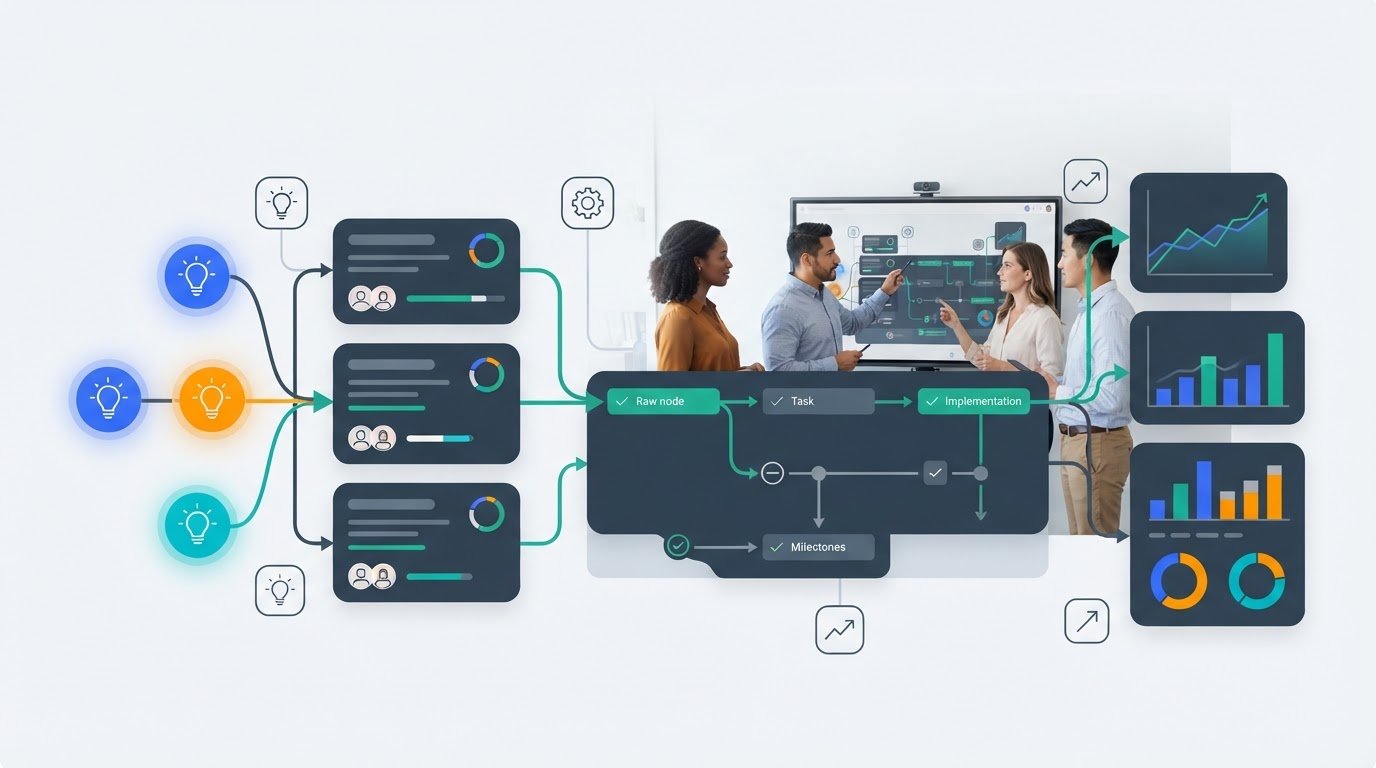
A bigger idea inbox won’t scale innovation. It will scale the backlog. A scalable innovation platform connects ideas to decisions, implementation, and measurable outcomes, so promising initiatives don’t get lost across teams and tools.

As innovation programs expand, coordination gets harder. Participation can dip beyond early adopters, ownership can become unclear, and leaders may struggle to see which ideas are progressing or delivering value. Adding campaigns or software alone won’t solve these problems. Scale depends on connected workflows, clear governance, and a process people can use consistently.

This article explains what makes an innovation platform scalable across an organization and how to build a repeatable approach from idea intake through evaluation and implementation. You’ll learn how to clarify ownership, sustain participation across teams, and track progress against meaningful business outcomes. The goal isn’t simply to collect more ideas. It’s to create an operating system that helps good ideas move forward and makes their impact visible.

Key Takeaways

  • A scalable innovation platform manages more than idea submissions. It connects participants, initiatives, workflows, governance, and measurement.
  • Map the path from idea capture to implementation and impact, with clear evaluation criteria and ownership at each stage.
  • Compare platforms by lifecycle coverage, flexibility, participation, governance, reporting, and usability. Look for ways to reduce disconnected work.
  • Start with a focused initiative, learn from how it works in practice, then refine the process before expanding to more teams.
  • AI-driven insights and gamification can support evaluation and participation, while clear governance keeps decisions and outcomes accountable.

What Makes a Scalable Innovation Platform Different From an Idea Repository?

A scalable innovation platform is a system for moving ideas from submission through evaluation, ownership, implementation, and impact measurement. A digital suggestion box collects input. A platform helps an organization decide what to do with it and track what happens next.

That distinction matters as an innovation program grows. Scale isn’t simply a larger number of users. It means teams can repeat a clear process across different initiatives and stakeholder groups, with governance and measurement that make decisions understandable. Employees, customers, or partners may contribute ideas, while teams run distinct initiatives, from continuous improvement to innovation challenges. The process should support that variety without leaving every group to invent its own rules.

What does scalable mean in an innovation program?

Organizational scalability is the ability to apply a repeatable approach across teams, initiative types, and participants. It’s different from technical capacity, which concerns whether a system can handle more activity. A program can accommodate more users and still fail to scale if review criteria, decision rights, and follow-through vary from one team to another.

Consider an employee suggestion to reduce a recurring step in a work process. A consistent workflow routes it to the right reviewer, assesses it against shared criteria, and assigns an owner if it’s selected. That owner coordinates implementation, and the team records whether the change produced the intended result. Each stage has a next step and someone responsible. That’s a repeatable process, not just a submission stored for later.

Innovation management connects the work of developing ideas with putting them into practice. A useful platform gives that discipline an operational structure, helping an initiative move beyond collecting suggestions. Organizations exploring different innovation approaches can also compare incremental and radical innovation as they define which kinds of ideas their processes should support.

How is a platform different from an idea repository?

Clear status visibility and accountable ownership make progress easier to follow across teams. Reviewers can see where decisions are needed, contributors can understand what’s happening to their ideas, and leaders can connect activity with outcomes instead of relying on submission counts alone. For a broader overview of the discipline, Innovation management provides useful context. The practical test is simple: does the system only preserve ideas, or does it help the organization act on them and learn from the results?

How a Scalable Innovation Platform Connects Ideas to Outcomes

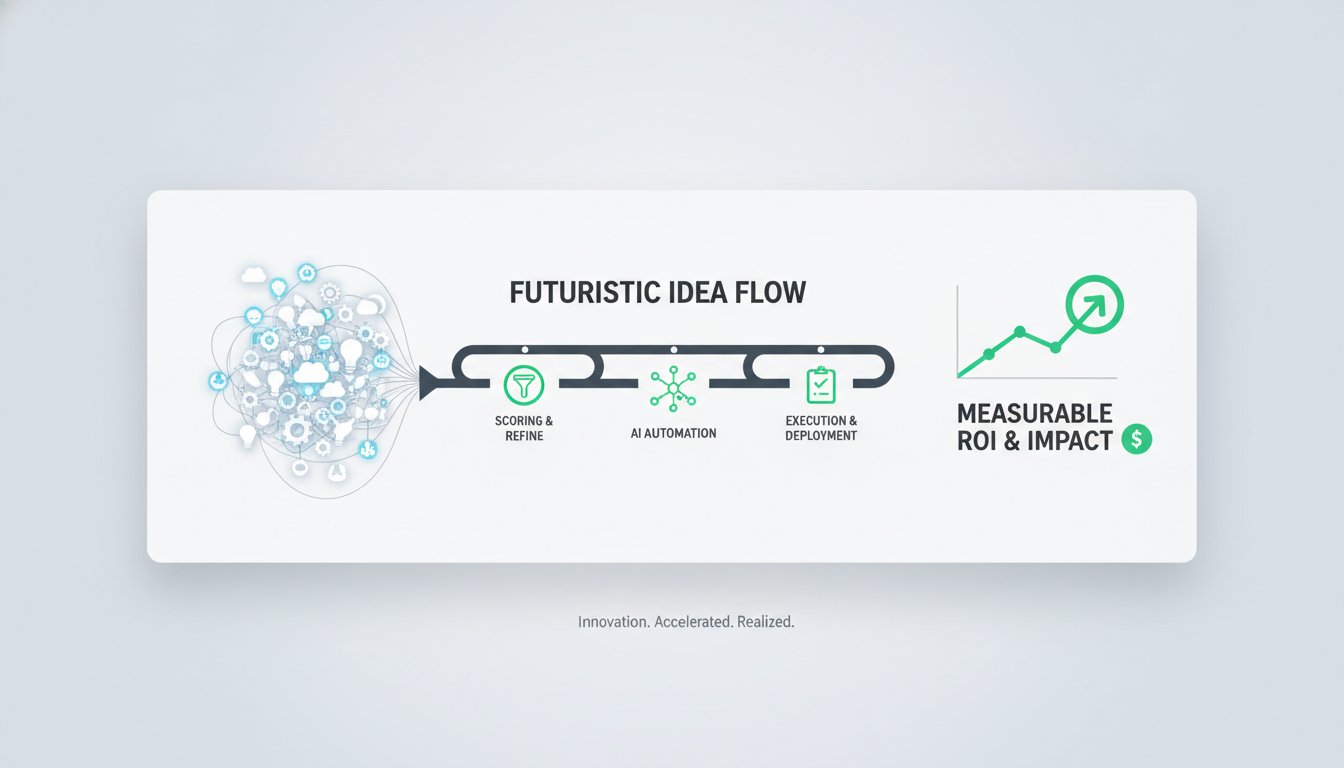
A connected lifecycle gives every idea a clear route: capture, clarify, evaluate, prioritize, assign, implement, and measure. Each transition should preserve context and decision history. Teams can then see what was proposed, why it advanced, who is responsible, and what resulted.

From idea submission to evaluation and prioritization

Start with a guided submission that asks for information reviewers can use, such as the problem, who it affects, and the proposed improvement. Keep prompts focused. Overly complex forms can make participation harder, while sparse submissions leave reviewers guessing. Next, apply consistent criteria tied to the initiative’s goals. Teams might assess strategic fit, feasibility, and potential benefit, then record why an idea was advanced, deferred, or declined.

Voting and gamification can draw attention to ideas and encourage participation, but popularity isn’t the same as business value. Use engagement signals as one input, not a substitute for evaluation. AI-driven insights can help organize submissions or surface patterns for review, but people still need to interpret the findings, apply program criteria, and make accountable decisions. In broader enterprise work management, platforms such as Tolvane address this by combining execution workflows with a dedicated AI governance fabric to keep automated analysis transparent and accountable.

From implementation tracking to ROI measurement

Once an idea is selected, assign an owner and define the next steps, milestones, and status updates. For example, a customer suggestion to simplify an onboarding step might move from review to a team-owned test, then into implementation if the results support the change. A visible record helps contributors and decision-makers follow progress instead of relying on scattered updates.

Measurement should distinguish activity from outcomes. Submission totals, votes, and review completion show participation and process movement. They don’t establish whether an implemented idea created value. Define a relevant outcome measure before work begins, such as time saved, fewer process errors, or another operational improvement aligned with the initiative. A scalable innovation platform makes lifecycle data useful by connecting decisions, ownership, implementation, and results in one traceable view.

That connection turns reporting into organizational learning: teams can see where ideas stall and which approaches deliver. Bain & Company’s discussion of the best practices of great scalers also emphasizes embedding repeatable practices as organizations grow. To see how connected workflows can support idea evaluation and follow-through, explore an innovation platform walkthrough.

How to Evaluate Scalable Innovation Platforms Without Adding Complexity

A platform should make innovation work easier to coordinate, not add another layer of administration. Evaluate it against your program goals, participants, decision rights, and existing processes. The right fit supports a consistent approach to managing ideas while allowing teams to adapt workflows when initiatives genuinely differ.

Which platform capabilities matter as programs grow?

Use the criteria below to compare how a platform supports work across an initiative’s lifecycle. Look beyond feature lists. Ask how each capability would help your teams make decisions, keep work visible, and learn from results.

Evaluation area What to assess
Lifecycle coverage Can teams carry ideas from submission through evaluation, implementation, and outcome measurement?
Workflow flexibility Can distinct challenges use relevant steps and criteria without forcing every initiative into one template?
Participation Can the process support employees, customers, or partners where their input is relevant?
Governance Are decision rights, review criteria, and ownership clear at each stage?
Reporting Can teams follow status and connect program activity to outcomes?
Usability Are submission and review journeys straightforward for participants and administrators?

These criteria work together. A customer-focused challenge may need different prompts from an employee process-improvement initiative, while both can use clear ownership and progress reporting. A scalable innovation platform should make that variation manageable without fragmenting data or obscuring decisions.

How can teams avoid complexity and low adoption?

Start with the user journey. Participants should understand what information to provide and what happens after submission. Reviewers should be able to apply the program’s criteria without unnecessary steps. Governance needs enough consistency to make decisions explainable, but not so much rigidity that every initiative follows an ill-fitting process.

For organizations modernizing older processes, this guide to innovation software alternatives can help frame the transition. Compare platforms using a real initiative and the people who would run it. That practical test reveals whether the system can support meaningful flexibility while keeping work clear, traceable, and manageable.

How to Scale an Innovation Program in Practical Stages

Expanding an innovation program works best as a sequence of deliberate steps, not a company-wide launch that assumes every team is ready at once. Begin with a meaningful, bounded use case. Clarify accountability, configure the workflow, launch with a defined group, learn from actual participation, and expand what proves useful. This gives teams room to improve the process before more initiatives depend on it.

Start with a focused use case and clear ownership

Choose a business challenge specific enough to guide action, such as reducing friction in a process or improving a customer experience. Identify who can contribute, who makes decisions, and what outcome would indicate progress. Assign responsibility for screening submissions, evaluating ideas, implementing selected proposals, and communicating decisions. Without those owners, ideas can stall between approval and action.

Configure only the workflow needed for that initiative. Set clear submission prompts, review criteria, and decision points, then select measures that reflect activity and outcomes. Participation and review completion help show whether the program is functioning; an outcome measure should reflect the challenge itself. An idea management ROI calculator can help teams think through how to connect implemented ideas with value.

Expand through feedback, learning, and repeatable workflows

After launch, review where participants drop off, which steps create avoidable friction, and whether decisions are communicated clearly. Ask contributors and reviewers what was confusing, then refine prompts, criteria, and updates before adding another initiative. Share decisions, including why ideas move forward or don’t, so participation feels connected to real action.

As the program grows, standardize the elements that support consistency, such as decision roles and status definitions, while allowing workflows to reflect different initiative goals. A scalable innovation platform can help keep those processes connected, but the operating practice matters just as much: clear communication, useful feedback, and visible follow-through. Expand when the initial workflow is understood and owners can carry it into the next context without rebuilding the process from scratch.

How Ideawake Supports a Scalable Innovation Platform Strategy

A platform’s value depends on how well its capabilities fit the work an organization needs to coordinate. Ideawake supports a scalable innovation platform strategy with a cloud-based innovation management platform that connects idea capture, evaluation, implementation, and ROI measurement. This lifecycle coverage helps teams follow ideas beyond submission and examine progress through to outcomes.

The platform supports ideas from employees, customers, and partners, along with initiatives such as innovation challenges and hackathons. These sources and formats can serve different program goals. Consider who will participate, who will evaluate submissions, and how selected ideas will move into action. The aim is a connected process, not a one-size-fits-all initiative.

Where Ideawake fits in the innovation lifecycle

Ideawake supports the path from an initial idea to evaluation, implementation, and ROI measurement. AI-driven insights can assist with analyzing ideas, while gamification can support participation. Neither removes the need for clear criteria, accountable decision-makers, or thoughtful follow-through. Those practices help teams use platform capabilities in line with their program’s purpose.

For example, an organization could use a challenge to gather ideas from a defined participant group, evaluate submissions against its objectives, and track selected ideas through implementation. The workflow and outcome measures should reflect the initiative rather than assume results in advance.

What to explore in a platform demonstration

Bring a real use case to a demonstration and trace it through the lifecycle. Consider how participants submit ideas, how reviewers assess them, who owns implementation, and how the organization records outcomes. This makes it easier to judge whether the workflow supports your governance needs and addresses friction in the current process.

Also identify where administrative work can be simplified and where flexibility is needed for different initiatives. A demonstration should connect platform capabilities to the way your teams operate, so you can assess fit based on the work rather than a feature list.

Turn a repeatable innovation process into lasting impact. Innovation scales when ideas move through connected workflows, with clear ownership, consistent evaluation, and outcomes leaders can track. A scalable innovation platform is more than a place to collect submissions. It helps teams build a repeatable path from idea to implementation while adapting the process to different initiatives.

Start with a focused use case, make decisions visible, and learn from participant feedback before expanding. Ideawake’s cloud-based innovation management platform supports the lifecycle from idea submission through ROI measurement, including ideas from employees, customers, and partners. AI-driven insights and gamification can support analysis and participation, while clear governance keeps accountability with the people making and carrying out decisions.

See how those workflows could apply to your organization’s innovation goals.

Book a free Ideawake demo

Frequently Asked Questions

What is a scalable innovation platform?

A scalable innovation platform is software that runs the full idea lifecycle, from submission and evaluation to ownership, implementation and measured results, across many teams without adding administrators at the same rate. It gives every program consistent workflows and governance while letting each team adapt prompts and criteria. Unlike a digital suggestion box, it turns ideas into tracked outcomes.

How should you structure innovation teams for enterprise scale?

Most enterprises use a hub-and-spoke model: a small central team owns the platform, governance and reporting, while champions in each business unit run their own challenges and reviews. The central team sets shared criteria and ROI definitions; the spokes adapt them to local goals. This keeps standards consistent without creating a bottleneck at the center.

How do you evaluate innovation tools for long-term scalability?

Test whether the tool can add users, business units and use cases without a services project each time. Check SAML single sign-on and SCIM provisioning, multiple communities, group-based permissions, configurable workflows, automation limits, an API and reporting that rolls up across programs. Then run a realistic pilot workflow, not a feature demo.

How can an organization scale innovation without creating more bureaucracy?

Collect only the information each decision needs, automate the routine steps and keep workflows short at launch. Define who reviews, who approves and who communicates outcomes, then let automation handle routing, reminders and status updates. Add stages only when a real decision requires them.

Can AI help scale innovation management?

Yes. AI absorbs the work that grows with volume: flagging duplicate ideas, helping submitters complete missing details, summarizing ideas for reviewers and drafting business case content. In Ideawake, AI features are opt-in per feature and people keep every decision, so programs can grow participation without growing the admin team at the same pace.

How do you measure the ROI of an innovation platform?

Connect implemented ideas to measured outcomes, such as cost savings, revenue or time saved, and compare that value with total program cost. Track participation and implementation rate as leading indicators, but do not treat submission counts as proof of impact. Our idea management analytics guide covers the KPIs by program stage.

Which idea management platforms scale best for enterprises?

The platforms that scale best combine enterprise identity and permissions with low administrative overhead. Ideawake supports multiple communities, SAML SSO, SCIM provisioning and integrations with Teams, Slack, Jira and Asana, and holds a 4.8 out of 5 rating on Gartner Peer Insights. For side-by-side detail against IdeaScale, Brightidea, Qmarkets and others, see our comparison pages.

How should a company start scaling its innovation program?

Start with one bounded business challenge, a clear owner and a simple workflow. Launch with the intended group, review participation and process friction, then expand to the next team using what worked. Scaling a proven process is far easier than launching an organization-wide program at once.
Article by

Coby Skonord

Coby Skonord is the co-founder and CEO of Ideawake. Since 2013 he has worked with enterprise innovation, continuous improvement, and HR leaders to turn employee ideas into measurable business impact.

How to Streamline Your Idea Implementation Process: A 2026 Enterprise Guide

How to Streamline Your Idea Implementation Process: A 2026 Enterprise Guide
Coby Skonord|
July 1, 2026

Most enterprise innovation programs are little more than expensive suggestion boxes where high-impact ideas go to retire. While 64% of organizations have integrated AI into their operations as of early 2026, the majority still struggle to move beyond surface-level experimentation. You’ve likely seen brilliant concepts stall in endless review meetings because there’s no clear path to funding or because your team lacks the specialized expertise to evaluate technical submissions. It’s a waste of human capital that keeps your time-to-market sluggish.

We’re here to change that narrative. You’ll learn the exact framework to streamline idea implementation process workflows, effectively bridging the gap between ideation and execution while stripping away administrative friction. By leveraging the latest ISO 56001:2024 certification standards, you can stop guessing and start delivering measurable results. This guide previews a system that decouples evaluation from execution, ensures clear ROI tracking for every dollar of innovation spend, and slashes the overhead that currently bogs down your most creative minds.

Key Takeaways

  • Close the “Implementation Gap” by shifting organizational focus from high-volume ideation to a structured, high-velocity execution framework.
  • Discover how to streamline idea implementation process workflows by adopting decentralized intake models that bypass traditional administrative bottlenecks.
  • Replace subjective decision-making with objective, weighted scoring systems that prioritize ideas based on strategic alignment, feasibility, and impact.
  • Leverage AI-driven automation to intelligently route technical submissions to the correct subject matter experts, slashing review times and friction.
  • Establish clear accountability by tracking critical innovation metrics, including time-to-market, implementation rates, and verified financial ROI.

The Implementation Gap: Why Enterprise Ideas Stagnate

Innovation theater is a chronic condition in the modern enterprise. It’s the practice of hosting high-energy workshops and collecting thousands of employee suggestions while lacking the infrastructure to move a single concept to production. This creates a massive Implementation Gap: the stark disconnect between high-volume ideation and low-volume execution. While organizations are often proficient at the creative side of the house, industry research consistently indicates that 70% to 90% of innovations fail not because the ideas were poor, but because of execution failures. This failure occurs in the “Valley of Death,” the precarious transition point where a validated idea loses its momentum during the hand-off from innovation teams to operational departments.

The foundational definition of implementation focuses on the realization of an application or execution of a plan. In an enterprise setting, this requires more than just enthusiasm; it requires an engineered workflow. To truly streamline idea implementation process cycles, leaders must stop treating execution as an afterthought and start treating it as a core competency. Failing to do so ensures that your innovation program remains a cost center rather than a growth engine. Engineering a way to streamline idea implementation process steps is no longer optional in a landscape where speed is the ultimate competitive advantage.

Common Barriers to Execution Velocity

Execution doesn’t stall by accident. It’s usually the result of three specific friction points. First, administrative friction creates a bottleneck where endless committee reviews kill employee enthusiasm. If an idea takes six months to clear a compliance check, the market has already moved on. Second, resource misalignment ensures that even the best ideas die without a dedicated implementation budget. Most departments are incentivized to maintain the status quo, leaving no room for non-core projects. Finally, an expertise deficit often prevents innovation managers from effectively evaluating specialized technical ideas, leading to “safe” but mediocre choices.

The Cost of Inaction

The price of a broken process is higher than most executives realize. Idea decay doesn’t just result in lost revenue; it actively erodes employee engagement. When staff see their contributions vanish into a black hole, they stop contributing. This leads to a talent drain as your most innovative thinkers move to competitors who can actually ship products. In a high-velocity 2026 market where AI-driven competitors move at light speed, a slow implementation rate is a terminal risk. Adopting a structured idea implementation framework is the only way to mitigate these risks and ensure your organization remains relevant.

5 Steps to Streamline Your Idea Implementation Process

Bridging the gap between a validated concept and a funded project requires more than a simple workflow. It demands a lean, modern execution framework engineered for speed and scalability. To effectively streamline idea implementation process cycles, organizations must move beyond the static “suggestion box” model and adopt a dynamic, five-step pipeline that prioritizes impact over volume. This system ensures that resources aren’t wasted on low-value experiments while accelerating the journey for high-potential winners.

  • Step 1: Decentralized Intake. Move away from a single, generic suggestion box. Use category-specific challenges to ensure ideas are pre-aligned with business needs.
  • Step 2: Automated Screening. With 64% of organizations already utilizing AI in operations, use automated filters to remove duplicates and low-feasibility submissions instantly.
  • Step 3: Collaborative Refinement. Harness internal crowdsourcing to strengthen ideas. Peer feedback identifies technical gaps before a formal review even begins.
  • Step 4: Rapid Prototyping and Validation. Test core assumptions through minimal viable experiments. In 2026, low-code technologies allow teams to build and test 70% of new applications without heavy IT involvement.
  • Step 5: Structured Hand-off. Transfer validated concepts to business units with comprehensive documentation and clear ownership.

Phase 1: Filtering for High-Potential Winners

The first hurdle in any innovation program is the noise. Using AI-driven insights allows innovation managers to spot duplicates or low-feasibility concepts in seconds, preventing them from clogging the pipeline. Objectivity is maintained through the use of idea evaluation and scoring tools, which shift the focus from popularity to strategic value. Instead of simple “voting” systems that favor the most charismatic submitter, weighted scoring ensures that every idea is judged on its feasibility, impact, and alignment with corporate goals. If you want to see how this looks in practice, you can schedule a personalized walkthrough of these automated workflows.

Phase 2: Validation and the Hand-off

Once an idea is filtered, it enters the validation stage. This is where “micro-pilots” prove value without requiring massive capital expenditure. These small-scale tests provide the data needed to secure buy-in from department heads. To streamline idea implementation process hand-offs, create a standardized “Implementation Package” that includes technical requirements, projected ROI, and resource needs. This documentation removes the ambiguity that often leads to projects stalling at the departmental level. Finally, ensure accountability by assigning a clear owner at the moment of transfer, preventing the idea from being lost during the transition.

Scoring and Prioritization: The Engine of Faster Execution

Subjectivity is the silent killer of enterprise progress. When projects are selected based on the loudest voice in the room or a vague “gut feeling,” the result is a clogged pipeline of mediocre initiatives. To streamline idea implementation process workflows, you must replace intuition with a mathematical engine. A weighted scoring system provides the necessary objectivity to filter out noise and focus resources on the high-impact opportunities that align with your 2026 strategic objectives.

The most effective scoring models evaluate three core pillars: Strategic Alignment, Feasibility, and Impact. Alignment ensures the idea supports your current mission. Feasibility accounts for technical hurdles and regulatory constraints, such as the EU AI Act transparency requirements effective August 2, 2026. Impact measures the potential for efficiency gains or revenue growth. However, a one-size-fits-all approach is a mistake. You must utilize distinct scoring criteria for incremental vs radical innovation to ensure that low-risk improvements don’t starve high-reward breakthroughs of capital.

The RICE Framework for Innovation Managers

Adapting the RICE framework allows for a granular comparison of disparate ideas. Start with Reach: how many employees or customers will this implementation actually touch? Next, calculate Impact: will it deliver a slight productivity bump or a shift in performance? According to a June 2026 Deloitte report, 66% of organizations are seeing efficiency gains from AI, but only 20% report revenue growth. Your Confidence score should reflect how certain you are about these projections based on pilot data. Finally, factor in Effort: the total requirement of time, money, and labor. This calculation gives you a single, comparable score for every submission.

Balancing the Innovation Portfolio

A streamlined process requires a healthy mix of “Quick Wins” and “Big Bets.” High-impact, low-effort projects provide the immediate momentum needed to sustain program funding. Conversely, transformative bets ensure long-term market relevance. If your portfolio is 100% safe, you’re falling behind. Use your scoring data to justify resource allocation to skeptical executive stakeholders, proving that your roadmap is built on empirical evidence rather than speculation. This transparency builds the trust necessary to secure the budgets required for large-scale implementation.

Leveraging AI and Automation to Remove Implementation Friction

Automation also serves as the primary defense against “idea decay.” When a submission enters the pipeline, automated notification triggers keep stakeholders accountable, while scheduled status updates ensure the submitter remains engaged. This transparency eliminates the “black hole” syndrome that historically plagues employee suggestion programs. By integrating your innovation pipeline directly with execution tools like Jira, Trello, or Microsoft Teams, you ensure that a validated idea becomes a trackable ticket in your existing project management ecosystem without a single manual data entry step.

Beyond Spreadsheets: Why Legacy Tools Fail

Many organizations still attempt to manage innovation through Excel or SharePoint, but these legacy tools lack the scalability required for high-volume execution. When you compare Ideawake vs Spreadsheets, the difference in audit trails and data integrity is stark. Spreadsheets are static and prone to human error, whereas specialized platforms provide a centralized source of truth. Research indicates that switching to a dedicated innovation management system can reduce administrative time by up to 80% by automating repetitive tasks like reporting and scoring aggregation. This reclaimed time allows your team to focus on high-value validation rather than document management.

The Smart Integration Ecosystem

A truly streamlined process doesn’t exist in a vacuum. With the average enterprise now utilizing 897 separate applications, integration is the only way to prevent data silos. Ideawake’s integrations bridge the gap between “Idea” and “Project” by allowing real-time data flow between your innovation pipeline and your ERP or CRM. This connectivity ensures that when an idea is moved to the implementation stage, all relevant financial and customer data is already present. This level of technical cohesion is exactly what’s required to scale AI from pilot to production in a fragmented regulatory environment. To see these automated workflows in action, you can book a free demo and explore how we connect your innovation strategy to your tech stack.

Measuring Impact: From Implementation to Tangible ROI

Measurement isn’t just an administrative chore; it’s the ultimate accountability mechanism for any innovation program. Without empirical data, you aren’t innovating; you’re just spending. Implementation is only successful if it delivers measurable value back to the business. To truly streamline idea implementation process cycles, you must move beyond vanity metrics like “number of ideas submitted” and focus on the hard data that executive stakeholders demand. Success isn’t defined by how many ideas you start, but by the tangible value they generate upon completion.

Key performance indicators should center on three specific areas. First, Time-to-Market measures the speed at which an idea travels from validation to production. Second, the Implementation Rate tracks the percentage of validated concepts that actually reach the finish line. Finally, Financial ROI provides the ultimate justification for your budget. Don’t ignore “Soft ROI” either. Tracking improvements in employee engagement and cultural transformation is vital, as these factors directly impact your firm’s ability to retain top-tier talent in a competitive 2026 market. According to a June 2026 Deloitte report, 66% of organizations are seeing efficiency gains from AI, and tracking these specific productivity bumps is a critical part of proving your program’s worth.

Calculating the Hard Numbers

Projecting returns early in the lifecycle is the best way to secure continued funding. You can use an Idea Management ROI Calculator to model potential gains before committing significant resources. It’s important to distinguish between cost savings generated by continuous improvement initiatives and the new revenue streams created by radical product innovations. Linking these innovation KPIs to broader organizational growth goals ensures that your program remains a strategic priority rather than a line-item expense. This data-backed approach builds the credibility needed to scale your efforts across the entire enterprise.

Continuous Optimization of the Process

The most successful organizations don’t treat their workflow as static. They treat their implementation process as a product that requires constant iteration. Use your implementation data to identify specific bottlenecks, such as a department head who consistently stalls project hand-offs or a technical review stage that takes too long. A Post-Implementation Audit allows your team to refine future workflows based on what actually happened during execution. This cycle of feedback and adjustment is the only way to maintain a lean, effective pipeline. If you’re ready to stop settling for average results and start shipping high-impact solutions, it’s time to execute faster with Ideawake’s modern innovation platform.

Mastering the Art of Enterprise Execution

Maintaining a competitive edge in 2026 requires more than a high volume of suggestions; it demands a rigorous, engineered path to production. You’ve seen how bridging the “Implementation Gap” requires a shift from subjective voting to objective, data-backed scoring models like RICE. By leveraging AI-driven automation to route technical reviews and integrating your pipeline with existing execution tools, you can finally eliminate the administrative friction that stalls progress. It’s time to stop treating innovation as a creative exercise and start treating it as a core operational discipline.

To effectively streamline idea implementation process workflows, your organization needs a platform built on modern architecture that handles everything from initial submission to final ROI measurement. Ideawake provides these end-to-end capabilities, using AI-driven insights to boost engagement and drastically reduce administrative complexity. This technical cohesion ensures that your most promising concepts don’t just sit in a database but actually reach the market where they can deliver measurable value.

Your next breakthrough is waiting; you just need the right engine to bring it to life.

Frequently Asked Questions

What is the difference between idea management and idea implementation?

Idea management focuses on the front-end capture, categorization, and initial evaluation of concepts, while idea implementation is the operational execution that transforms those concepts into tangible products or process improvements. Think of management as the “what” and implementation as the “how.” To successfully streamline idea implementation process cycles, you must bridge these two phases with a structured hand-off that includes technical validation and resource allocation.

How long should the idea implementation process take in a large enterprise?

In a large enterprise, the timeline varies by complexity, but a streamlined “Quick Win” should move from submission to pilot in under 30 days. Radical innovations often require 6 to 18 months depending on regulatory hurdles like the EU AI Act requirements. The goal is to reduce “wait time” between stages, ensuring that no idea sits in a review queue for more than 72 hours without an automated status update.

Why do most employee ideas fail to get implemented?

Most ideas fail due to execution bottlenecks rather than a lack of creativity, with research suggesting 70% to 90% of innovations stall during the hand-off to operational departments. This “Valley of Death” occurs when there is no dedicated implementation budget or when the idea lacks a clear owner to drive it through technical hurdles. Without a structured framework, even high-potential concepts are eventually abandoned as administrative friction kills initial momentum.

How can I measure the ROI of a streamlined idea implementation process?

ROI is measured by comparing the total cost of implementation against the verified financial gains, such as increased revenue or operational cost savings. Use hard data from a ROI calculator to track these figures. You should also factor in “Soft ROI,” including improvements in employee retention and engagement, which are critical metrics for high-performing 2026 organizations that prioritize a culture of continuous improvement.

Should we use Jira or a specialized innovation platform for implementation?

Jira is an excellent project management tool, but it lacks the front-end engagement, crowdsourcing, and automated scoring capabilities of a specialized innovation platform. While Jira handles the “Build” phase, a dedicated platform is necessary to streamline idea implementation process workflows by managing the “Evaluate” and “Validate” stages. The best approach is to integrate the two, allowing validated ideas to flow automatically into your technical team’s existing backlog.

How do I get executive buy-in for a new idea implementation framework?

Secure executive buy-in by presenting a data-backed business case that links innovation to specific organizational growth goals. Focus on the cost of inaction, such as the risk of falling behind AI-driven competitors or losing top talent to more agile firms. Show them a pilot plan with clear, weighted scoring criteria that proves you are prioritizing financial impact over vanity metrics.

What role does AI play in streamlining the innovation lifecycle in 2026?

AI has evolved into an orchestration engine that automatically routes technical submissions to the correct subject matter experts for rapid review. By early 2026, 64% of organizations were already using AI to drive operational efficiency. In the innovation lifecycle, AI identifies duplicate ideas, predicts implementation feasibility based on historical data, and automates status communications to keep the entire workforce engaged without increasing administrative overhead.

How do I handle “failed” implementations without discouraging employees?

Treat every failed implementation as a paid research project that provides data for the next iteration. Conduct a Post-Implementation Audit to document exactly why the project stalled, whether it was a technical hurdle, a market shift, or a resource gap. Communicate these findings transparently to the submitter to maintain trust. This approach transforms “failure” into a learning asset that refines your future selection criteria and strengthens the overall innovation culture.

Article by

Coby Skonord

Coby Skonord is the co-founder and CEO of Ideawake. Since 2013 he has worked with enterprise innovation, continuous improvement, and HR leaders to turn employee ideas into measurable business impact.