
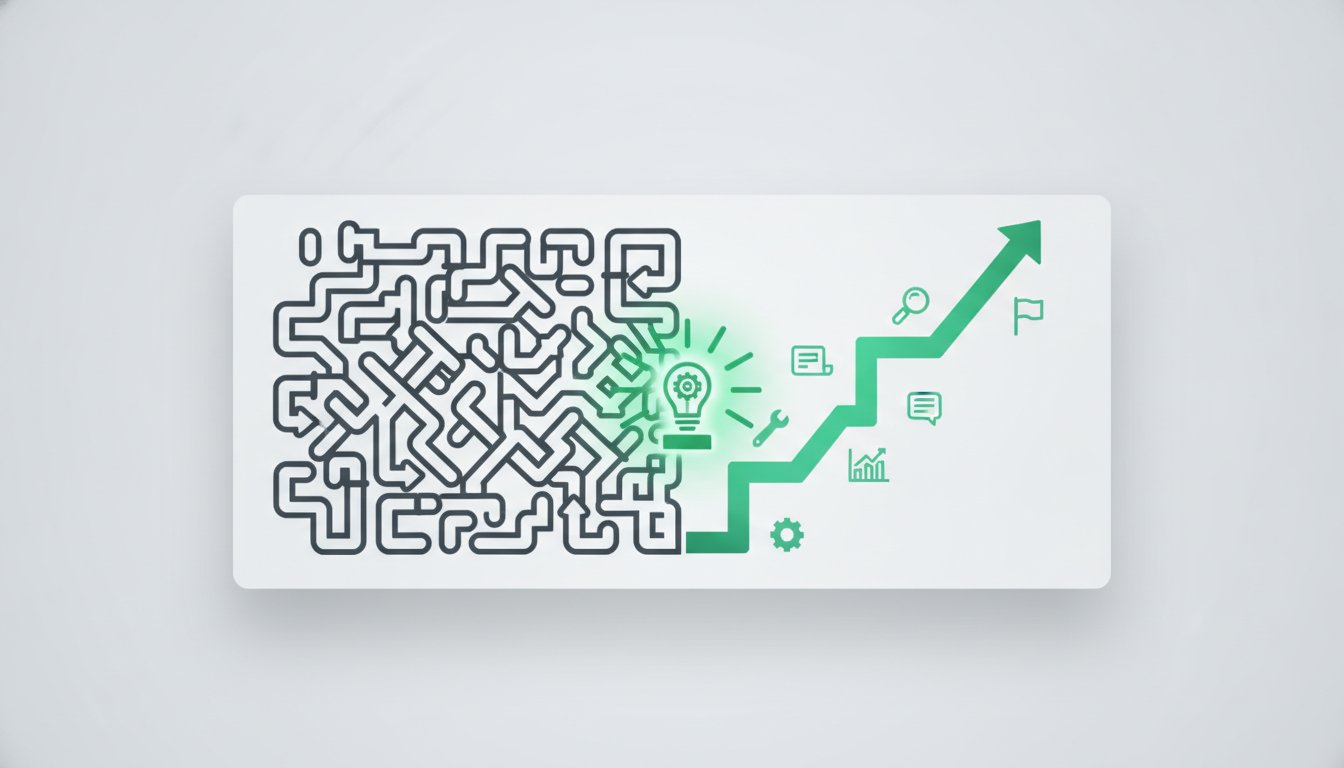
Tag Archives: corporate culture

Overcoming Resistance to New Ideas in Business: A Research-Backed Framework for 2026

Overcoming Resistance to New Ideas in Business: A Research-Backed Framework for 2026
Coby Skonord|
July 19, 2026

According to research from McKinsey & Company published in May 2026, approximately 70% of organizational transformations fail to reach their objectives because they lack internal buy-in. This staggering figure proves that overcoming resistance to new ideas in business isn’t just a leadership challenge; it’s a significant threat to your bottom line. You’ve likely seen high-potential projects stall because of bureaucratic gatekeeping or a culture stuck in the “this is how we’ve always done it” mindset. It’s exhausting. Watching innovation programs suffer from low engagement while competitors move faster is a recipe for mediocrity.

We’re here to change that narrative. You’ll learn the psychological and structural strategies required to transform organizational inertia into a measurable competitive advantage. This article provides a repeatable framework for idea adoption, leveraging research-backed methods to reduce middle management friction and increase the ROI on your internal innovation projects. We’re moving beyond stagnant experimentation toward a high-performance culture that treats innovation as a predictable science rather than a roll of the dice.

Key Takeaways

  • Identify the biological roots of “Status Quo Bias” to shift your strategy from simple persuasion to creating genuine psychological safety.
  • Focus on dismantling structural and psychological “friction” instead of merely adding more incentives, which can often inadvertently increase defensiveness.
  • Implement small-scale “Beacon Projects” to provide tangible proof of concept and drastically reduce the perceived risk for high-level stakeholders.
  • Develop a transparent, five-step lifecycle for overcoming resistance to new ideas in business by eliminating the information gaps that fuel employee fear.
  • Deploy modern idea management platforms to automate the evaluation process and use AI-driven insights to strip away human bias and gatekeeping.

The Psychology of “No”: Why Businesses Resist New Ideas

The “Not Invented Here” (NIH) syndrome adds another layer of complexity. It triggers an automatic rejection of ideas originating from outside a specific department, effectively strangling cross-functional collaboration. Understanding the Diffusion of Innovations Theory is critical here; it explains that adoption depends less on the objective quality of an idea and more on how it’s perceived within the social system of your company. If an idea feels foreign, the system rejects it.

Cognitive Biases That Kill Innovation

Managers often suffer from the “Endowment Effect,” where they overvalue existing processes simply because they currently own and operate them. This creates a massive barrier when trying to distinguish between creativity vs. innovation in a practical setting. However, you can pivot this psychological hurdle by leveraging the “IKEA Effect.” When people contribute to the creation of a solution, they value it more highly. By involving stakeholders early in the idea evaluation process and criteria development, you transform potential critics into invested co-creators. Research indicates that high cognitive load significantly increases resistance to novelty, as the brain lacks the energy required to process complex changes. Simplify the message to lower the barrier to entry.

The Institutional “Immunological Response”

Fuel vs. Friction: A Framework for Idea Adoption

Most leaders assume that overcoming resistance to new ideas in business requires a more compelling sales pitch. Much like in professional sales training—where resources like justgosell.com coach teams to address underlying buyer hesitations rather than simply pitching harder—internal champions must learn to look beyond superficial persuasion. They focus on “Fuel”—the incentives, benefits, and data designed to push an idea forward. While fuel is necessary to spark interest, it’s rarely enough to sustain momentum. When you encounter pushback, adding more fuel often backfires. It signals to your team that the change is so difficult or undesirable that it requires an aggressive bribe to accept. Real progress happens when you stop pushing and start identifying the “Friction” holding your organization back. Friction is the psychological and structural drag that makes even the best ideas feel like a burden.

To dismantle this resistance, you must address four specific types of friction:

  • Inertia: The powerful urge to stick with the default path because it’s familiar.
  • Effort: The actual or perceived energy required to implement the new idea.
  • Emotion: The fear of looking foolish, losing status, or failing in a new system.
  • Reactance: The defensive response people have when they feel their autonomy is being threatened.

Why Incentives (Fuel) Often Fail

Relying on external rewards can trigger the “Overjustification Effect,” where employees lose their intrinsic motivation because the focus shifts to the reward rather than the value of the work itself. Furthermore, dumping “more data” on skeptical stakeholders rarely changes minds. Skeptics often view excessive data as a manipulation tactic rather than evidence. If you look at historical innovation failures, the root cause is rarely a lack of benefits. It’s almost always a failure to account for the human friction that makes adoption feel impossible. If the friction is high enough, no amount of fuel will move the needle.

Identifying and Neutralizing Friction

Effort friction is the most common silent killer of new initiatives. Administrative hurdles, such as complex submission forms or redundant approval layers, stop ideas before they’re even voiced. Behavioral science suggests that every additional “click” or step in a process can reduce participation by significant margins. To win, you must make the right path the easiest path. Emotional friction is equally dangerous; it’s the quiet fear that a new process will make a manager’s current skills obsolete. You must frame new ideas as tools that enhance existing status rather than replace it. If you’re ready to see how a streamlined system can remove these barriers, you might consider how to optimize your innovation workflow to ensure the best ideas actually reach the finish line.

Structural De-risking: Using “Beacon Projects” and Prototypes

Familiarity is your strongest ally in de-risking. Humans are biologically wired to seek patterns and safety in the known. If an idea feels like a radical departure from the norm, it triggers the institutional “immunological response” that attacks foreign concepts. Successful innovators frame their proposals as logical extensions of existing success. You aren’t replacing the system; you’re providing the high-performance upgrade it currently lacks. This framing makes the “new” feel like a natural evolution rather than a dangerous disruption.

The Power of Incremental vs. Radical Innovation

Measuring ROI Early to Silence Critics

Skepticism dies in the face of hard data. You must measure performance from day one to silence the critics who view innovation as an expensive “cost center.” It’s helpful to use an innovation ROI calculator to project potential gains and set benchmarks before you even launch. Social proof from a successful pilot project consistently overrides theoretical objections. When you can show that a new idea delivers tangible results in a real-world scenario, you remove the last hiding place for institutional resistance.

Transparency and Gamification: Building a Culture of Buy-in

The “IKEA Effect” is a powerful psychological tool for building buy-in. Research shows that people value things more when they have a hand in building them. By involving employees in the refinement and voting stages of an idea, you move them from passive observers to active owners. This shift is critical for long-term adoption. Unlike static spreadsheets that hide data from the very people who generated it, a modern platform ensures that the entire lifecycle is open for inspection. This visibility builds trust and ensures that even rejected ideas provide value through clear, constructive feedback loops.

A transparent idea lifecycle follows five critical stages:

  • Open Submission: Removing barriers to entry to ensure every voice is heard.
  • Peer Review: Using public voting to surface high-potential concepts early.
  • Expert Evaluation: Utilizing transparent, data-backed criteria to score ideas fairly.
  • Selection Feedback: Providing clear, logical reasons for the path forward.
  • ROI Tracking: Showing the tangible impact of the implemented idea to prove value.

The Role of Psychological Safety

Innovation requires a baseline of psychological safety. As Harvard Business School professor Amy Edmondson has demonstrated, teams that feel safe to take risks and admit mistakes are significantly more effective at implementing new ideas. A “blame-free” environment is a prerequisite for any successful innovation program. If an employee fears looking foolish for suggesting a concept, they’ll stop contributing altogether. To sustain momentum, you must handle rejected ideas with extreme care. Providing data-backed reasons for why an idea wasn’t selected ensures that the individual feels heard and remains willing to participate in the future.

Gamification Mechanics That Work

Gamification isn’t about trivializing work; it’s about turning organizational change into a shared challenge. Public voting and leaderboards are excellent tools to validate ideas before they ever reach management. This peer-level validation provides a layer of “social proof” that reduces the burden on leadership to act as the sole gatekeepers. When you use these mechanics, you unlock the benefits of employee ideation programs by creating a sense of community around improvement. While spreadsheets often lead to administrative waste and silos, a gamified platform creates a high-energy environment where the best ideas naturally rise to the top through collective intelligence.

Scaling Innovation: How Idea Management Platforms Automate Buy-in

While many leaders treat overcoming resistance to new ideas in business as a purely psychological challenge, the reality is often structural. Traditional methods like the physical “Suggestion Box” or unmonitored email aliases are high-friction systems destined to fail. They offer no transparency, provide zero feedback, and eventually become a graveyard for employee creativity. In contrast, a modern idea management platform automates the very processes that usually trigger organizational pushback. By centralizing the entire lifecycle, you create a “single source of truth” that provides the accountability and visibility necessary to win over even the most cynical stakeholders.

AI and the Future of Idea Evaluation

The introduction of Ideawake AI has fundamentally changed how organizations handle the evaluation phase. By using machine learning to score ideas against predefined criteria, you strip away human bias and political gatekeeping from the decision-making process. This objectivity is vital for building trust across the organization. Automated workflows drastically reduce “Effort Friction” for both the submitter and the evaluator, ensuring that no high-potential concept is lost to administrative fatigue. If you’re currently researching tools, review the best idea management software list for 2026 to see how these AI capabilities are being integrated into top-tier solutions.

Transitioning from Spreadsheets to Platforms

Many organizations attempt to manage innovation through Excel, but this often leads to “Innovation Chaos.” Spreadsheets are static, siloed, and lack the real-time engagement features required to build a culture of buy-in. There’s a significant efficiency gap when you compare Ideawake vs Spreadsheets, particularly regarding data integrity and ROI tracking. Fragmentation creates confusion, and confusion breeds resistance. A centralized platform ensures that every stakeholder has access to the same information at the same time, removing the uncertainty that fuels fear. It’s time to stop fighting a broken system and start building one that drives results.

Sign up for a demo today to see how to dismantle resistance and scale your innovation program with total confidence.

Turning Resistance into Your Competitive Engine

The landscape of organizational innovation is shifting from a battle of wills to a science of adoption. You’ve seen how identifying friction points like reactance and effort can dismantle barriers that no amount of incentives could overcome. By utilizing small-scale beacon projects and leveraging the IKEA effect, you can transform skeptics into invested co-creators. The future of overcoming resistance to new ideas in business depends on replacing administrative gatekeeping with transparent, AI-driven workflows that provide a single source of truth.

Ideawake is trusted by enterprise leaders to scale innovation through a platform built on modern architecture. Our AI-driven evaluation removes human bias while proven ROI tracking capabilities provide the hard data needed to satisfy executive stakeholders. It is time to stop fighting the system and start building one that empowers every employee to contribute to your success.

Frequently Asked Questions

How do you handle a boss who is resistant to new ideas?

What are the most common reasons employees resist change in 2026?

In 2026, the primary drivers of resistance include fear of AI-driven displacement and a lack of transparency regarding how new processes impact individual roles. Research from McKinsey indicates that 70% of transformations fail due to lack of buy-in. Employees don’t necessarily resist the change itself; they resist being changed without their input. Addressing “Information Asymmetry” through transparent, automated communication is the most effective way to dismantle these defensive barriers.

Can gamification actually improve innovation adoption rates?

Gamification significantly improves adoption rates by leveraging the “IKEA Effect,” where people value solutions more when they participate in their creation. Features like public voting, leaderboards, and peer recognition turn “change” into a collaborative challenge rather than a top-down mandate. This creates social proof, showing that peers already support the initiative, which reduces the perceived risk and psychological friction for the rest of the workforce.

How does an innovation management platform reduce psychological friction?

An innovation management platform reduces psychological friction by providing a transparent, predictable lifecycle for every submission. Friction often stems from the “black hole” effect, where ideas are submitted but never receive feedback. By automating status updates and providing clear evaluation criteria, these platforms eliminate the uncertainty and perceived unfairness that lead to employee disengagement and institutional resistance.

What is the “Not Invented Here” syndrome and how do I fix it?

“Not Invented Here” (NIH) syndrome is the automatic rejection of ideas originating from outside a specific department or group. You fix it by involving cross-functional stakeholders during the early ideation phase rather than after the solution is finalized. When teams from different departments co-create a concept, they develop a sense of ownership that bypasses the natural “immunological response” usually triggered by “foreign” ideas.

Is it better to build or buy an idea management solution?

Buying a specialized solution is almost always superior to building one internally due to the complexity of modern AI integration and the high cost of ongoing maintenance. Internal tools often lack the gamification and automated evaluation features required for overcoming resistance to new ideas in business. A purpose-built platform reduces implementation time and administrative overhead, allowing your team to focus on high-value innovation rather than troubleshooting software.

How do you measure the ROI of a new idea before it is fully implemented?

You measure the ROI of a new idea by establishing clear baseline metrics and using an innovation ROI calculator to project potential gains against implementation costs. During the initial pilot phase, track specific KPIs like time saved, waste reduced, or participation levels. This early data provides the “social proof” needed to silence critics and justifies the resources required for a full-scale rollout across the organization.

What role does AI play in overcoming organizational bias?

AI plays a critical role in overcoming organizational bias by scoring submissions against objective data rather than subjective human opinions. Human evaluators often fall victim to the “Endowment Effect” or political gatekeeping. AI-driven evaluation ensures that every idea is judged on its merits and alignment with corporate strategy, which builds a culture of fairness and encourages participation from every level of the workforce.

Article by

Coby Skonord

Coby Skonord is the co-founder and CEO of Ideawake. Since 2013 he has worked with enterprise innovation, continuous improvement, and HR leaders to turn employee ideas into measurable business impact.

Crowdsourcing Ideas from Employees: The High-Performance Guide to Driving ROI in 2026

Crowdsourcing Ideas from Employees: The High-Performance Guide to Driving ROI in 2026
Coby Skonord|
June 14, 2026

Stop pretending that a digital “suggestion box” is a strategy for growth. It’s a performance killer that signals to your best talent that their insights don’t matter. With only 21% of employees globally feeling engaged at work, the cost of ignoring the front line is no longer just a culture problem; it’s a direct hit to your bottom line. Effectively crowdsourcing ideas from employees is the difference between stagnant mediocrity and a high-velocity innovation engine that delivers massive, measurable financial impact.

You know your workforce holds the keys to your next breakthrough, yet those ideas are likely rotting in email threads or dying in unstructured meetings. We’re going to fix that. This guide provides the high-performance blueprint to transform your organization into a relentless innovation machine that prioritizes ROI over “nice-to-have” feedback. We’ll break down the exact framework for deploying structured challenges, leveraging AI for rapid evaluation, and building a culture where every internal insight is treated as a high-value asset ready for execution.

Key Takeaways

  • Ditch the passive suggestion box for a high-velocity innovation pipeline that treats every employee insight as a strategic asset for financial growth.
  • Learn why targeted, time-bound innovation challenges deliver a 10x higher ROI than always-on portals when crowdsourcing ideas from employees to solve specific bottlenecks.
  • Master the mechanics of submission, gamified collaboration, and rigorous evaluation to ensure high-value sparks move from ideation to implementation without friction.
  • Align your innovation “North Star” with C-suite priorities to transform raw workforce potential into a relentless engine of continuous improvement and measurable impact.
  • Eliminate administrative overhead by deploying high-performance platforms that automate the workflow from initial spark to final ROI measurement.

Beyond the Suggestion Box: Why Crowdsourcing Ideas from Employees is a Strategic Mandate

The traditional suggestion box is a graveyard. It is a hollow gesture that signals to your workforce that their brilliance is destined for a dusty binder or a deleted email folder. In 2026, passive listening is a liability you can’t afford. Modern Crowdsourcing has evolved from a cultural “perk” into a high-stakes strategic mandate. It is the active, structured pursuit of disruptive value that transforms every member of your team into a high-performance engine of non-linear growth.

Market dynamics have shifted. Disruption happens in weeks, not years. You don’t have the luxury of waiting for the C-suite to identify every operational friction point. Survival now demands bottom-up intelligence. By crowdsourcing ideas from employees, you tap into the only asset in your organization capable of delivering exponential returns on a massive scale. This isn’t just about morale; it’s about survival in a hyper-competitive economy.

The Death of the Physical Suggestion Box

Passive idea collection is the fastest way to breed employee cynicism. When ideas sit in a “graveyard” without feedback or evaluation, “idea rot” sets in, destroying morale and ensuring your best talent stays silent. For large enterprises, manual idea management is an administrative nightmare that drains resources without delivering results. You must move beyond “nice-to-have” feedback. You need a high-velocity innovation pipeline that converts raw sparks into operational intelligence. This isn’t about being “nice”; it’s about building a robust system that identifies, vets, and scales the solutions your competitors are too slow to see.

Unlocking the Front-Line Advantage

The Mechanics of a High-Performance Crowdsourcing Engine

Innovation isn’t a happy accident. It’s the result of a disciplined, high-velocity machine. If your process for crowdsourcing ideas from employees relies on manual review and sporadic follow-ups, you’ve already lost. A high-performance engine requires four non-negotiable phases: submission, collaboration, evaluation, and implementation. This is the “Innovation Lifecycle.” It’s a structured pipeline designed to filter noise and amplify signal. Successful organizations adopt specific strategic approaches to crowdsourcing to ensure their efforts align with mission-critical goals rather than just gathering random feedback.

Transparency is the fuel that keeps this engine running. When employees see where their ideas are in the pipeline, trust grows. If an idea is rejected, tell them why. If it’s moving forward, show the progress. Trust is built through visible action, not vague promises. You can’t manage what you can’t measure; using an Innovation Management Platform ensures every spark is tracked from inception to implementation, providing the accountability your leadership demands.

AI-Driven Insights: Eliminating the Administrative Bottleneck

The biggest threat to ROI is the “evaluation lag.” When a thousand employees submit ideas, a human committee becomes a bottleneck. Ideawake AI destroys this friction. It automatically identifies duplicate entries and clusters similar themes, ensuring your team isn’t wasting time on redundant reviews. Even better, it scores ideas against your pre-defined strategic priorities before a human ever touches them. This reduces “time-to-decision” from months to days. Speed is your greatest competitive advantage. Don’t let bureaucracy kill a billion-dollar idea.

Gamification: Turning Innovation into a High-Stakes Sport

Why do people play games? Competition, recognition, and reward. Your innovation platform should feel like a high-stakes sport. By using voting, leaderboards, and transparent prizes, you turn crowdsourcing ideas from employees into an engaging, social experience. Science shows that leaderboards drive higher quality submissions because people want to see their names at the top.

Design your incentive structures to reward both “the big win” that disrupts markets and “the small fix” that optimizes daily operations. Leveraging social proof through comments and likes encourages cross-departmental collaboration, breaking down silos and building a culture of collective ownership. It’s about creating a momentum that makes participation inevitable.

Strategic Challenges vs. Always-On: Choosing Your Innovation Battle

Success in crowdsourcing ideas from employees isn’t about opening the floodgates and hoping for the best. It’s about strategic deployment. You have two primary weapons in your arsenal: the “Always-On” portal and the “Time-Bound” innovation challenge. One provides a steady pulse of incremental gains, while the other acts as a high-velocity strike against specific business bottlenecks. Understanding when to use which is the difference between a high-performance engine and a chaotic noise machine.

Targeted challenges are where the massive financial impact happens. While an open suggestion system is essential for daily friction removal, time-bound challenges often yield a 10x higher ROI because they focus your workforce’s collective intelligence on a single, high-stakes problem. This centralized activity happens within your Innovation Portal for Employees: The High-Impact Engine for Corporate Growth, serving as the command center for every disruptive initiative you launch.

The Power of the Targeted Innovation Challenge

Continuous Improvement: The Relentless Pursuit of Better

While challenges drive the big wins, an “Always-On” culture ensures you never stop optimizing. This is the bedrock of operational excellence. It allows for a steady stream of small-scale suggestions that, when aggregated, lead to massive efficiency gains. The secret is managing this volume without losing focus. You must integrate crowdsourcing ideas from employees directly into your existing Lean or Six Sigma programs. This ensures that every minor process tweak is evaluated through a rigorous lens of utility and impact. By providing a permanent home for these insights, you eliminate the “idea rot” that occurs when employees feel they have to wait for a specific event to share a solution. It’s about maintaining a relentless, daily pursuit of “better” across every department.

5 Steps to Launch a Disruptive Employee Crowdsourcing Initiative

Launching a successful initiative for crowdsourcing ideas from employees isn’t about hope. It’s about a cold, calculated execution of a proven roadmap. If you treat this like a side project, expect side-project results. To drive massive ROI, you must follow a high-performance framework that aligns raw talent with corporate strategy. Here is the five-step blueprint for organizational transformation:

  • Step 1: Define Your North Star. Align every challenge with C-suite priorities to ensure executive buy-in and resource allocation.
  • Step 2: Select Your Arsenal. Deploy high-performance employee led innovation tools that eliminate administrative friction and automate the lifecycle.
  • Step 3: Rally the Troops. Ignite participation with a high-energy communication plan that positions employees as the architects of the company’s future.
  • Step 4: Execute with Precision. Use structured, objective evaluation to filter the noise and identify the highest-impact winners.
  • Step 5: Prove the ROI. Track implementation religiously and report hard financial numbers to the board to justify further scaling.

Phase 1: Alignment and Tool Selection

Executive sponsorship is the lifeblood of innovation. Starting without it is a guaranteed recipe for failure. If the leadership team doesn’t see how crowdsourcing ideas from employees solves their most urgent problems, they won’t fund the implementation. When selecting your platform, look for tools that reduce administrative complexity rather than adding to it. Your software must support the full journey. It’s not enough to just “collect” ideas. You need a system that manages the transition from a raw spark to a fully vetted project with a clear ROI measurement. Don’t settle for a tool that leaves you doing manual data entry in a spreadsheet.

Phase 2: Launch, Evaluation, and Implementation

Adoption doesn’t happen by accident. You need to identify and empower “Innovation Champions” within every department. These are the high-energy influencers who drive bottom-up adoption and keep the momentum alive when the initial excitement fades. Once the ideas start flowing, use the “Scorecard” method for evaluation. This ensures every submission is judged objectively based on feasibility, cost, and potential impact rather than internal politics.

Closing the feedback loop is the final, critical piece of the puzzle. Telling an employee “no” is just as important as saying “yes.” When you provide a transparent, logical reason why an idea isn’t moving forward, you build long-term trust. It shows that you actually listened. If you want to see how this looks in practice, you can book a demo of our Idea Management Platform to see a high-performance engine in action.

Scaling Innovation: Why Ideawake is the Ultimate Partner for Employee Crowdsourcing

Legacy systems are where innovation goes to die. They are often characterized by clunky interfaces and administrative friction that kill momentum before a single idea is even vetted. Ideawake is the modern disruptor designed to eliminate these bottlenecks. We provide a high-velocity, end-to-end engine that captures the initial spark and tracks it through every stage of the lifecycle until it delivers measurable ROI. For a comprehensive look at how the technology has shifted, see The Definitive Guide to Innovation Management Platforms in 2026.

Speed is the only currency that matters in a hyper-competitive market. While traditional competitors take months to configure and deploy, our platform gets you from zero to launch in record time. We don’t just collect data; we drive outcomes. By crowdsourcing ideas from employees through a platform built for speed, you ensure that high-value opportunities are captured and executed before they evaporate. Our platform doesn’t stop at the “good idea” stage. It provides a rigorous tracking module that connects every implemented project to its specific financial outcome, allowing you to report hard numbers to the board with total confidence.

Results-Driven Architecture for the Modern Enterprise

Legacy tools are built on static spreadsheets and manual processes; Ideawake is built on agility. Our cloud-based architecture outperforms older innovation software by offering seamless integrations and real-time data visualization. Ideawake AI is our secret weapon for reducing manual labor. It automatically clusters similar themes and spots high-value trends that human eyes might miss. Ideawake AI acts as a 24/7 innovation consultant, identifying synergies between disparate departments to ensure a solution found in logistics can be instantly applied to manufacturing. Whether you are a mid-market leader with 500 employees or a global titan with 500,000, our infrastructure scales without breaking a sweat. It provides a consistent, high-performance experience across every timezone.

Your Partner in Transformation

We aren’t just a software vendor. We are your high-performance innovation partner. Ideawake provides the strategic framework necessary to turn a collection of suggestions into a relentless culture of excellence. Our gamification features are engineered to ensure long-term engagement. We move beyond the “honeymoon phase” by creating a competitive, social environment where participation is rewarded and recognized. This keeps the innovation pulse alive year-round. Stop settling for average results. Effective crowdsourcing ideas from employees requires a partner that guarantees accountability and measurable gain. It is time to demand more from your workforce and your technology. Book your high-impact demo today and start driving the ROI your organization deserves.

Dominate Your Market with a High-Velocity Innovation Engine

The era of passive, “nice-to-have” feedback is dead. Survival in a hyper-competitive landscape requires a ruthless commitment to bottom-up intelligence and structured execution. By crowdsourcing ideas from employees, you aren’t just improving morale; you’re building a scalable machine that identifies friction and creates value in real time. We’ve laid out the framework for strategic challenges, AI-driven evaluation, and the rigorous tracking of financial outcomes. Now, it’s time to execute.

Ideawake is the partner that makes this transformation possible. Our modern architecture is designed for the scale of 2026, featuring AI-driven idea clustering to kill administrative overhead and end-to-end ROI tracking to prove your impact. Don’t settle for average results or let game-changing insights rot in a suggestion box graveyard. It’s time to turn your workforce into a relentless engine for growth and measurable success.

Ready to turn employee ideas into pure ROI? Book your Ideawake demo now.

Your team already has the answers to your toughest problems. Give them the platform to deliver them and watch your organization accelerate past the status quo. The future belongs to those who innovate at speed.

Frequently Asked Questions

How do we motivate employees to participate in crowdsourcing?

Recognition and tangible rewards are the primary drivers of sustained participation. With only 21% of employees globally feeling engaged at work, you must provide a compelling reason for them to care. Use leaderboards, social proof, and transparent prizes to make innovation feel like a high-stakes sport. When workers see that their insights lead to real change, they’re far more likely to contribute than when they’re shouting into a void.

What should we do with ‘bad’ or duplicate employee ideas?

Use AI-powered clustering to merge duplicates and automated scoring to filter low-value submissions before they reach a human reviewer. Don’t waste your team’s time on redundant triage. Ideawake AI identifies similar themes instantly, allowing you to consolidate efforts. For ideas that don’t align with your current strategy, provide transparent feedback. Telling a contributor “no” with a clear reason builds more trust than leaving their idea in a silent graveyard.

How do we measure the ROI of an employee crowdsourcing program?

Track the hard financial impact by measuring cost savings, new revenue generation, and hours of productivity regained from implemented ideas. High-performance programs don’t settle for “engagement” metrics or “idea counts.” You must calculate the net value of implementation against the cost of the platform. Since highly engaged teams are 23% more profitable, your ROI reporting should reflect these massive shifts in organizational performance and bottom-line growth.

Is crowdsourcing ideas only for large enterprises?

Crowdsourcing is a strategic necessity for any organization hungry for growth, regardless of headcount. While global enterprises use it to break down silos, mid-market companies use it to outmaneuver larger, slower competitors. Scalable platforms ensure that crowdsourcing ideas from employees works just as effectively for a team of 500 as it does for a workforce of 50,000. Impact isn’t about your size; it’s about your speed of execution.

How much time does it take to manage a crowdsourcing challenge?

Modern automation and AI reduce the daily administrative burden to just a few hours per week. Legacy methods failed because they required manual triage and constant follow-up. Today, automated workflows handle the submission, notification, and initial vetting phases. This allows innovation managers to stop being “idea janitors” and start acting as strategic catalysts who focus only on the highest-impact opportunities that move the needle for the business.

What is the difference between a suggestion box and a crowdsourcing platform?

A suggestion box is a passive graveyard, while a platform is an active, high-velocity innovation pipeline. Boxes lack transparency, feedback loops, and collaborative features. A platform uses structured crowdsourcing ideas from employees to turn raw sparks into vetted, actionable projects. It provides the data, gamification, and workflow management needed to ensure that ideas actually reach implementation instead of collecting digital dust in a forgotten inbox.

Can crowdsourcing work for remote or deskless workers?

Mobile-first platforms and digital collaboration tools ensure that every worker has a seat at the innovation table, regardless of their location. Deskless employees often have the most valuable insights because they’re closest to the customer and daily operational friction. While in-person teams can generate 15% to 20% more ideas, digital platforms bridge the gap by allowing remote talent to collaborate asynchronously across different time zones and job sites.

How do we ensure executive buy-in for a crowdsourcing initiative?

Present a business case that aligns innovation directly with the C-suite’s most urgent financial priorities. Executives don’t care about “good ideas”; they care about ROI, market share, and risk mitigation. Show them how a structured program kills administrative waste and accelerates time-to-market. When you frame crowdsourcing as a high-performance engine for non-linear growth rather than a cultural perk, buy-in becomes a strategic formality instead of a struggle. Organizations that take a proactive approach to stop losing employee ideas to unstructured processes consistently demonstrate faster time-to-market and stronger financial outcomes that resonate with executive stakeholders.

Article by

Coby Skonord

Coby Skonord is the co-founder and CEO of Ideawake. Since 2013 he has worked with enterprise innovation, continuous improvement, and HR leaders to turn employee ideas into measurable business impact.